





















Beomeosa Temple, Busan: Golden Fish Legend, Fire and Rebirth
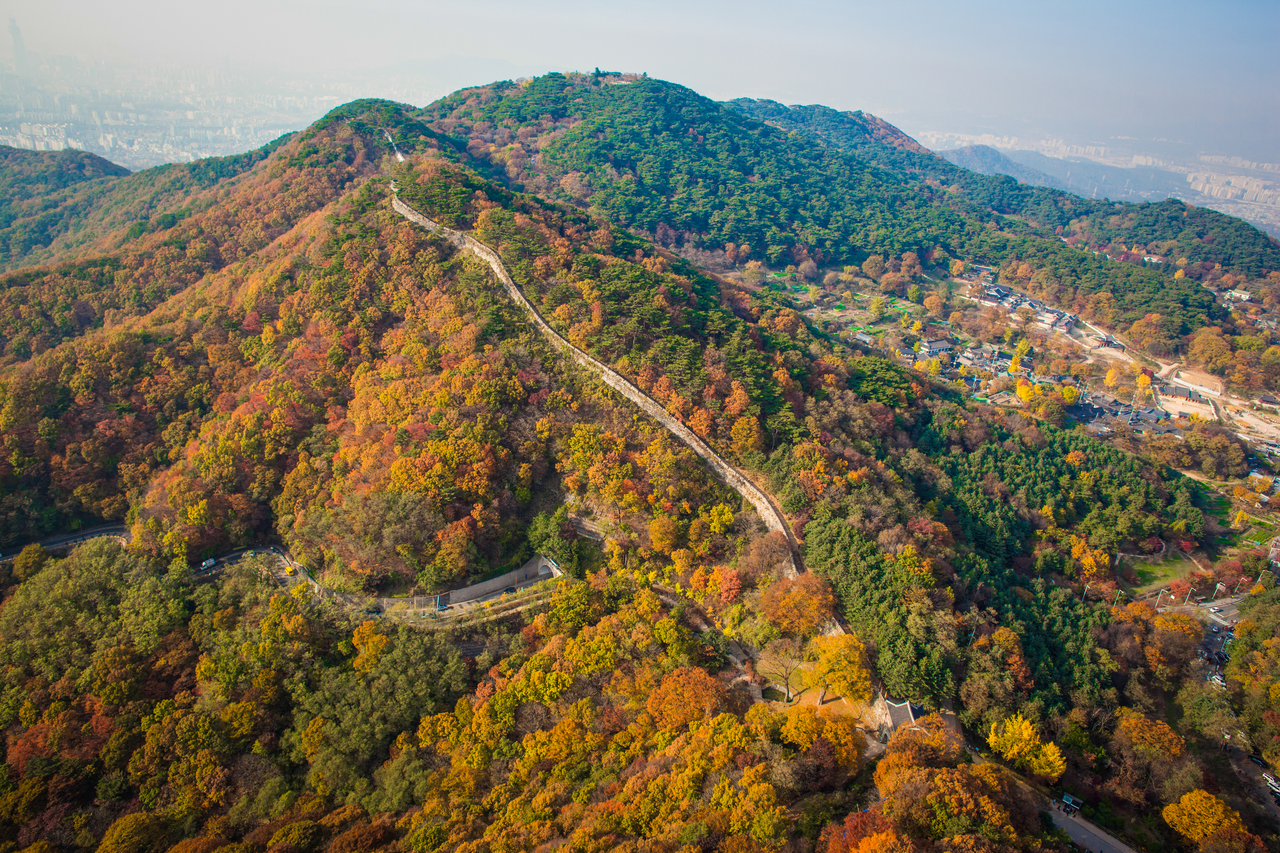
Near the top of Geumjeongsan, the mountain that rises behind northern Busan, there is a hollow in a rock about ten metres tall that holds water. An old Korean geography of 1530 records the legend told about it: a golden fish came down from heaven on five-coloured clouds and played in this well. The Encyclopedia of Korean Culture judges that the mountain's name, Geumjeong, "golden well", comes from it, and the temple says it took its own name the same way: Beomeosa, the temple of the fish from Brahma's heaven.
This is our deep dive into Beomeosa, the temple on Geumjeongsan. We keep what the records say apart from what legend says, follow the temple from its founding through the fire of 1592 and a century of rebuilding to the students who marched for independence in 1919, and finish with how to see it today, temple stay prices included.
Korea › Busan › Geumjeong-gu › Cheongnyong-dong
Founded: by tradition in 678 by the monk Uisang; greatly expanded in the 9th century
Heritage: one National Treasure (volumes 4–5 of the Samguk Yusa, kept in the temple museum) and Treasures including the main hall, the gate, the stone pagoda, the main Buddha triad and, since June 2026, the main hall's wall paintings
Entry: free · visitor hours roughly 8:00–17:00 (sources differ; ceremonies start as early as 4:30)
Getting there: Metro Line 1 to Beomeosa Station, then bus 90 · about 1 hour to 1 hour 15 minutes from Busan Station (our estimate)
Checked 24 October 2026 with the sources at the end.

Who and when. Korea Heritage Service, citing the Samguk Yusa, says the monk Uisang first built the temple in 678. What the temple itself points to in that 13th-century history is a name: "Beomeo of Geumjeong" appears in the list of ten temples where Uisang spread Hwaeom (Flower Garland) Buddhism. The Encyclopedia of Korean Culture judges it reasonable to say the temple was founded in 678 and greatly expanded under King Heungdeok (reigned 826–836); Korea Heritage Service dates the three-storey stone pagoda in front of the main hall to that king's time.
Fire and rebuilding. In 1592 the Japanese invasion that began at Busan burned the whole temple, and it lay in ruins for about ten years. Korea Heritage Service notes that monks took part in the fighting. Rebuilding began in 1602 and went on for more than a century: the main hall's roof beam was raised in 1658, the Buddhas inside were made in 1661, and gates and halls followed in 1684, 1700 and 1781.
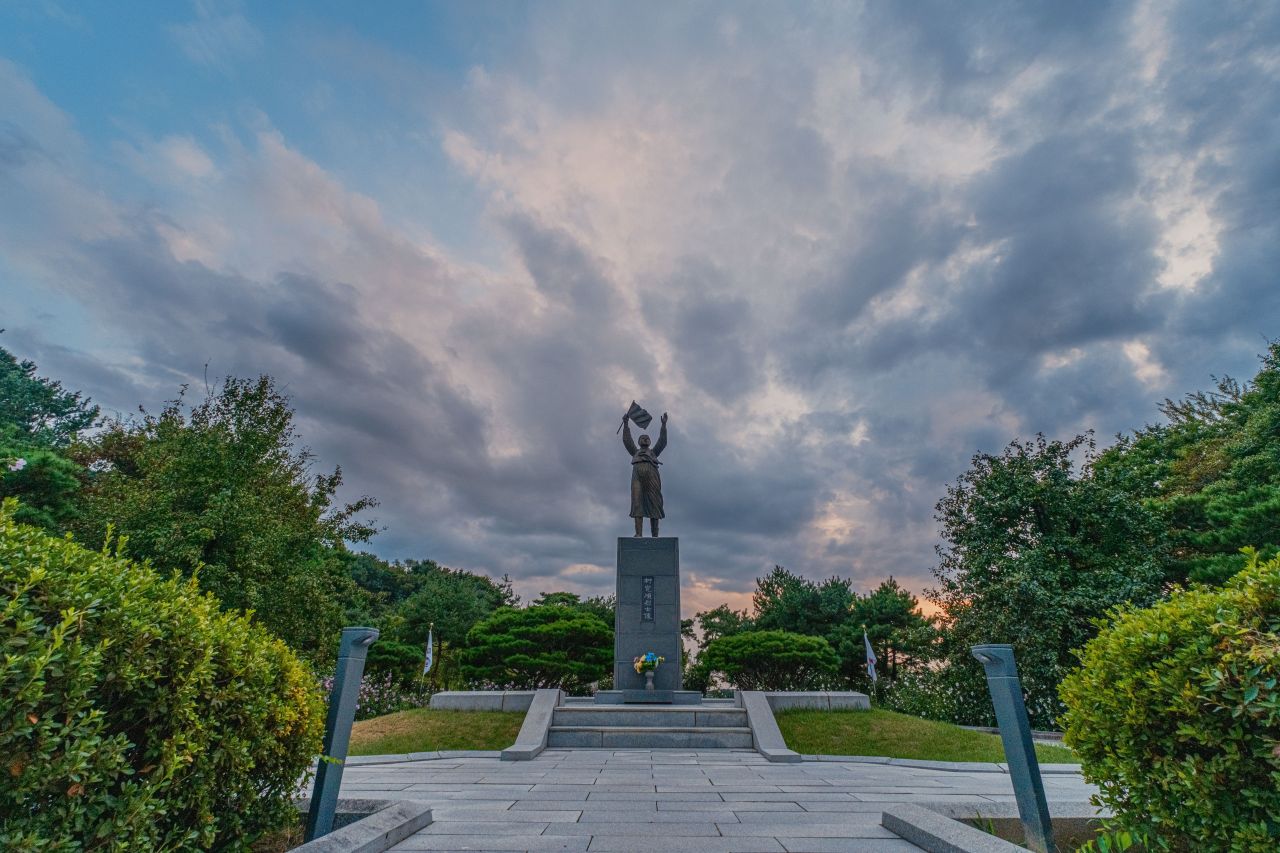
1919. In late February 1919 the independence activist Han Yong-un visited Beomeosa, and young monks went to Seoul and came back to organise. On the evening of 18 March about 40 of them shouted for independence near Dongnae's west gate, and on 19 March students of the temple's seminary and Myeongjeong School joined the protest at Dongnae market (one newspaper puts the market protests on both days); more than 100 people were arrested, 34 were tried, and the Japanese authorities closed both schools. A memorial to the temple's March First Movement stands beside the temple's ring road.
The Buddha that survived the fire
According to the record of its repair, a wooden seated Buddha now in the temple's Mireukjeon hall escaped the flames of the 1592 war. It was found in 1602, placed in a hall in 1638 and re-gilded by the monk Seongak in 1641. It is a Busan-designated cultural heritage.
| Source | What it says | Record or legend? |
|---|---|---|
| Samguk Yusa (13th century), as cited by the temple | "Beomeo of Geumjeong" is one of ten temples of Uisang's Hwaeom school | Record (the name only) |
| Korea Heritage Service, main hall entry | Uisang first built the temple in 678, "according to the Samguk Yusa" | Accepted tradition; we could not check the year in the original text |
| Sinjeung Dongguk Yeoji Seungnam (geography, 1530), as quoted by the Encyclopedia of Korean Culture | A golden fish came down from heaven on five-coloured clouds and played in a golden well on the mountain top; the mountain and the temple were named after it | Legend, recorded as legend |
| Beomeosa Changgeon Sajeok (temple history, 1700) | When a Japanese fleet of 100,000 ships threatened Silla under King Heungdeok, a spirit in a dream told the king to ask Uisang to pray; after the prayers the ships attacked each other and the invaders all died | Legend. Uisang (625–702) and King Heungdeok (826–836) lived more than 120 years apart, and the encyclopedia doubts the dates |
| Ink inscription on the ridge beam, found in a 1993 survey | The main hall's roof beam was raised in 1658 | Record (physical evidence) |
| Text found inside the main Buddhas | The triad was made in 1661 by the sculptor-monk Huijang and six others | Record (physical evidence) |
| Year | What happened | What you see now |
|---|---|---|
| 678 | Founded, by tradition, by Uisang | — |
| 9th century | Greatly expanded under King Heungdeok | Three-storey stone pagoda (Treasure) |
| 1592 | Burned in the Japanese invasion; in ruins for about ten years | — |
| 1602 | First rebuilding, soon lost to fire again; the surviving wooden Buddha is found | Mireukjeon Buddha |
| 1613–14 | Main hall, other halls and the gate rebuilt (sources give 1613 or 1614) | Jogyemun gate (Treasure) |
| 1658 · 1661 | Main hall roof beam raised; the Buddha triad made | Daeungjeon hall and its Buddha triad (both Treasures) |
| 1700 | Several gates and pavilions built; the temple history written | Bulimun gate and Bojeru pavilion stand on these sites |
| 1781 | The Jogyemun gate repaired into its present form | Jogyemun gate |
| Colonial era | Major repair of the pagoda; a stone was added under its base | The pagoda looks taller than it should |
| Dec 2010 | Fire at the Cheonwangmun gate; the gate was pulled down while the fire was fought, which kept it from reaching the Treasure gate below | Cheonwangmun gate, rebuilt (year not found) |
| 2026 | Geumjeongsan becomes a national park (3 Mar); the main hall's wall paintings become a Treasure (26 Jun) | Wall paintings inside the main hall |

The temple climbs the hillside, so you walk up through gates (check the site map on arrival): from the ticket-office bus stop through the Jogyemun (the "one pillar gate"), the Cheonwangmun, the Bulimun and the Bojeru pavilion to the courtyard of the main hall.
1. Jogyemun gate. Its short wooden posts stand on tall stone pillars, which Korea Heritage Service calls unusual, describing the gate as a masterpiece among Korea's one-pillar gates. The same official entry notes that the calligrapher of its name boards appears in Korea's official report on pro-Japanese collaborators.
2. Inside Daeungjeon, the main hall. The Buddha is flanked by the bodhisattvas Maitreya and Dipankara, standing for the future and the past, not the usual pair; the triad dates from 1661. Look up at the carved canopy, then at the walls: four early-18th-century paintings which, Korea Heritage Service says, have not been repainted; they became a Treasure in June 2026. The same entry says this is the only Buddha hall where these four subjects are found together. Ask before photographing inside.
3. The three-storey pagoda (Treasure). A 9th-century pagoda in front of the main hall; the extra stone added in the colonial-era repair is why its base looks so high.
4. The temple museum. Volumes 4–5 of the Samguk Yusa, printed in early Joseon from 1394 blocks, are a National Treasure kept here; Korea Heritage Service calls them the earliest-printed copy known and the only source for three leaves missing from the copy already listed as a National Treasure. We could not confirm whether they are on display; call ahead (051-508-2200).

5. If you have a few more hours (our estimate): walk up to the North Gate of Geumjeong Fortress (about 1.2 km from the temple) and on towards the golden well, Geumsaem, near the summit.
Etiquette (from the temple stay rules, good manners for any visit): keep your voice down, no smoking or alcohol, no outside food, wear socks in the halls, and no pets anywhere in Geumjeongsan National Park.
| What | Details | Checked |
|---|---|---|
| Address | 250 Beomeosa-ro, Geumjeong-gu (Cheongnyong-dong) | Temple website |
| Entry · hours | Free · about 8:00–17:00 (KTO) or 8:30–17:30 (a travel site); dawn service 4:30, evening drums and service 18:30 | KTO (Jun 2026) |
| Getting there | Metro Line 1 to Beomeosa Station, exit 5 or 7, then bus 90 to the "Beomeosa ticket office" stop (about 3.5 km); or from Nopo Station exit 2 | Temple website |
| Temple stay: rest | ₩70,000 per night adult (₩60,000 teens, ₩50,000 primary, ₩40,000 under school age); up to 2 nights | templestay.com (2026) |
| Temple stay: weekend meditation | ₩100,000 adult (₩90,000 / ₩80,000 / ₩70,000), 1 night, with tea with a monk | templestay.com (2026) |
| Temple stay rules | Age 5+, check in before 14:00, book at least 2 days ahead, no single rooms; the stay centre is 800 m (20 min walk) from the temple; closed Mon–Tue | templestay.com (2026) |
| Phone | Temple office 051-508-3122 · temple stay 051-508-5726 | Temple website |
templestay.com marks Beomeosa as a temple for foreigners but does not say whether programmes run in English; KTO says English guiding can be arranged by request in advance. During BTS's Busan concerts in June 2026 the temple offered 20 foreigners a free temple stay, and 45 applied for each place.

Map
From the metro station to the temple, then up to the fortress gate, the golden well and the summit. Tap a number for its name.
Map © OpenFreeMap, data © OpenStreetMap contributors. Use Naver Map or KakaoMap for directions in Korea.
The same war, down the hill
The invasion that burned Beomeosa landed at Busan on 23 May 1592; Busanjin fell the next day and Dongnae fortress soon after. Its story, from the magistrate Song Sang-hyeon's "It is easy to die, but hard to give you the road" to the remains found in the old moat, is in our Busan guide.
FAQ
Is Beomeosa worth the trip from Haeundae?
Yes, if you like history: it is a half-day trip by metro and bus, and it is free. Combine it with Dongnae on the way back down Line 1.
What does "Beomeo" mean?
"Fish of Brahma's heaven": 梵 for the heaven of Brahma and 魚 for fish, from the legend of the golden fish in the mountain-top well.
Can I see the National Treasure?
The Samguk Yusa volumes belong to the temple museum, but we could not confirm that they are on display. Call 051-508-2200 before you go.
Do I need to book a temple stay?
Yes, at least two days ahead on templestay.com; no same-day bookings, and the rest programme may be cancelled if fewer than five people sign up.
Sources (checked 24 October 2026)
Korea Heritage Service heritage entries (main hall, Jogyemun gate, three-storey pagoda, Buddha triad, wall paintings, Samguk Yusa); Encyclopedia of Korean Culture (Beomeosa, Geumjeongsan, the Mireukjeon Buddha); Beomeosa temple website (history, directions, phone numbers); templestay.com (programmes, prices, rules); Korea Tourism Organization data (entry, hours, English guiding); Newsis (wall paintings, 2026); Kyunghyang Shinmun, Twig24 and Daum news (Geumjeongsan National Park); YTN (2010 fire); Bulgyo Shinmun and Kookje Shinmun (1919); Herald Economy (BTS temple stay, 2026). Photos: Korea Tourism Organization photo gallery; none were taken in 2026.


Comments
Post a Comment