





















Seoul City Wall Naksan Hike: Hyehwamun to Dongdaemun
In early 1396, more than a hundred thousand men from across Joseon were marched to the new capital and set to work on a wall. Each county was given its own stretch, and when the stones were laid, the name of the county was cut into them so that each stretch could be traced back to the people who built it. Six hundred years later you can still read some of those names, a short walk from a subway exit in central Seoul.
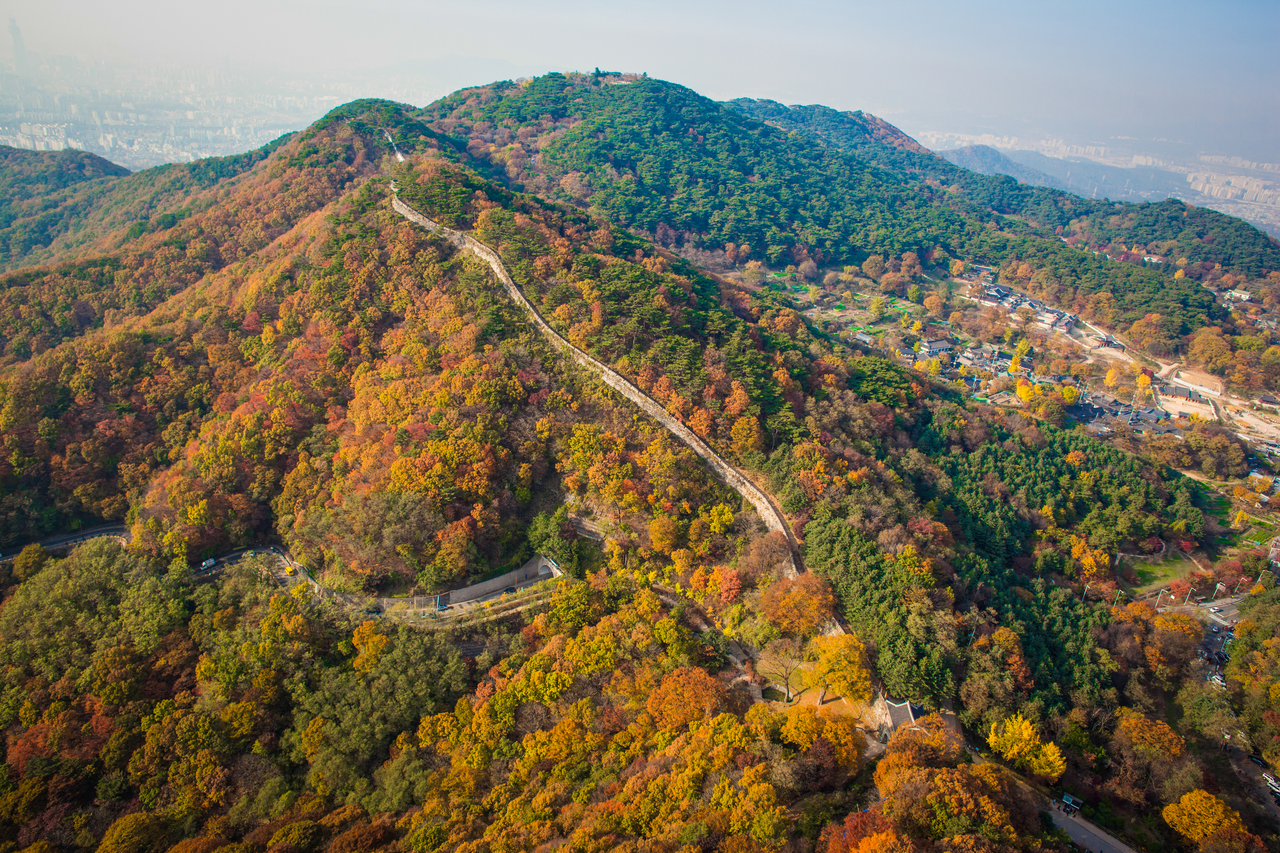
The Naksan section of the Seoul City Wall is one of the easiest pieces of the old 18.6 km fortress to walk. It is free, open 24 hours, and takes about an hour from Hyehwamun, the north-east gate, over a low hill to Heunginjimun, the Great East Gate. This guide adds what most visitors miss: how to read the stones, the story of a hill that was covered in apartment blocks until 2002, the mural village that painted over its own murals, the free museum at the bottom, the lights of Dongdaemun after dark, and what it all costs.
1Hyehwamun → 2Naksan Park → 3Ihwa Mural Village → 4Seoul City Wall Museum → 5Heunginjimun → 6DDP at night
Distance: 2.1 km along the wall from Hyehwamun to Heunginjimun (Seoul Metropolitan Government); about 3 km with the mural-village detour and DDP (OpenStreetMap walking route). Time: about an hour of walking; plan an afternoon and evening, about 5–6 hours with dinner.
Direction: north to south: a gentler climb first, and the steepest stretch, near Heunginjimun, is then a descent.
Cost: free. The wall, Naksan Park and the museum charge no entry.
Best days: Tuesday to Sunday. The museum is closed on Mondays.
Hours, prices and events checked on 23 October 2026 with the Seoul City Wall website (seoulcitywall.seoul.go.kr), Seoul Museum of History, Seoul Metropolitan Government and the other sources listed at the end.

In this guide
- Route map and plan
- What's on: daily and this season
- Lost and rebuilt: 600 years of the wall
- Hyehwamun, the north-east gate
- Reading the stones
- Naksan Park: from slum to park
- Ihwa Mural Village
- Seoul City Wall Museum
- Heunginjimun, the Great East Gate
- DDP and Dongdaemun at night
- What to bring, getting there, parking
- Food, nearby places and costs
- Watch out, outdated tips, FAQ
Route map
The red line is the walking route from Hyehwamun over Naksan Park, with a loop through Ihwa Mural Village, down to the museum, Heunginjimun and DDP (about 3 km). The wall itself runs beside the path from 1 to 2 and from 2 down to 4. Tap a number for directions.
Map © OpenFreeMap, data © OpenStreetMap contributors. Walking line from OpenStreetMap routing. Google Maps gives only limited directions in Korea; most visitors use Naver Map or KakaoMap. Search for "Hansung Univ." to find the start station.
Plan for the day (Tuesday to Sunday)
| Time | Where | Why then |
|---|---|---|
| 13:30 | Hansung Univ. Station (Line 4), Exit 4 → Hyehwamun | About 3 minutes on foot; start at the north end so the steepest stretch is a descent |
| 13:45 | Wooden stairs behind the Catholic university, then Jangsu Village | Best stretch to compare stones from different centuries |
| 14:30 | Naksan Park and the summit (124 m) | The view over the city; the selfie spot for the wall certificate |
| 15:00 | Ihwa Mural Village | Go in daylight: people live here and ask for quiet |
| 16:00 | Back to the wall, down the inside path | Paved and gentle |
| 16:30 | Seoul City Wall Museum | Free; closes 18:00, last entry 17:30 |
| 17:15 | Heunginjimun Park and the gate | Engraved stones on the outer wall; look down into the round outer gate |
| Dusk | Back up the wall from Heunginjimun Park | The wall is lit after sunset, with a view over the gate and DDP |
| 19:00 | DDP, then dinner | Free light show on the hour and half hour (first show 19:00 in October, 18:00 from November to February, last show 22:00) |
Times are our suggestion; the official estimate is about an hour of walking for 2.1 km. Coming on a Monday? Do the walk and skip the museum.
What happens when: daily
| Time | Where | Event |
|---|---|---|
| 24 hours | Naksan section | The wall path is always open and free |
| 9:00–17:00 | Naksan Exhibition Hall, in the park | Small free exhibition about the hill |
| 9:00–18:00 | Seoul City Wall Museum | Free; last entry 17:30; closed Mondays and 1 January |
| 10:00 · 14:00 (weekends also 15:00) | Dongdaemun Station, Exit 7 | Seoul's official guided walk of the Naksan wall, booked online (we could not confirm an English guide) |
| After sunset | The whole section | Floodlights along the wall (the city does not publish exact times) |
| On the hour and half hour until 22:00 | DDP, Eoullim Plaza | DDP 365 Light, a five-minute media show on the building (first show 19:00 in October, 18:00 from November to February, last show 22:00) |
This season (2026)
| Date | Where | What |
|---|---|---|
| 8 Oct – 7 Nov (Thu–Sat) | Seoul City Wall | Moonlight tour of the wall (2026 Hanyangdoseong Dalbit Yuram), free, booked on yeyak.seoul.go.kr. The route and times are not published; phone 02-779-9870 |
| 14 – 25 Oct | DDP | Seoul Design Week |
| Late Oct – mid Nov | Seoul | Usual peak of autumn colour in the city centre |
| From November | DDP | 365 Light starts earlier, at 18:00 |
| From 17 Dec (expected) | DDP | Seoul Light DDP winter edition; the date is not yet confirmed on the official page |
Lost and rebuilt: 600 years of the wall
| Year | Where | What happened |
|---|---|---|
| 1396 | Whole wall | Built in two 49-day campaigns, 98 days in all, divided into 97 sections; about 18.6 km around the four hills of the capital |
| 1398 | Heunginjimun | The east gate is completed |
| 1422 | Whole wall | King Sejong rebuilds the earthen sections in stone, with about 322,000 workers in 38 days |
| 1704 on | Whole wall | King Sukjong rebuilds collapsed sections |
| 1869 | Heunginjimun | The gate is rebuilt; today's building dates from this year |
| 1899 | Gates | A tram line runs through the city and the gates begin to lose their purpose |
| 1907–1908 | Flat sections | Under Japanese control, a committee is set up to dispose of the wall; most of the flat-ground sections are pulled down |
| 1925 | Near Heunginjimun | A stadium is built on the line of the wall and its stones are reused |
| 1928 · 1938 | Hyehwamun | The gate tower is removed, then the arch and part of the wall |
| 1960s | Naksan | The hill disappears under "citizen apartments" and crowded houses |
| 1974 on | Whole wall | Restoration of every section begins (it started at Sukjeongmun in 1968) |
| 1978–1980 | Dongdaemun to Hyehwamun | 2,160 m of the Naksan wall is restored |
| 1994 | Hyehwamun | Rebuilt about 10 m north of its old site, which is now a main road |
| 1997–2002 | Naksan | 30 apartment blocks and 176 houses are demolished; Naksan Park opens in July 2002 |
| 2008–2009 | Dongdaemun | The old stadium is torn down; digging uncovers the wall and a water gate. 142 m is rebuilt as found, and the park opens on 27 October 2009 |
| 2014 | Dongdaemun | DDP opens (21 March) and the Seoul City Wall Museum opens (31 July) |
| 2016 | Whole wall | About 70% of the circuit, 13.1 km, survives or has been rebuilt |
| 2026 | Whole wall | Korea submits the "Capital Fortifications of Hanyang" for UNESCO World Heritage listing; a decision is expected in 2027 |
1Hyehwamun, the north-east gate

Hyehwamun was one of the four smaller gates of the capital. It was first called Honghwamun; the name was changed in 1511 because the main gate of Changgyeonggung palace had been given the same name. Under Japanese rule its gate tower was removed in 1928 and its stone arch in 1938, and its site became part of the road. When the city rebuilt it in 1994, the old site was a main road, so the new gate stands about 10 m to the north. In 2019 a new name board reproducing the original lettering was unveiled.
- Getting there: Hansung Univ. Station (Line 4), Exit 4, about 3 minutes. Hyehwa Station Exit 1 is about 5 minutes.
- Open: you can see the gate from outside at any time. We found no official information on visiting the gate tower.
- Tip: the gate sits on the other side of the road from the Naksan wall and there is no bridge between them. Look at it, then cross the road at street level to the wooden stairs.
- Nearby, the Hyehwa-dong Exhibition and Information Center (the former Seoul mayor's residence) has displays about the wall and is free. It is closed on Mondays; its hours were changed in July 2026, so check before you go.
Reading the stones
The wall was built and repaired over five centuries, and each era left a different kind of stone. The stretch behind the Catholic university, near the start, is one of the best places to compare them. Seoul's official guide gives this rule of thumb:
| Era | What the stones look like | Why |
|---|---|---|
| 1396, King Taejo | Rough natural stones of uneven size | Built fast, in 98 days |
| 1422, King Sejong | Rounded stones, wider at the bottom, "like corn kernels" | The earthen parts were rebuilt in stone |
| 1704 on, King Sukjong | Squared blocks of about 40–45 cm | Stones were standardised |
| 1800s, King Sunjo | Large, finely cut squares of about 60 cm | The most precise work |
When the wall was built, each section was assigned to a county, and the section's name and the county's name were carved into the stone; from the 1700s, the carvings name the supervising officer, the master mason and the date. It was, in effect, an early system of holding builders to account. On the Naksan section you can find counties such as Muan and Gimje, hundreds of kilometres to the south. The most inscribed stones on this walk are gathered on the outside of the wall at the Dongdaemun end, in the park above Heunginjimun, where stones found during repairs were set together.
2Naksan Park: from slum to park

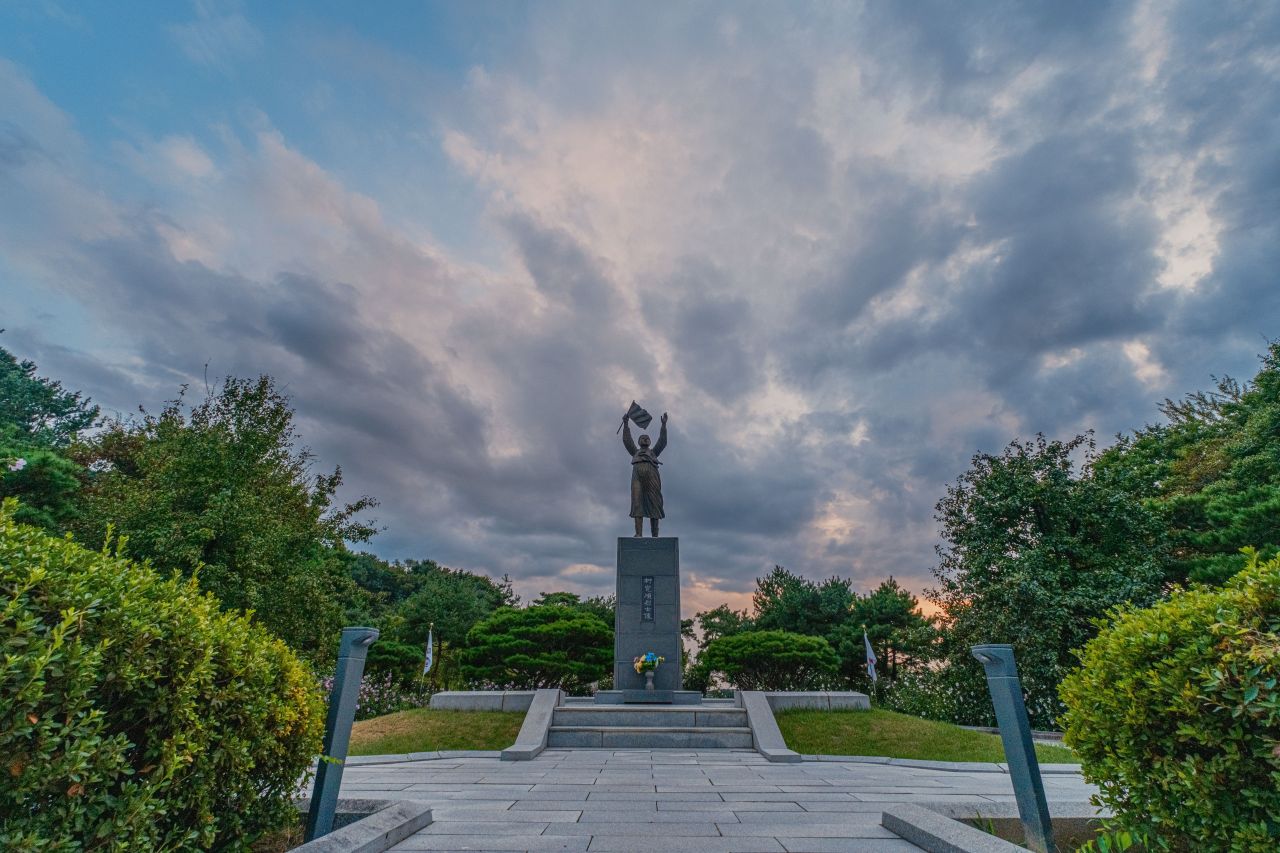
Naksan is a low hill, 124 m high, on the east side of old Seoul. From the 1960s it was covered with "citizen apartments" and dense housing, and the wall all but vanished among them. From 1997 the city demolished 30 apartment blocks and 176 houses, and in July 2002 the hill reopened as a park. Today the wall runs along its crest with a path on either side.
- Open: 24 hours, free. The Naksan Exhibition Hall in the park is open 9:00–17:00, free.
- Getting there directly: Hyehwa Station (Line 4), Exit 2, about 15–20 minutes uphill, or village bus Jongno 03 from Dongdaemun Station to its last stop at Naksan Park.
- Wall certificate: Seoul gives a completion certificate and a seasonal badge to people who photograph themselves at four official spots around the wall. The Naksan spot is the Naksan Park sign or the Naksan viewpoint sign; your face must be visible. Upload the photos on the Seoul City Wall website, book a date, and collect the certificate at one of two centres (Tuesday–Sunday, once per quarter). No fee is mentioned. The page has English instructions; one Seoul article says foreign visitors collect it at weekends, but we could not confirm this on the official page.
The name Naksan is usually explained by its shape: the hill was said to look like a camel's back, and was also called Nakta-san, camel mountain. Seoul's parks office gives a second name, Tarak-san, after the royal dairy nearby that supplied milk, tarak, to the palace. In the park is the site of Biudang, "the house that barely keeps off the rain," the home of a famously honest early Joseon official.
The queen who looked east. Just outside the wall to the east is a peak called Dongmangbong, "the peak for looking east." It is said that Queen Jeongsun, whose young husband King Danjong was deposed and exiled to Yeongwol in 1457, climbed it every day to look towards Yeongwol and, after his death, to mourn him. Nearby, she is said to have lived by dyeing cloth. These are traditions rather than records, and the exact site of her residence is still debated. Dongmangbong is a short detour from Changsin Station (Line 6).
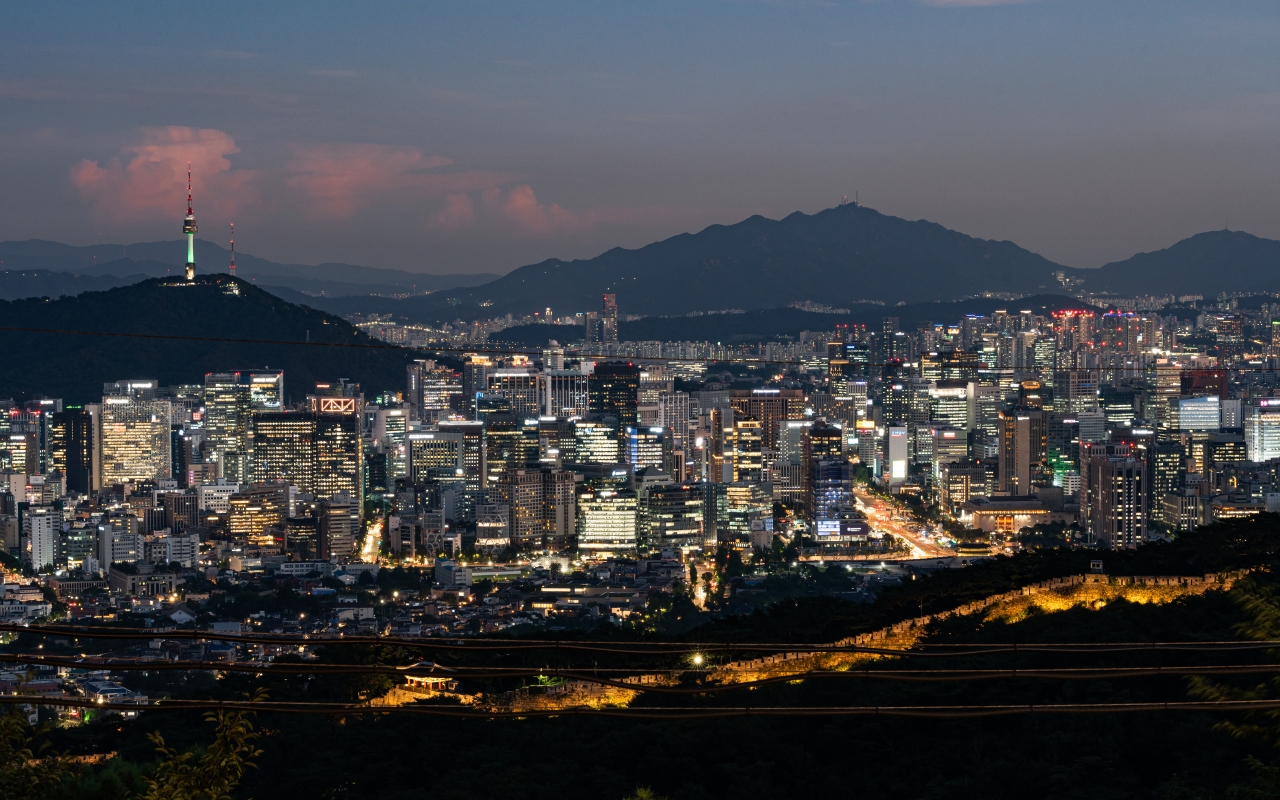
At sunset and just after. Seoul's parks office calls Naksan "one of the most beautiful places for a night view in Seoul." Lights at the foot of the wall wash it in gold; in front are the roofs of Changsin-dong, in the middle Heunginjimun and the silver curves of DDP, and behind them N Seoul Tower on Namsan, partly screened by trees. From the play square near the top you can see Inwangsan and Bukhansan to the north-west. In late autumn the trees along the wall change colour.

KPop Demon Hunters (Netflix animation, 2025) — An article on Seoul city's news site (by a citizen reporter) identifies Naksan Park's city-wall path as the setting of the night-time scene where Rumi and Jinu talk with Seoul's lights behind them. It is an animated film, so the park inspired the scene rather than being filmed; the spot has become a photo stop for fans. In the film, the three members of the K-pop girl group Huntrix hunt demons by night, and their leader Rumi finds herself drawn to Jinu of the demon boy band the Saja Boys.
3Ihwa Mural Village

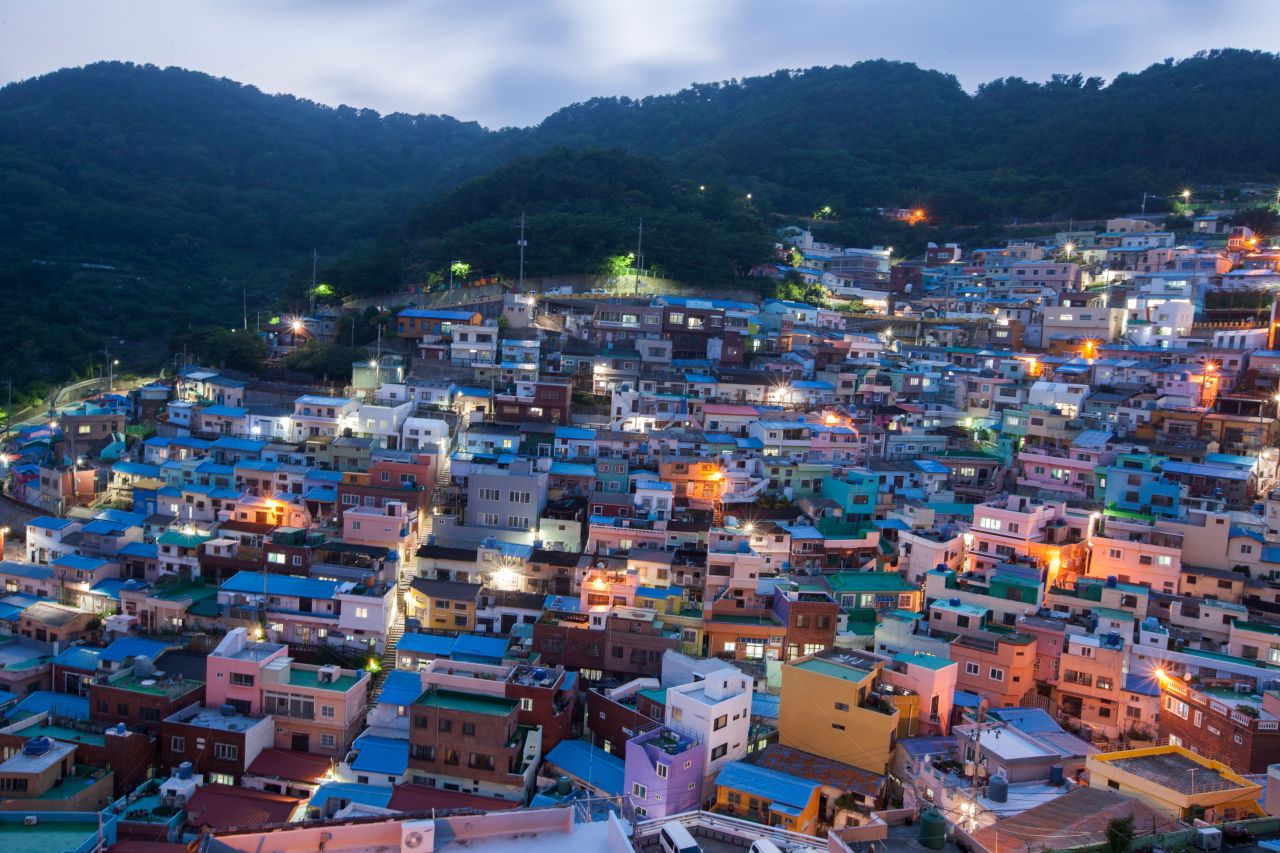
On the western slope below the park is Ihwa-dong, an old hillside neighbourhood. In 2006 a public art project brought artists here to paint murals linking it with the Daehangno theatre district below. A popular TV variety show visited, the village became famous, and weekend crowds followed.
On the nights of 15 and 23 April 2016, the two most photographed murals in the village, a sunflower stairway and a koi (carp) stairway, were covered in paint. Some residents had had enough of the weekend crowds and noise, and were at odds with the city over its plans for the area; police later booked five residents for damaging property. Today you will see signs in several languages saying "Residential area" and "Please talk quietly," and a hair salon has a mural of a finger to the lips.
- What is there now: the two famous stairways have not been repainted, but most other murals remain and new ones have appeared, according to a guide updated in October 2026. A smaller koi mural can be found elsewhere in the village.
- How to visit: go in daylight, speak softly, do not photograph into windows or open doors, and take your rubbish with you. Residents have complained about visitors shouting late at night.
- The lanes are steep with many steps.
Rooftop Prince (SBS, 2012) — scenes with Park Yoo-chun and Han Ji-min were shot in the village, according to citizen-reporter articles on Seoul city's news site. In the drama, a Joseon crown prince investigating his wife's death falls 300 years into a rooftop flat in modern Seoul with three of his men. The village also became famous after an appearance on KBS's variety show 2 Days & 1 Night.
4Seoul City Wall Museum
Below Naksan, on the hill above Heunginjimun, the city's museum of the wall fills three floors of the Seoul Design Support Center. It opened in 2014 and is a branch of the Seoul Museum of History. The permanent exhibition on the third floor covers how the wall was built, a model of Heunginjimun, and the lanterns carried by night patrols; the ground-floor lobby has a media-art show.
- Hours: Tuesday–Sunday 9:00–18:00, last entry 17:30. Closed Mondays and 1 January.
- Ticket: free.
- Getting there: Dongdaemun Station, Exit 1 (Line 1) or Exit 10 (Line 4).
- About 15–30 minutes is enough for most visitors. The museum has an English website; we could not confirm English audio guides.
5Heunginjimun, the Great East Gate

Heunginjimun, usually called Dongdaemun, was completed in 1398; the building you see was rebuilt in 1869. It is a national Treasure. Two things make it unique among the eight gates of the old city: it is the only one with an ongseong, a half-moon outer wall that kept attackers from reaching the gate directly, and it is the only one whose name has four characters.
- Open: the gate and Heunginjimun Park around it are free and always open. Travel guides say the upper gate tower is not open to visitors, and we found no official notice of an opening in 2026.
- Best view: climb a little in Heunginjimun Park, on the hill above the gate, and look down into the round outer wall.
- Getting between the gate and the park means several busy crossings; use the crosswalks.

The extra character. Seoul's other main gates have three-character names. A popular explanation, repeated in Korean newspapers but not in the official heritage records, is that the east side of the city was thought to be weak in feng shui terms, so the character 之, shaped like a winding mountain range, was added to strengthen it.
Walking the wall for luck. Eighteenth- and nineteenth-century accounts of Seoul describe sunseong, walking all the way around the wall in spring and summer to enjoy the views inside and out. Scholars who came to the capital for the state exams are said to have walked it to pray for success.
After dark, when the gate and its round outer wall are floodlit against the traffic of Jongno, and the lit wall climbs the hill behind it towards Naksan.
6DDP and Dongdaemun at night

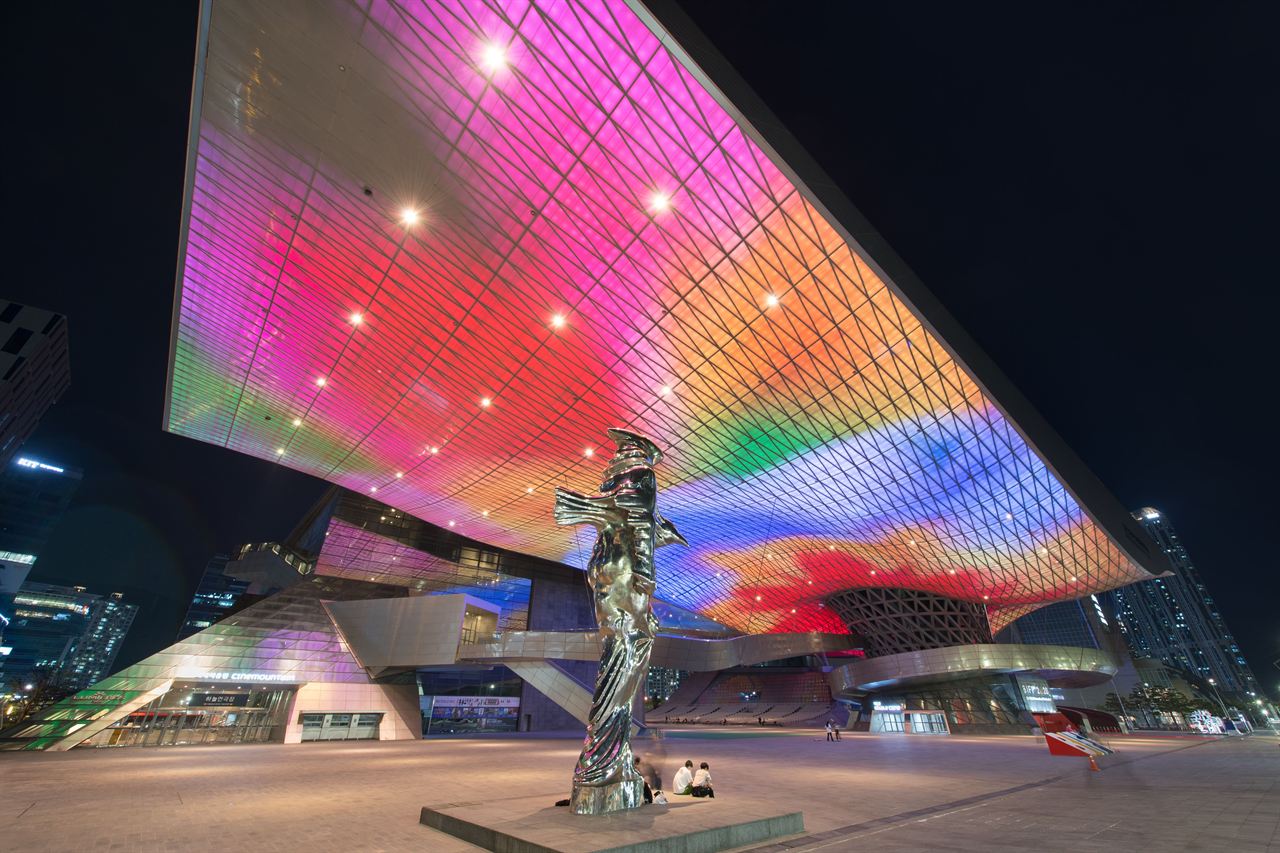
Just south of the gate, the curving silver building of Dongdaemun Design Plaza (DDP), designed by Zaha Hadid, opened in 2014 on the site of the old stadium that had been built over the wall in 1925. When the stadium was demolished, excavators found the wall and the Igansumun, a two-arched water gate at the lowest point of the city wall. They are on show in Dongdaemun History & Culture Park beside DDP. When DDP opened, some architects criticised it for not restoring more of the wall.
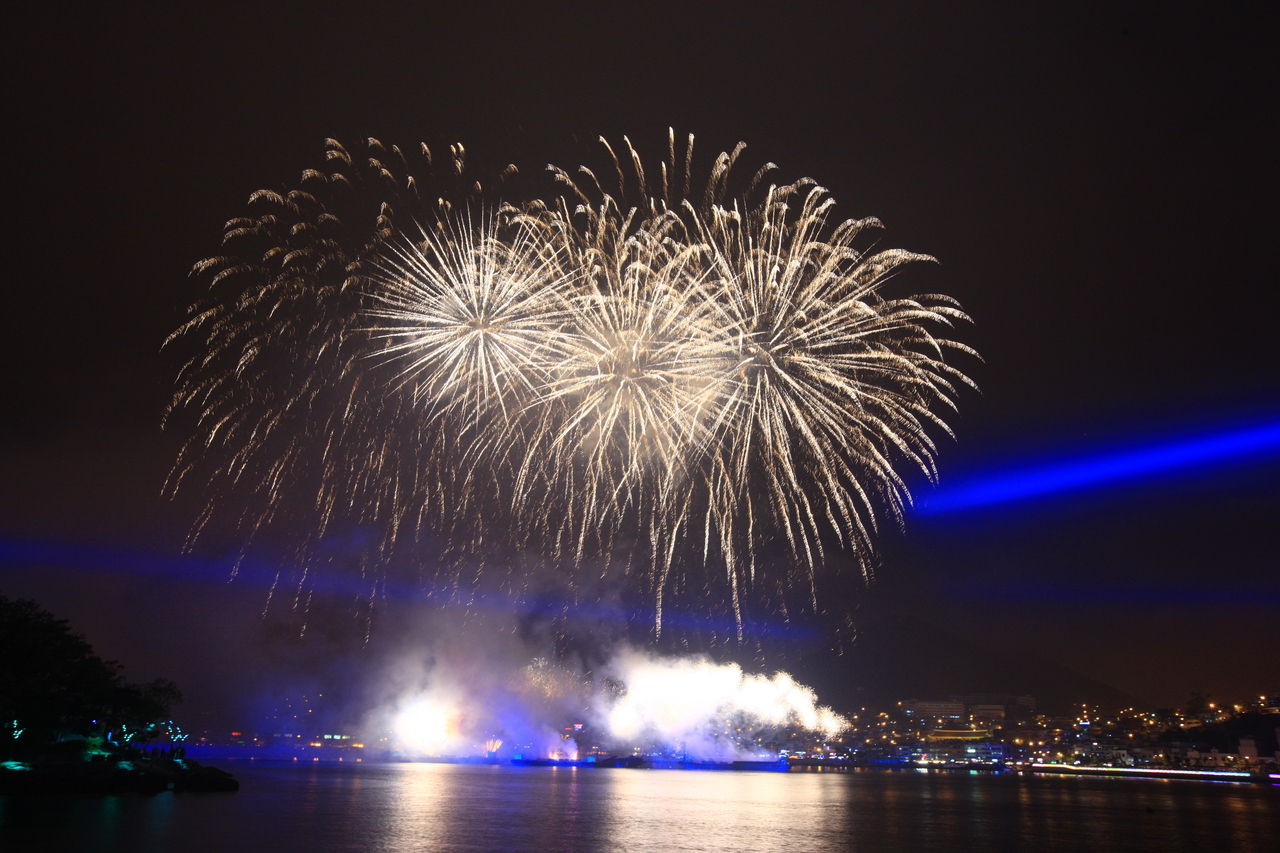
- DDP 365 Light: a free five-minute media show every 30 minutes, first show 19:00 in October, 18:00 from November to February, last show 22:00.
- Cheonggyecheon: the restored stream runs just north of DDP. Since October 2025 the Ogansugyo bridge area has had a new night-lighting display, and the stream walk to Gwangjang Market is about 850 m.
What to bring
Hanbok gets you into palaces free, but everything on this walk is free already, so there is no hanbok benefit here. What helps more:
- Comfortable shoes with grip. The route starts with wooden stairs; the inside path is paved and easy, the outside path shows off the wall but is slippery in rain, and so is the descent towards Heunginjimun.
- Water. We found no official list of shops or water points on the hill.
- Toilets: the museum and DDP have indoor toilets during opening hours. We could not find official information on toilets along the path.
- Weather: in Seoul, the average high is 20°C in October and 12°C in November, with lows of 11°C and 4°C. Bring a layer for the evening.
- There are stairs and uneven ground. A tour operator describes the route as not wheelchair-accessible; we found no official accessibility information.
Getting there, parking and apps
- Start: Hansung Univ. Station (Line 4), Exit 4. Finish: Dongdaemun Station (Lines 1 and 4) or Dongdaemun History & Culture Park Station (Lines 2, 4 and 5).
- Village bus Jongno 03: a loop between Dongdaemun / Jongno 5-ga and Naksan Park, handy if you want to skip the climb. The fare is about ₩1,200; sources give different exit numbers at Dongdaemun Station, so search the bus in Naver Map.
- Climate Card for visitors: Seoul's short-term travel pass (7 days ₩20,000, plus ₩3,000 for the card) covers the subway, city buses and village buses. Since 17 March 2026 the new ticket machines on Lines 1–8 accept foreign-issued cards. For a single day like this one, an ordinary T-money card is cheaper.
- Parking: Naksan Park has a small car park (25 spaces, ₩150 per 5 minutes) that fills up on weekend evenings, and DDP's car park costs ₩400 per 5 minutes (₩4,800 an hour, up to ₩50,000 a day). Because this is a one-way walk, you would have to go back for the car: take the subway.
- Maps: Naver Map or KakaoMap.
Experiences
- Official guided walk of the Naksan wall — from Dongdaemun Station Exit 7, weekdays 10:00 and 14:00, weekends 10:00, 14:00 and 15:00, booked through Seoul's walking-tour site (visitseoul.net). It runs in the opposite direction to this guide, uphill. We could not confirm English guiding.
- Wall completion certificate and seasonal badge — selfies at four official spots (see Naksan Park above). Collect four seasonal badges and you get a metal one.
- Four-gate stamp tour — collect stamps at Heunginjimun, Sungnyemun, Sukjeongmun and the Donuimun site in the "Seoul City Wall" app for a white badge.
- Moonlight tour — free evening tours on Thursday to Saturday until 7 November 2026, booked on Seoul's public reservation site.
- Dongmyo flea market, one stop east of Dongdaemun on Line 1 (Dongmyo Station, Exit 3) — second-hand clothes, records, cameras and antiques; busiest on weekend afternoons. Opening hours vary by stall.
Food: a chicken pot and the market
Average restaurant prices in Seoul in September 2026: gimbap ₩3,923, kimchi-jjigae set meal ₩8,846, bibimbap ₩12,000, samgyeopsal (200 g) ₩21,321 (price.go.kr, the Korean government price portal).
- Dakhanmari alley, between Jongno 5-ga and Dongdaemun stations, inside the grilled-fish alley. Dakhanmari means "one whole chicken": it is simmered in a big pot at your table, you dip the pieces in a sauce mixed from chilli flakes, soy sauce, vinegar and mustard, and when the chicken is gone, noodles go into the broth. Seoul's news site traces it to chicken noodle soup served to market traders in the late 1970s. We could not find a reliable current price.
- Gwangjang Market, about 850 m along Cheonggyecheon from DDP — mung-bean pancakes (bindaetteok) for about ₩5,000 and gimbap for about ₩3,500 (November 2025 reports). See "Watch out" before you order.
- Daehangno, below Naksan to the west — the theatre district, with plenty of casual places to eat around Hyehwa Station.
Nearby places
| Place | Why go | Hours · fee |
|---|---|---|
| Daehangno and Marronnier Park Hyehwa Station | Seoul's theatre district, with outdoor performances in the park | Open all day, free |
| Seonggyungwan 10 min from Hyehwa Station | The Joseon royal academy, with a giant ginkgo that turns gold in autumn | The main shrine has been under major repair; check before you go |
| Dongmangbong near Changsin Station | The peak tied to the story of Queen Jeongsun | A public park, free |
| Changsin-dong toy and stationery market Dongmyo Station | Narrow lanes of toy and stationery shops, now popular with adults too | Hours not confirmed; go in the daytime |
| Dongmyo shrine Dongmyo Station, 3 min | A 1602 shrine to the Chinese general Guan Yu, a national Treasure | Free; reopened in 2022 |
| Gwangjang Market 850 m from DDP | Seoul's best-known food market | Market 8:30–18:00; food stalls later |
| Cheonggyecheon beside DDP | A walk along the restored stream with new night lighting | Open 24 hours |
How much does the day cost?
For one person, for the route above plus one night nearby (the hotel row is a full room price). US dollar figures use ₩1,324 = US$1 (Seoul market close, 22 October 2026).
| Item | Budget | Mid / Comfort |
|---|---|---|
| Wall, park, museum | Free | Free |
| Subway | ₩3,100 (2 rides) | ₩3,100 |
| Dinner | about ₩13,000 (kimchi-jjigae set + gimbap) | about ₩33,000 (bibimbap + samgyeopsal 200 g) |
| Hotel, 1 night (room price; halve it if two share) | from about ₩70,000 | mid from about ₩108,000 comfort from about ₩162,000 |
| Total | about ₩86,000 (US$65) | mid about ₩144,000 (US$109) comfort about ₩198,000 (US$150) |
Hotel figures are the starting prices Klook showed on 23 October 2026; real prices depend on your dates.
Where to stay
Staying in Dongdaemun puts you at the bottom of the walk, next to the night lights, the markets and three subway lines.
Why: about 100 m (a 1-minute walk) from Dongdaemun History & Culture Park Station, the station for DDP.
See prices on Klook
Why: about 100 m (a 2-minute walk) from the same station, at a lower price. Card payment only.
See prices on Klook
Why: the lowest-priced well-rated option in this search, about 400 m (6 minutes) from Dongmyo Station, near the flea market. Card payment only.
See prices on Klook
Distances and ratings as shown on Klook's hotel pages, 23 October 2026. These are affiliate links: if you book, Korea Routes may earn a small commission at no extra cost to you.
Watch out
- Hyehwa Station Exit 2 skips the gate and puts you mid-hill at Naksan Park. For Hyehwamun use Hansung Univ. Station Exit 4 (3 min) or Hyehwa Exit 1 (about 5 min).
- The museum is closed on Mondays, and last entry is 17:30.
- Ihwa Mural Village is a residential area. Visit in daylight and keep your voice down.
- Rain: the outside path and the descent to Heunginjimun get slippery; use the inside path.
- Night: the wall is lit, but some stretches are quiet late in the evening. Walk with someone if you can. In an emergency call 112; for interpretation or tourist complaints call 1330 (24 hours in English).
- Gwangjang Market: after overcharging scandals, Seoul and Jongno-gu now run mystery-shopper checks, and from May 2026 every stall must show the owner's name; repeat offenders can be banned for good. Check the posted price before you order.
- Taxis: since January 2026 Seoul taxi receipts show English and any surcharge, and you can report overcharging by scanning the QR code inside the taxi.
Outdated tips you will still find online
| You may read | Correct in 2026 | Source |
|---|---|---|
| See the koi and sunflower stairways in Ihwa | Painted over in 2016 and not restored; most other murals remain | Korea Times, Korea Herald, Soul of Seoul (Oct 2026) |
| The Ihwa murals are all gone | Most remain, and new ones have been added | Soul of Seoul (Oct 2026) |
| The Naksan section is 3.2 km / 2.1 km | Both are official: 2.1 km ends at Heunginjimun, 3.2 km continues to Gwanghuimun | Seoul City Wall website, Seoul Metropolitan Government |
| "Dongdaemun Stadium" station | Now Dongdaemun History & Culture Park (Lines 2, 4, 5) | Wikivoyage still uses the old name |
| DDP's LED rose garden lights up every night | Reported closed in 2019; today's night show is DDP 365 Light | KoreaToDo; Seoul Metropolitan Government (365 Light) |
| Collect gate stamps on a paper map | The official page now points to the "Seoul City Wall" app (paper maps were the method before October 2022); use the app | Seoul City Wall website |
| The Seoul City Wall is a UNESCO World Heritage Site | Nominated in January 2026; decision expected in 2027 | Korea Heritage Service via Korea JoongAng Daily |
FAQ
Is the Seoul City Wall walk free?
Yes. The path is open 24 hours, and Naksan Park and the Seoul City Wall Museum are free too.
Which direction should I walk?
From Hyehwamun (Hansung Univ. Station) south to Heunginjimun. You climb gently to Naksan first, and the steepest part, near Heunginjimun, is then a descent.
How long does it take?
About an hour for the 2.1 km along the wall. With the mural village, the museum and photo stops, plan half a day.
Is it safe at night?
The wall is lit and Seoul is generally safe, but parts of the path get quiet late in the evening. Walking with someone is the easy precaution.
Can I go inside Heunginjimun?
Travel guides say the gate tower is not open to visitors, and we found no official notice of an opening in 2026. You can walk around the gate and look into its outer wall from the park above.
Sources (checked 23 October 2026)
Seoul City Wall website (seoulcitywall.seoul.go.kr) for the course, guided walks, certificate, notices and events; Seoul Museum of History for the Seoul City Wall Museum; Seoul Metropolitan Government's culture and parks sites and its media hub (mediahub.seoul.go.kr) for history, stone types, Naksan Park, Ihwa Mural Village, Dongdaemun History & Culture Park, DDP 365 Light, Cheonggyecheon and the Gwangjang Market and taxi measures; Encyclopedia of Korean Culture and Korea Heritage Service for the wall and Heunginjimun; Seoul Shinmun, YTN, Korea Times and Korea Herald for the 2016 Ihwa murals; Korea JoongAng Daily for the UNESCO nomination; Seoul parks office leaflet (December 2025) and DDP for parking; The Soul of Seoul and Treksplorer for current visitor tips. price.go.kr (Korean government price portal) for Seoul meal prices, September 2026; Money Today for the 22 October exchange rate; Klook for hotel details. Photos: Korea Tourism Organization photo gallery; none were taken in 2026.


Comments
Post a Comment