





















Busan Guide: History, Food, Stars and Where to Go
On 18 August 1950, as the front line closed in, the South Korean government moved to Busan, and for 1,023 days this port at the southeastern tip of Korea was the capital of a country at war. Refugees from the north crowded its hillsides, invented a wheat-flour version of their cold noodles, and lined the railings of Yeongdo Bridge with notes for the families they had lost. Three and a half centuries earlier, the Japanese invasion of 1592 had begun on this same shore. Today Busan is Korea's second city, with beaches, a film festival and a sea of neon over Gwangan Bridge, and the old stories are still there if you know where to look.
This is our guide to the whole city. It gives you Busan in brief, a very short history, what Busan is famous for, the stars who come from here, where Korea remembers the countries that came to help, and every district in one line, with links to our detailed neighbourhood guides as they appear. Tap a tab or open a story to read more.
Korea › Busan
Size: about 3.2 million people (2025 census), 770 km², 15 districts (gu) and one county (Gijang-gun)
From Seoul: KTX 2 h 18 min, ₩54,400 (standard KTX from Seoul Station); flights Gimpo → Gimhae about 1 hour
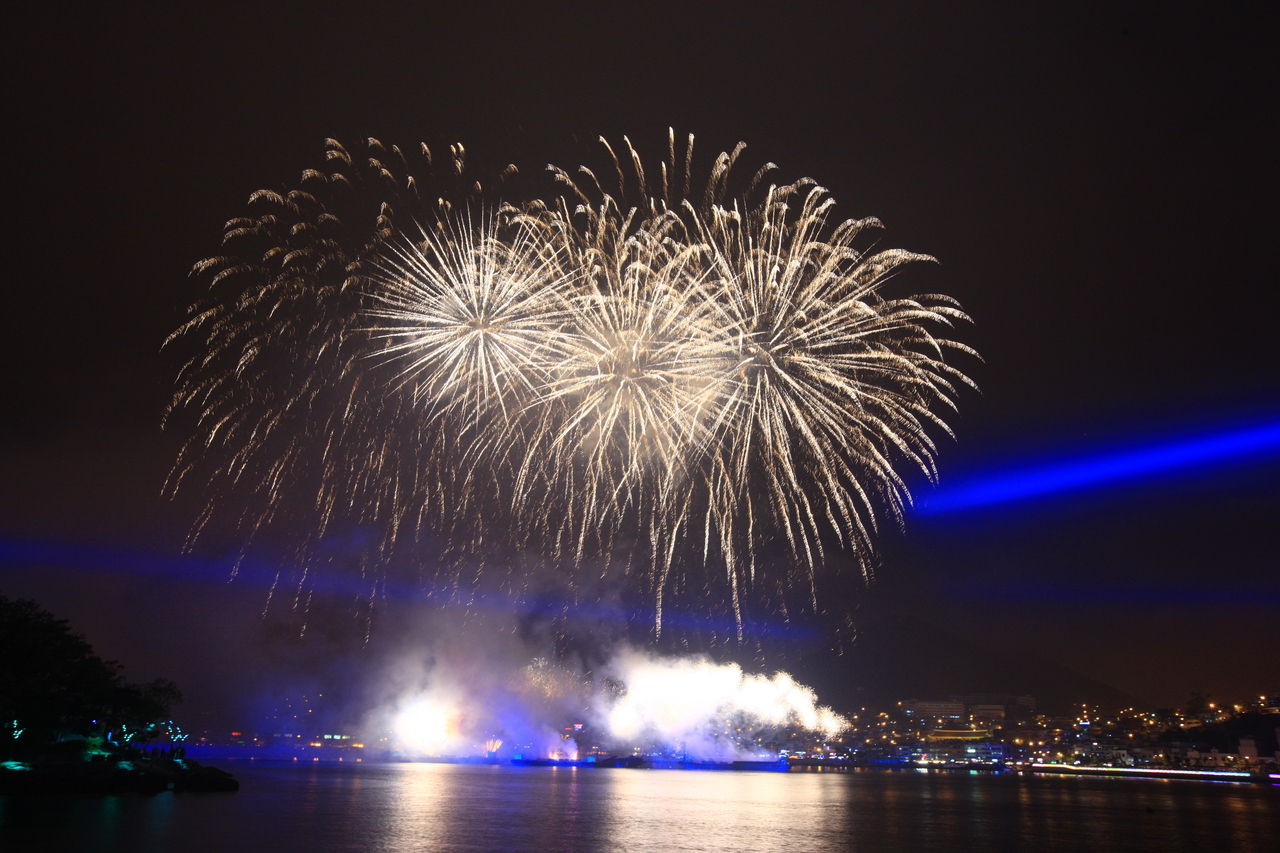
Best seasons: late March to early April (cherry blossoms) and October to early November (clear skies, the film festival in early October — 2026's has ended — and the fireworks on 7 November 2026)
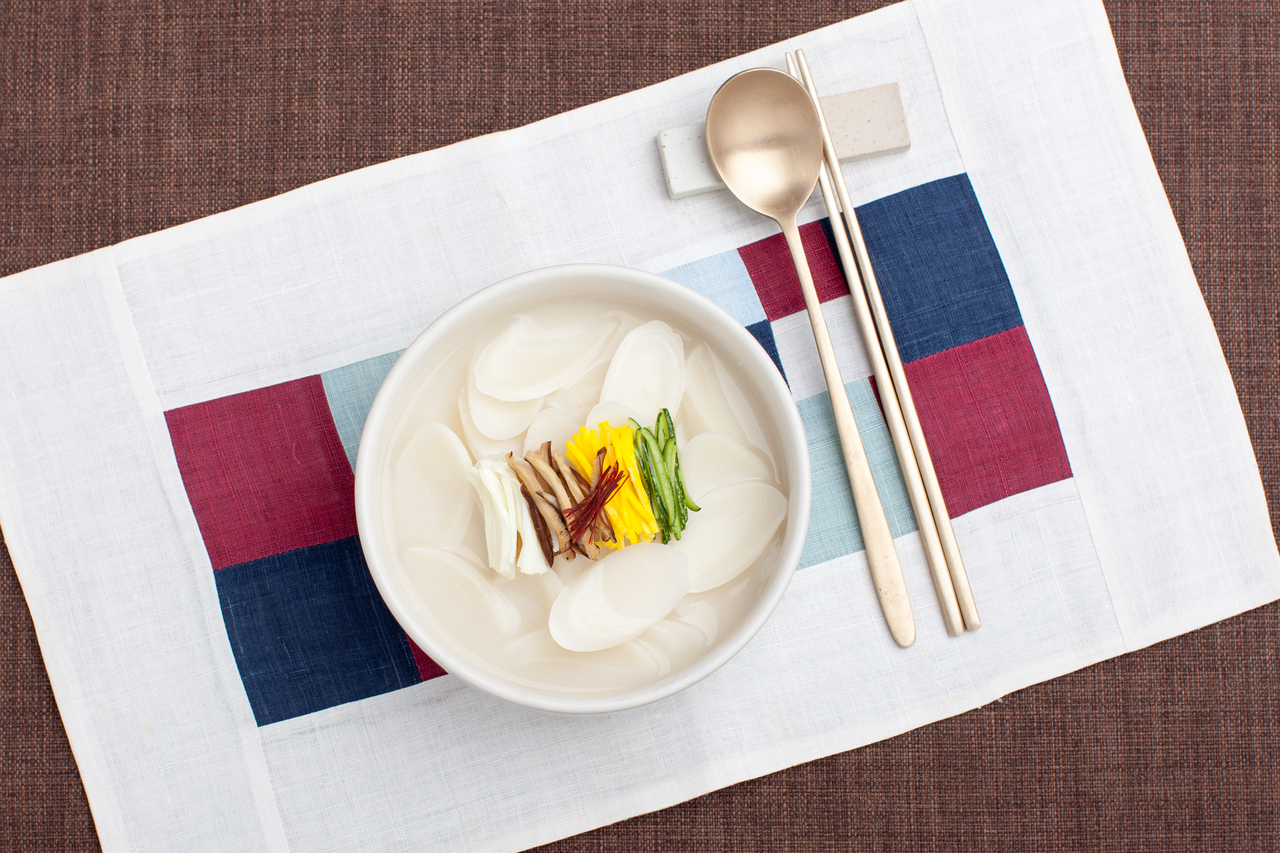
Eat this here: milmyeon cold noodles, pork rice soup, fish cake, seed hotteok, mackerel
Checked 24 October 2026 with the sources at the end.

In this guide
- Map
- A very short history
- Hard times and the people who lived them
- Specialties and food
- Stars from Busan
- On screen: shows, films and K-pop
- For couples and families
- Where Korea remembers its friends
- Districts
- Getting here and around
- Watch out, and outdated tips
- FAQ
Map
Ten places that tell the Busan story. Tap a number for its name.
Map © OpenFreeMap, data © OpenStreetMap contributors. Use Naver Map or KakaoMap for directions in Korea.
A very short history
| Year | What happened | Where to see it |
|---|---|---|
| 757 | Silla renames its Geochilsan commandery, on the land of the old state of Geochilsan, "Dongnae", the name of Busan's old centre | Dongnae-gu |
| 1592 | The Japanese invasion lands at Busan; Busanjin and Dongnae fortresses fall within two days | Dongnae Eupseong, Chungnyeolsa |
| 1678 | The Choryang Waegwan, a Japanese trading post of about 330,000 m², opens; twelve Joseon peace missions to Japan (1607–1811) pass through Busan | Yongdusan area, Joseon Tongsinsa History Museum |
| 1876 | Busan becomes Korea's first modern treaty port | Busan Modern and Contemporary History Museum |
| 1950–53 | Provisional capital for 1,023 days; refugees settle the hillsides | Provisional Capital Memorial Hall, 40 Steps, Gamcheon |
| 1970s–90s | Shoes become Busan's number-one export for about 20 years | Busan's old factory districts |
| 2002 · 2005 | Asian Games (29 Sep – 14 Oct 2002, with North Korea taking part); APEC leaders' summit at Nurimaru (19 Nov 2005) | Asiad Main Stadium, Nurimaru APEC House |
Hard times and the people who lived them
1592: Dongnae fortress, and the tomb of noses
On 23 May 1592 (the 13th day of the 4th lunar month) Japanese troops landed at Busan. Busanjin fortress fell the next day and its commander Jeong Bal was killed. At Dongnae fortress the magistrate Song Sang-hyeon answered a demand to let the army pass with a wooden board: "It is easy to die, but hard to give you the road." Townspeople joined the fight with whatever they had; Japanese records count more than 3,000 dead and about 500 taken prisoner. In 2005, construction of Suan subway station uncovered remains of at least 81 people in the old moat, including a woman's skull cut twice by a sword.
During the second invasion (1597–98), Japanese commanders collected noses and ears as proof of kills. A Japanese historical dictionary records that the cutting reached non-combatants, men and women, old and young. The Mimizuka mound in Kyoto holds the noses and ears of roughly 20,000 people. In 1990 the spirits of the dead were symbolically brought back to Korea, and in 1992 they were enshrined at the Joseon–Ming soldiers' tomb (Jomyeong Gunchong) in Sacheon; the mound itself is still in Kyoto. Today you can stand on the restored walls of Dongnae Eupseong and at Chungnyeolsa shrine, where Song Sang-hyeon is remembered.
1950–53: the refugee capital
By press estimates, Busan's population of about 470,000 before the war passed one million, and some reports put it at 1.2–1.3 million after the retreat of January 1951. By the end of the war an estimated 40,000 shacks stood across the city, many on the hillsides, and fires broke out three or four times a day. More than 100,000 people lived around the 40 Steps, where separated families came to look for each other, and many promised to "survive and meet at Yeongdo Bridge", leaving notes on its railings. Gamcheon village began as a hillside settlement of refugees and members of the Taegeukdo religious community; at Ami-dong, refugees built houses on top of a Japanese cemetery, whose gravestones were left behind and can still be found among the homes. More than 80 schools ran in tents. Our Busan fireworks guide walks through these places.
After the war: the girls of the shoe factories
Refugee labour and aid rubber turned Busan into Korea's shoe city. For about 20 years from the late 1970s, shoes were Busan's number-one export, and at one time around 90% of the world's Nike shoes were made here. In 1986 the five biggest makers employed about 54,000 people, many of them young women from the Honam region, some starting at 13 or 14. Shifts began at 7:50 and, with overtime, usually ran until 9 pm. After 1992 production moved to China, Vietnam and Indonesia.
Specialties and food
| Specialty | Why it is famous here | Where to try or buy |
|---|---|---|
| Mackerel | Busan's city fish since 2011, according to news reports; the Busan Cooperative Fish Market handled about 80% of Korea's mackerel catch, according to 2014–15 reports | Jagalchi Market, Nampo-dong |
| Gijang anchovies | Spring anchovies landed at Daebyeon port; the Gijang Anchovy Festival held its 30th edition on 24–26 April 2026 | Daebyeon port, Gijang-gun |
| Gijang seaweed (miyeok, dasima) | Gijang's coast is known for seaweed; a spring seaweed festival has been held here (reported in 2016) | Gijang markets |
| Gijang spring onion (jjokpa) | Registered as a protected geographical indication, reports say | Gijang markets |
| Daejeo "salty" tomatoes | Grown in Daejeo near the mouth of the Nakdong River and sold for their slightly salty taste; the Daejeo Tomato Festival was held in March 2025 (its 22nd edition) | Gangseo-gu |
Milmyeon — cold wheat noodles. North Korean refugees who could not find buckwheat made naengmyeon with aid flour and sweet-potato starch; Korea's main encyclopedia dates it to after 1950.
Dwaeji gukbap — pork and rice soup. Nobody knows exactly where it began; the leading theories tie it to the war, either refugees imitating beef soup with cheap pork or North Korean sundae soup changing in Busan.
Eomuk — fish cake. It came from Japanese kamaboko sold in colonial-era Bupyeong Market, and boomed when refugees poured in.
Ssiat hotteok — a sweet pancake stuffed with seeds, said to have started on the streets of Nampo-dong in the 1980s.
| Restaurant (since) | Why it matters | Price (checked) |
|---|---|---|
| Naeho Naengmyeon, Nam-gu (1919 in the north) | Opened in Hungnam, reopened by refugees in Busan in 1952–53; tells the milmyeon story | Milmyeon ₩9,000 (Feb 2026) |
| Halmae Gukbap, Dong-gu (1956) | Started by a refugee from Pyongyang | Pork soup ₩8,000 (undated menu) |
| Wonjo 18beon Wandang, Seo-gu (1947 stall, 1956 shop) | Wandang (Busan-style wonton soup) and bal-guksu noodles | Wandang ₩9,000 (Jan 2026) |
| Samjin Eomuk, Yeongdo (1953) | Third-generation fish-cake maker in Bongnae Market | Fish-cake croquette ₩2,000 (Mar 2026) |
Founding years from the Encyclopedia of Korean Culture, the Busan regional encyclopedia and newspapers; prices from each shop's Naver Place menu, with the menu's update date.
| Restaurant | Show (date) | Note |
|---|---|---|
| Naeho Naengmyeon | Baek Jong-won's Top 3 Chef King (21 May 2016); Heo Young-man's Food Travel (25 Mar 2022) | Also in the comic Sikgaek |
| Halmae Gukbap | Wednesday Food Talk, Busan special (30 Sep 2015) | |
| Wonjo 18beon Wandang | Heo Young-man's Food Travel, ep. 61 (24 Jul 2020) | Wonton and noodles |
Broadcast records from Naver Place TV listings, checked against news reports where available.
A Korean singer, a K-pop star and foreign travellers eating their way around Busan. Tap to play here.
 ▶
48 hours of Korean food in Busan — Puri and Sue
Foreign travellers, June 2026: seed hotteok, fish cake, milmyeon, pork soup
 ▶
Kyuhyun checks Busan restaurants his fans recommended — KYUHYUN (official channel)
K-pop: Super Junior's Kyuhyun, Oct 2025 (Korean, with subtitles)
 ▶
Sung Si-kyung's Meogeultende: Nongoljip, Haeundae — Sung Si-kyung
Korean singer's food show, Busan episode, Sept 2026
Stars from Busan
Busan's accent is famous in Korean dramas, and many stars grew up here. Here is where each one comes from, in their own words or as the Korean press reports. For Jimin, Jung Kook and Kang Daniel's own Busan, see our Busan K-pop stars guide.
| Name | Known for | Busan link |
|---|---|---|
| Jimin | BTS | Called Busan "the hometown where I was born" on stage in Busan (June 2026); reported to have grown up in Geumjeong-gu |
| Jungkook | BTS | From Busan; reported to have grown up in Buk-gu |
| Im Si-wan | Actor, ex-ZE:A | From Busan |
| Kang Ha-neul | Actor | Has said his hometown is Busan |
| Leehan | BOYNEXTDOOR | From Busan |
| Jeong Eun-ji | Apink, actor | Born in Haeundae-gu (1993), according to a magazine profile |
| Kim Hye-soo | Actor | Born in Busan (1970), according to a magazine profile |
| Kang Dong-won | Actor | Has said he was born in Busan in 1981 and moved to Changwon at six |
| Jung Woo | Actor (Reply 1994) | Grew up in Busan |
| Yoo Jae-myung | Actor | From Busan |
| Choo Shin-soo · Lee Dae-ho | Baseball | Born and raised in Busan (Choo); Busan-raised Lotte Giants legend (Lee) |
On screen: shows, films and K-pop
| Show (episode, date) | Where | What happened |
|---|---|---|
| Running Man, ep. 83 (26 Feb 2012) | Jagalchi Market, Bosu-dong Book Street, Haeundae Beach | A race with guest Oh Ji-ho |
| Running Man, ep. 328 (4 Dec 2016) | Busan | "Suspicious Busan Vacation" with TWICE, a Busan-food word puzzle |
| Running Man, ep. 421 (7 Oct 2018) | Gukje Market and the seaside | Penalty part-time jobs and a chase through the market |
| 2 Days & 1 Night, season 4 (5 and 12 Jul 2026) | Route 7 from Donghae via Pohang and Gyeongju to Nampo-dong | A road trip down the east coast ending in Busan |
| Title (year) | Where | The story, in a line |
|---|---|---|
| Black Panther (2018) | Gwangalli beach road, Gwangan Bridge, Jagalchi, Yeongdo | Marvel filmed its car chase in Busan in March 2017 (the casino entrance was a set in Atlanta) |
| Ode to My Father (2014) | Gukje Market ("Kkotbun-i's" shop), Yongdusan Park | A refugee's whole life, from the 1950 evacuation to modern Busan |
| Haeundae (2009) | Gwangan Bridge, Haeundae | A mega-tsunami disaster film seen by over ten million Koreans |
| Friend (2001) | All over Busan, incl. the run through Jagalchi in school uniforms | Four Busan friends growing up and apart |
| Pachinko (2022) | Jagalchi, Taejongdae and other Busan sites | A Korean family's four generations, starting on Yeongdo in 1915 |
| Artist · event | Where | Source |
|---|---|---|
| BTS, Yet to Come in Busan (15 Oct 2022) | Asiad Main Stadium; about 52,000 people for the free World Expo bid concert | Yonhap via Korea Times |
| BTS, 5th Muster MAGIC SHOP (15–16 Jun 2019) | Asiad auxiliary stadium | The Fact |
| BTS World Tour ARIRANG in Busan (12–13 Jun 2026) | Asiad Main Stadium; on 13 June Jimin called Busan his hometown | TenAsia |
For couples and families
| Place | Why it works for a date | Best time · fee |
|---|---|---|
| Gwangalli drone light show | About 1,100 drones over Gwangan Bridge (since July 2026) | Saturdays 19:00 and 21:00 (Oct–Feb), about 12 min, free; may be cancelled for weather |
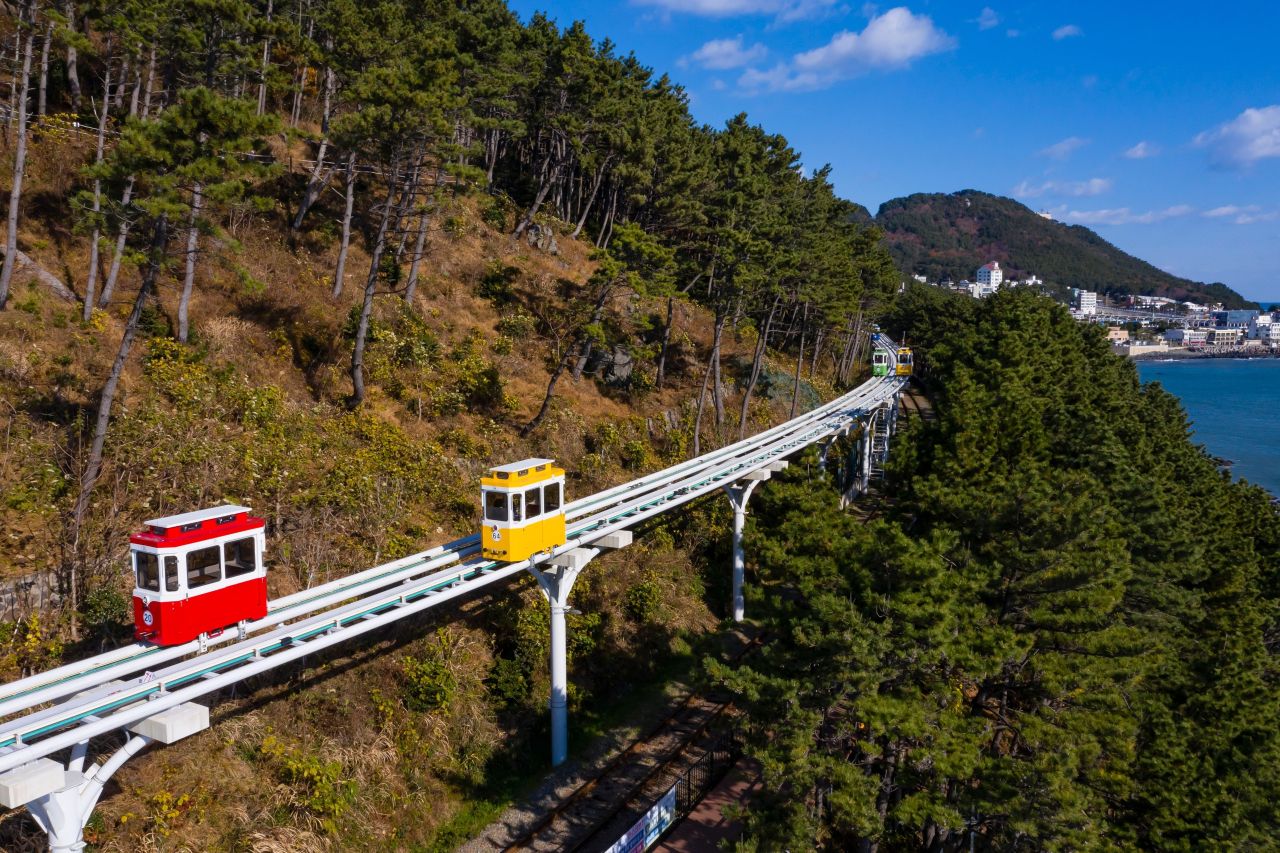
| Haeundae Blueline Park Sky Capsule | A tiny private car rolling above the sea from Mipo to Cheongsapo, about 30 min | ₩50,000 per capsule for two |
| Dalmaji-gil | A hillside road above Haeundae famous for its moonrise | Evening, free |
| Huinnyeoul Culture Village | White houses on a cliff above the sea in Yeongdo; people live here, so keep quiet | Late afternoon, free |
| Busan X the Sky | An observation deck high above Haeundae | 10:00–21:00, adult about ₩27,000–29,000 |
| Place | Why kids like it | Hours · adult / child |
|---|---|---|
| SEA LIFE Busan Aquarium (Haeundae) | Indoor, good on a rainy day; no stroller rental | 10:00–19:00 weekdays, 10:00–20:00 weekends · ₩32,000 / ₩27,500 |
| Lotte World Adventure Busan (Gijang) | Theme park, mostly outdoor rides, 500 m from Osiria Station | 10:00–20:00 weekdays · adult ₩47,000–49,000, child ₩33,000–35,000 |
| National Science Museum Busan (Gijang) | Hands-on science halls | 9:30–17:30, closed Mon · ₩3,000 adult, under 7 free |
| Haeundae Beach Train | A slow seaside tram | Adult ₩10,000 / child ₩7,000 one way (Mipo–Songjeong) |
| Busan City Tour bus | Hop-on loops of the city | No service Mon–Tue · ₩20,000 / ₩10,000 |
Children aged 6–12 usually pay about half on the KTX, according to travel agencies; check the fare when you book.
Where Korea remembers its friends
Soldiers and medical teams from 22 nations came to help in the Korean War, and Busan, the wartime capital, remembers many of them. West Germany also ran a Red Cross hospital in Busan from 1954 to 1959.
Read our full guide to the UN Memorial Cemetery and Turn Toward Busan.
Districts

What to see
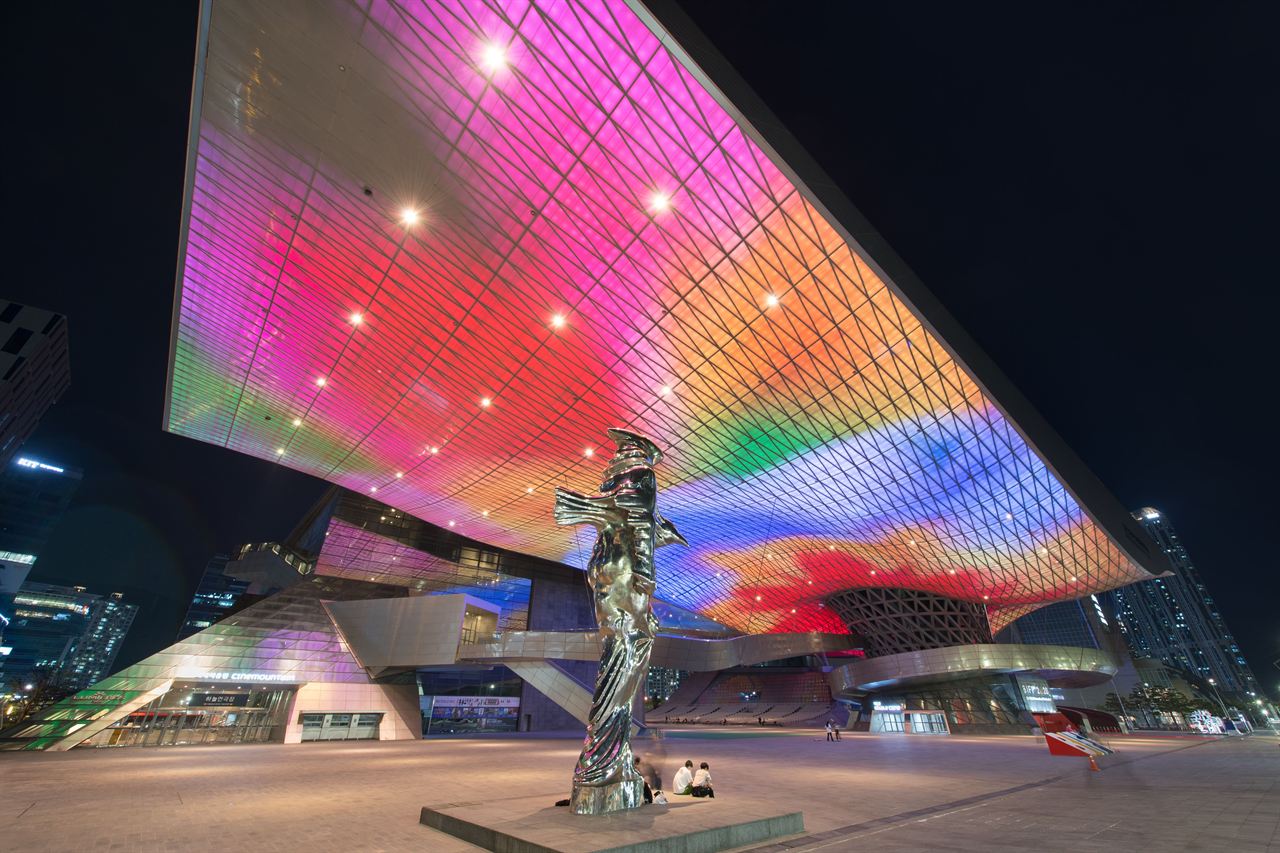
Haeundae Beach, the Dongbaekseom coastal walk to Nurimaru APEC House, Marine City and The Bay 101 at night, the Busan Cinema Center.

What to see
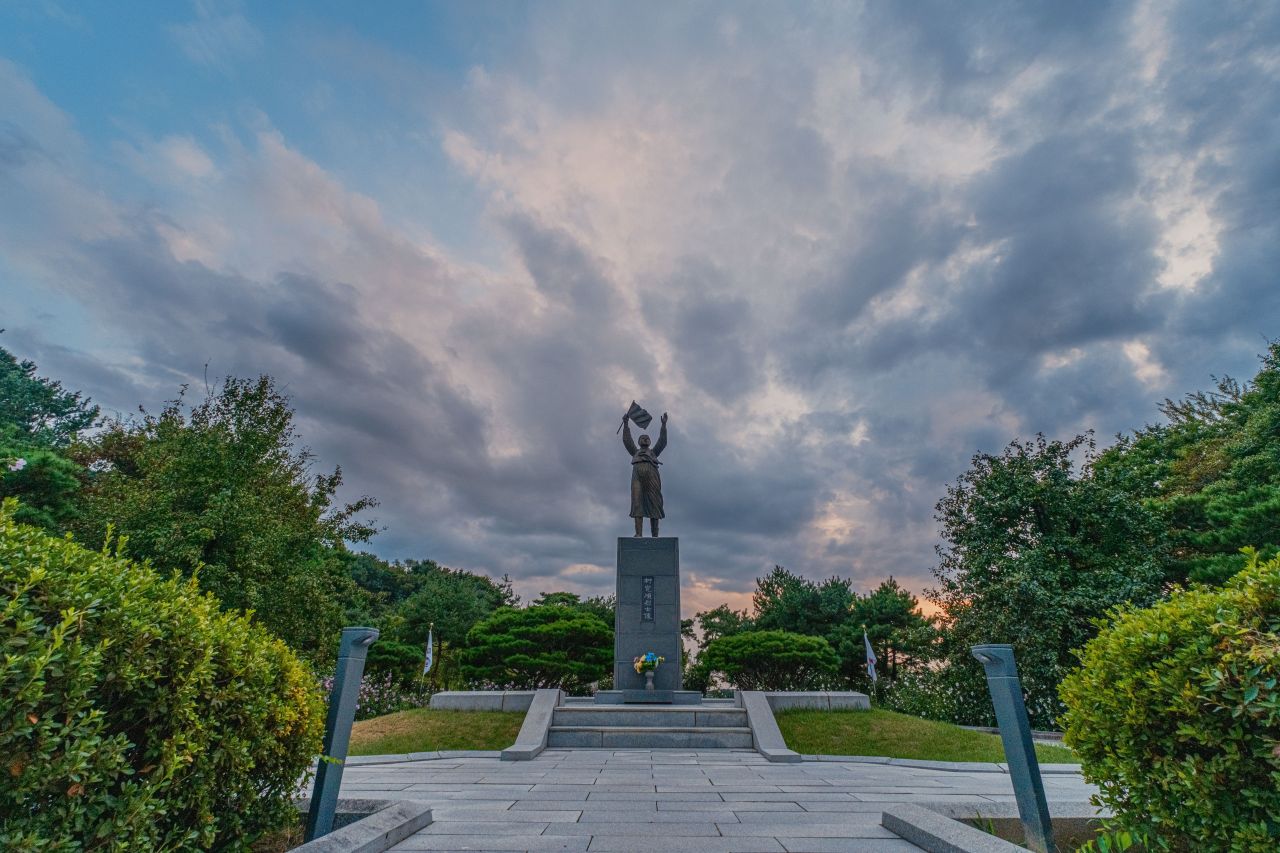
The UN Memorial Cemetery and UN Peace Memorial Hall, the General Whitcomb statue, the Igidae coastal path, Naeho Naengmyeon.
What to see
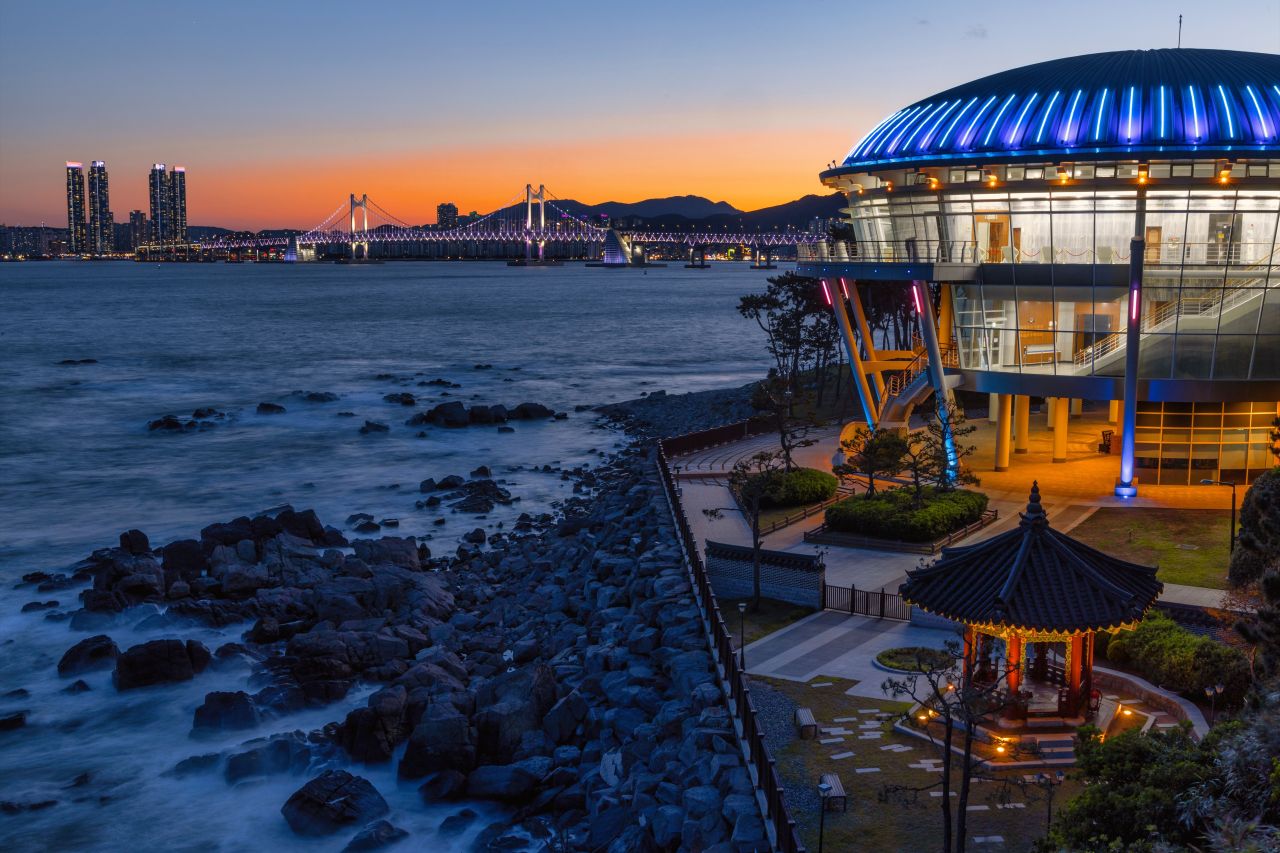
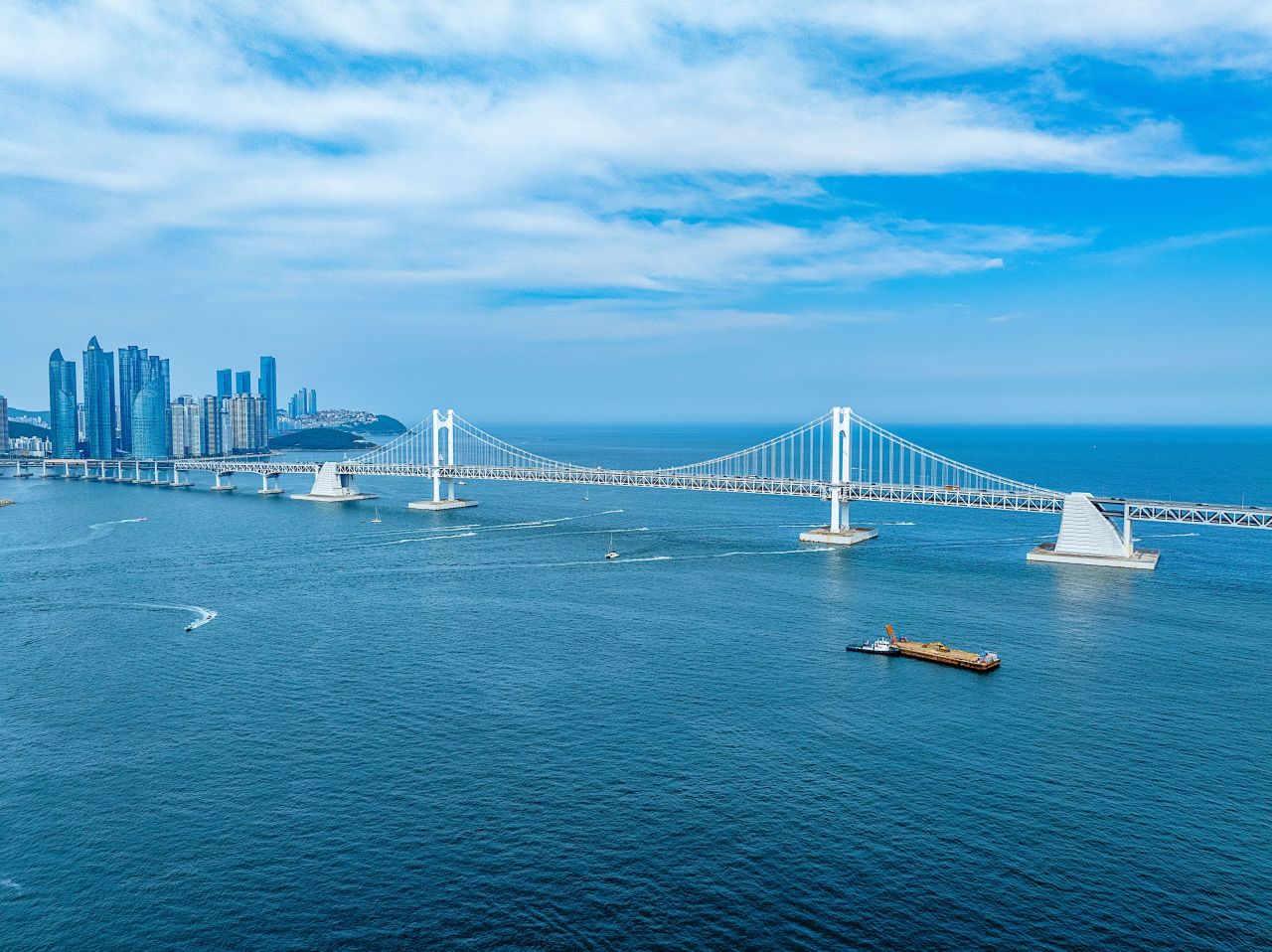
Gwangalli at night, the Saturday drone show, the Busan Fireworks Festival on 7 November 2026. From the beach, a public yacht tour leaves the Gwangalli Marine Sports Center (about US$18), and Kent Hotel Gwangalli is steps from the sand (about US$88 a night on 3 November 2026). Those two Klook links are affiliate links: if you book through them, Korea Routes may earn a commission, at no extra cost to you.
All 15 districts and Gijang county, one line each
| District | Why go | Look for |
|---|---|---|
| Jung-gu | The old centre | Jagalchi, Gukje Market, BIFF Square, Yongdusan Park |
| Seo-gu | Songdo Beach and its sea cable car | Provisional Capital Memorial Hall |
| Dong-gu | Right in front of Busan Station | Choryang Ibagu-gil and the 168 Steps, Joseon Tongsinsa History Museum |
| Yeongdo-gu | An island district | Taejongdae cliffs, Huinnyeoul village, Yeongdo Bridge, Samjin Eomuk |
| Busanjin-gu | Seomyeon downtown | Busan Citizens Park (former US Camp Hialeah), the Swedish war memorial |
| Dongnae-gu | Busan's old centre before the port | Dongnae Eupseong, Chungnyeolsa, Bokcheon-dong tombs, hot springs |
| Nam-gu | Remembrance and coast | UN Memorial Cemetery, Igidae |
| Buk-gu | Mostly residential | Hwamyeong riverside park |
| Haeundae-gu | The beach city | Haeundae, Dongbaek Island, Nurimaru |
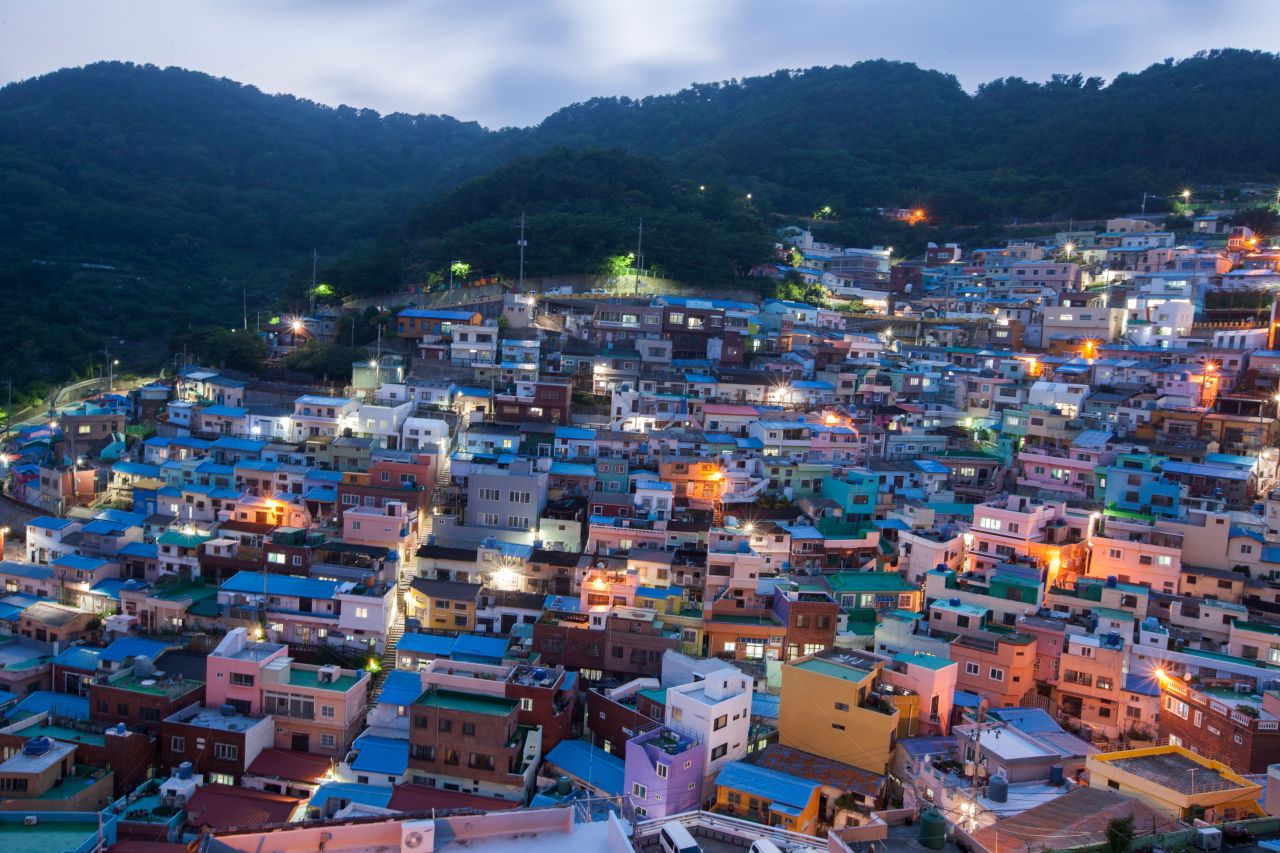
| Saha-gu | Sunsets and a refugee village | Gamcheon Culture Village, Dadaepo Beach, Eulsukdo birds |
| Geumjeong-gu | Mountain temple and fortress | Beomeosa, Geumjeong Fortress |
| Gangseo-gu | Gimhae airport | Daejeo canola fields, salty tomatoes |
| Yeonje-gu | City hall and the stadium | Asiad Main Stadium, Oncheoncheon stream |
| Suyeong-gu | The bridge at night | Gwangalli, drone show, fireworks |
| Sasang-gu | Mostly industrial and residential | Samnak riverside park |
| Gijang-gun | Coast and seafood | Haedong Yonggungsa, Daebyeon port anchovies, theme parks |
Photos: Korea Tourism Organization photo gallery — Haeundae by Busan Tourism Organization (2020), UN Memorial Cemetery by Oh Gyeong-taek (Sep 2023), Gwangan Bridge by Lee Byeong-hyeon (Jun 2024).
Getting here and around
From Seoul: KTX from Seoul Station to Busan in 2 h 18 min (₩54,400) or from Suseo (₩52,900), after the fare cut of September 2026. Express buses from Seoul Express Bus Terminal to Busan's Nopo terminal take about 4 h 20 min (deluxe ₩43,300; premium ₩56,200). Flights from Gimpo to Gimhae take about an hour.
From Gimhae airport: the light rail to Sasang connects to Metro Line 2; Airport Limousine 1 runs to Centum City, Dongbaek Island and Haeundae Beach (adult ₩9,500 since January 2026).
Around the city: Busan has a metro, buses and taxis; for cards, apps and taxi tips see our transport guide. Busan is long and hilly: from Busan Station alone, Beomeosa in the north is about an hour away by metro and bus.
Watch out
Typhoons are most frequent in August, and the most damaging ones tend to come from late August to mid-September.
Gamcheon and Huinnyeoul are places where people live. Go early, keep your voice down and do not photograph inside homes.
Markets: carry some cash in small notes; some stalls do not take foreign cards.
Outdated tips you will still find online
| You may read | Correct in 2026 | Source |
|---|---|---|
| Seoul–Busan KTX ₩59,800 | ₩54,400 since the KTX–SRT merger (1 Sep 2026) | Etoday, Wikitree |
| Yeongdo Bridge lifts daily at 2 pm | Saturdays only, and suspended since 10 Oct 2026 | Busan City, YTN |
| Busan City Tour ₩15,000, daily | ₩20,000, no service Mon–Tue | citytourbusan.com |
| Visit the Busan Modern History Museum (old US cultural centre building) | That annex closed in 2022; the museum reopened in 2024 as the Busan Modern and Contemporary History Museum, 104 Daecheong-ro | Busan City |
FAQ
How many days do I need in Busan?
Two to three days: one for the old centre and the refugee story, one for Haeundae and Gwangalli, and half a day for Beomeosa or Taejongdae.
Where should I stay?
Haeundae or Gwangalli for the sea and nightlife, Seomyeon for shopping and transport, Nampo-dong near Busan Station for markets and history.
Is Busan good for a BTS trip?
Yes. Jimin and Jungkook are from Busan, and the Asiad Main Stadium hosted BTS concerts in 2022 and 2026. Dadaepo Beach, Gamcheon's fan murals and the stadium are all easy to add to a Busan day.
Can I fly straight to Busan?
Yes. Gimhae airport has international flights. There are no flights between 11 pm and 6 am (night curfew).
Sources (checked 23–24 October 2026)
Busan Metropolitan City (basic statistics, wartime capital pages, events); 2025 census as reported by Nocut News; Encyclopedia of Korean Culture and the Busan regional encyclopedia (history, food origins, shoe industry); Korea Heritage Service; UN Memorial Cemetery (unmck.or.kr) and UN Peace Memorial Hall; KNN, Korea JoongAng Daily, Kormedi, Dailian and The Fact for the war memorials; TenAsia, Newsis, Insight, Marie Claire Korea and others for stars' Busan links; SBS program pages and Sports Kyunghyang for variety shows; Seoul Shinmun, Busan Ilbo, Cine21 and GQ Korea for filming locations; Korea Tourism Organization data, Blueline Park and Busan City Tour official sites for date and family places; Naver Place for restaurant prices and TV listings; train fares from Korail data and news on the KTX–SRT merger. Videos are embedded from their creators' YouTube channels. Photos: Korea Tourism Organization photo gallery; none were taken in 2026.


Comments
Post a Comment