



















Namhansanseong Fortress Hike from Seoul: Trails, Hours
Namhansanseong Fortress stands on a mountain about 25 km south-east of central Seoul: take Seoul Subway Line 8 to Sanseong Station (산성역), then bus 9 or 52 to the last stop, Namhansanseong, a ride of 26 to 43 minutes.
Walking the walls is free every day; only the Haenggung, the king's temporary palace, charges (2,000 won for adults, 10:00–17:00 from November to March, closed on Mondays unless it is a public holiday).
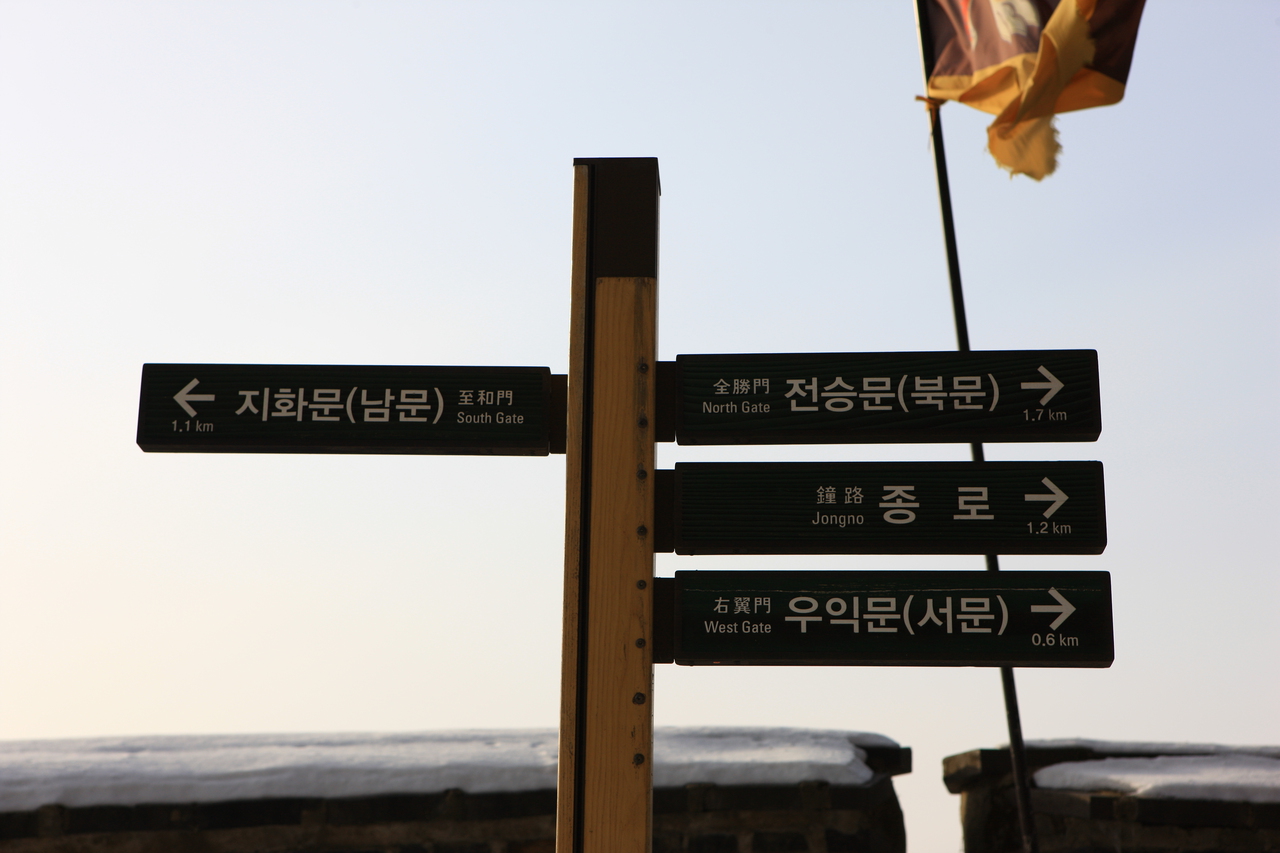
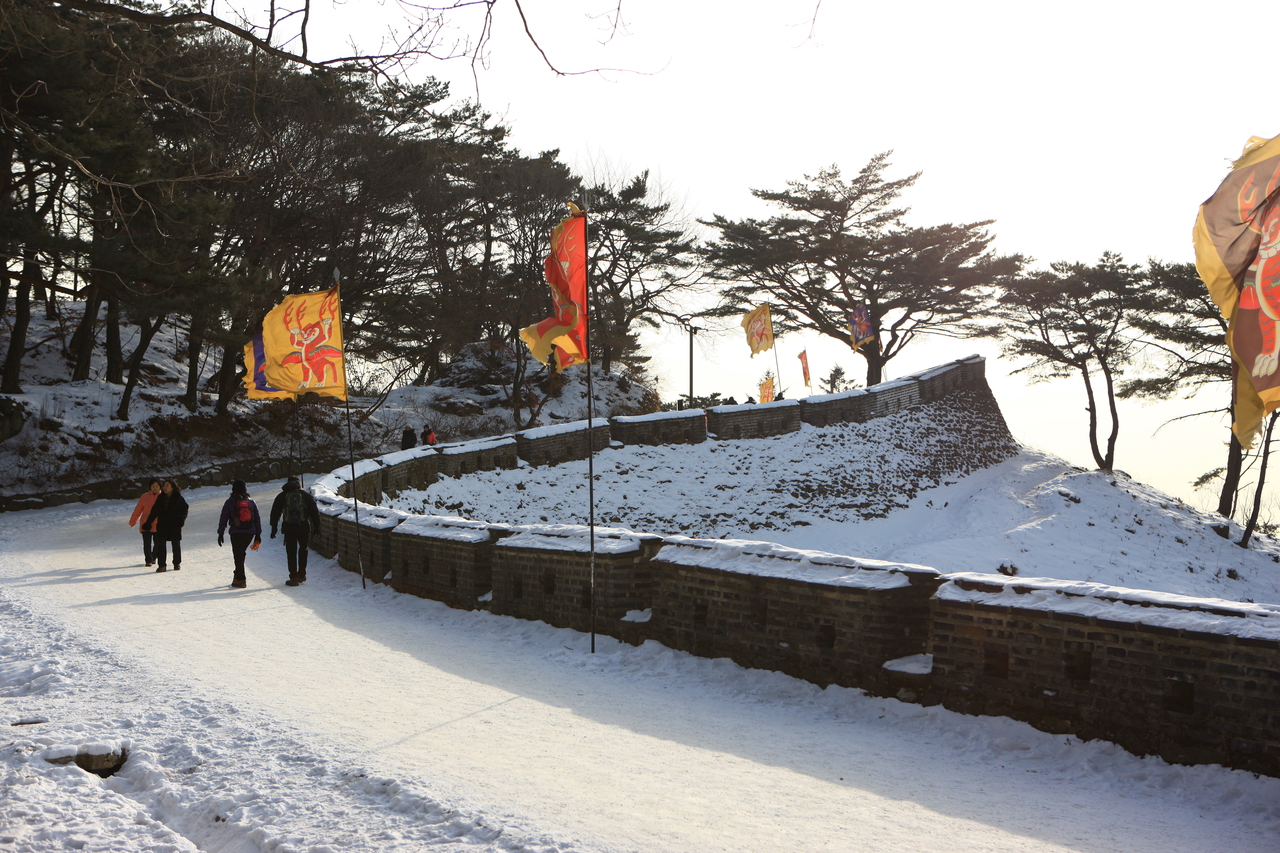
The easiest loop, course 1, is about 3.8 km and takes 1 hour 20 minutes past the North, West and South gates and the Sueojangdae command post. From late November to early January the sun sets over Seoul at about 17:15–17:25 (later from mid-January), so see the palace first and the West Gate view last.
Korea › Gyeonggi-do › Gwangju-si
What: a mountain fortress city built in 1624–1626 as an emergency capital; UNESCO World Heritage since 22 June 2014
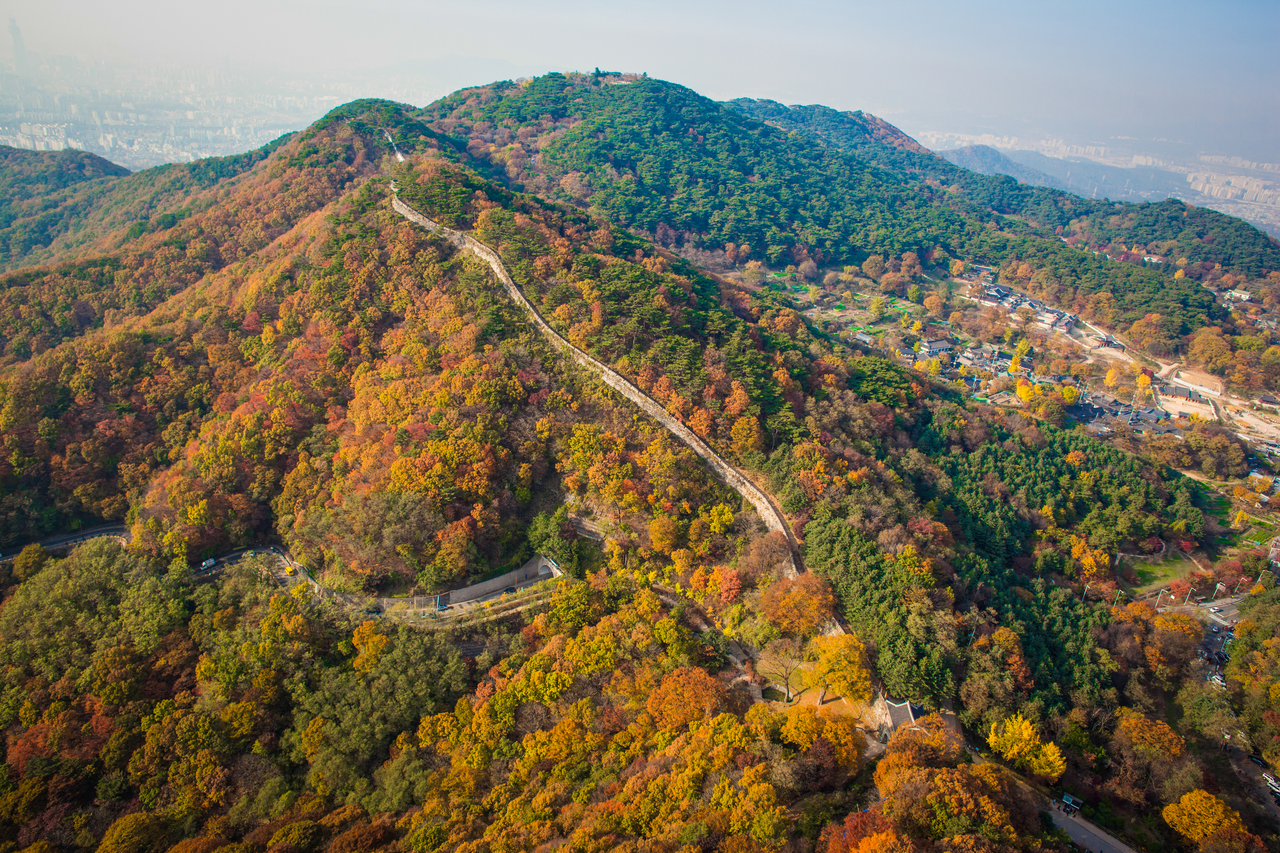
Walls: about 12.4 km in all, free, open every day
Haenggung palace: adults 2,000 won, ages 7–18 1,000 won; free for under-7s, 65 and over, Gyeonggi residents and anyone in full hanbok
Winter hours: 10:00–17:00 (November–March), last ticket 16:30, closed Mondays except public holidays
Getting there: Line 8 to Sanseong Station, then bus 9 or 52 (9-1 on holidays) to the last stop
Time needed: half a day; a full loop of the walls is 7.7 km, about 3 hours 20 minutes
Where to stay: a day trip from Seoul; sleep in Jamsil or central Seoul
Checked 14 November 2026 with the sources at the end.
In this guide
- Map
- The five trails: which to walk
- Haenggung, the temporary palace
- Getting there from Seoul
- History: records, legends, ruin and rebuilding
- The winter of 1636: 47 days
- The monks who built the walls
- Sunset at the West Gate
- On screen and videos
- Food: the chicken village
- Nearby
- Couples and families
- What a day costs
- Where to stay
- Watch out, and outdated tips
- Quick answers
Map
B is the bus terminus by the Sanseong Rotary; 1 is the palace; 2 to 5 are the North Gate, West Gate, Sueojangdae and South Gate. The red line follows course 1 from the bus stop on OpenStreetMap footpaths, about 4.9 km, a little longer than the official 3.8 km. Tap a marker for its name.
Map © OpenFreeMap, data © OpenStreetMap contributors. Use Naver Map or KakaoMap for directions in Korea; search 남한산성 for the fortress or 남한산성행궁 for the palace.
The five trails: which to walk
The fortress office lists five signposted courses. Courses 1, 2 and 4 start at the Sanseong Rotary next to the bus terminus; 3 and 5 start at the World Heritage Centre a short walk east.
| Course | Distance, time | What you pass |
|---|---|---|
| 2 | about 3 km, 1 hour | Yeongwoljeong pavilion, Sueojangdae, West Gate, Gukcheongsa temple, Sungnyeoljeon shrine |
| 1 | 3.8 km, 1 hour 20 min | North Gate, West Gate, Sueojangdae, South Gate; described by the tourism organisation as gentle enough for beginners |
| 4 | 3.8 km, 1 hour 20 min | South Gate, the site of the south command post, East Gate, Jisudang pavilion, Gaewonsa temple |
| 3 | 5.7 km, 2 hours | Hyeonjeolsa shrine, Beolbong peak, Janggyeongsa temple, Mangwolsa temple, East Gate |
| 5 | 7.7 km, 3 hours 20 min | Almost the whole main wall: East, North, West and South gates and Sueojangdae |
Distances and times: Gyeonggi-do Namhansanseong World Heritage Centre, trails page (updated 24 October 2024). The English version of the page gives 2.8 km for course 2.
For a first visit, course 1 covers the gates and the one surviving command post. Sueojangdae stands at 482 m on Cheongnyangsan, the highest point of the west wall; it is the only one of the fortress's five command posts still standing.

Haenggung, the temporary palace
The Haenggung was the palace where a king could live and rule if he had to leave Seoul. King Injo lived here during the 47-day siege of 1636–37, and in 1711 a shrine was added to hold the royal ancestral tablets in an emergency. Most of what you see was rebuilt from 1999 and reopened on 24 May 2012.
| Item | Winter (Nov–Mar) | Note |
|---|---|---|
| Hours | 10:00–17:00 | 10:00–18:00 from April to October; last ticket 30 minutes before closing |
| Closed | Mondays | Open when Monday is a public holiday |
| Adults (19–64) | 2,000 won | 1,600 won each in groups of 30 or more |
| Ages 7–18 | 1,000 won | 800 won in groups |
| Free | Under 7, 65 and over, Gyeonggi residents (ID), hanbok | Hanbok means traditional dress, top and bottom |
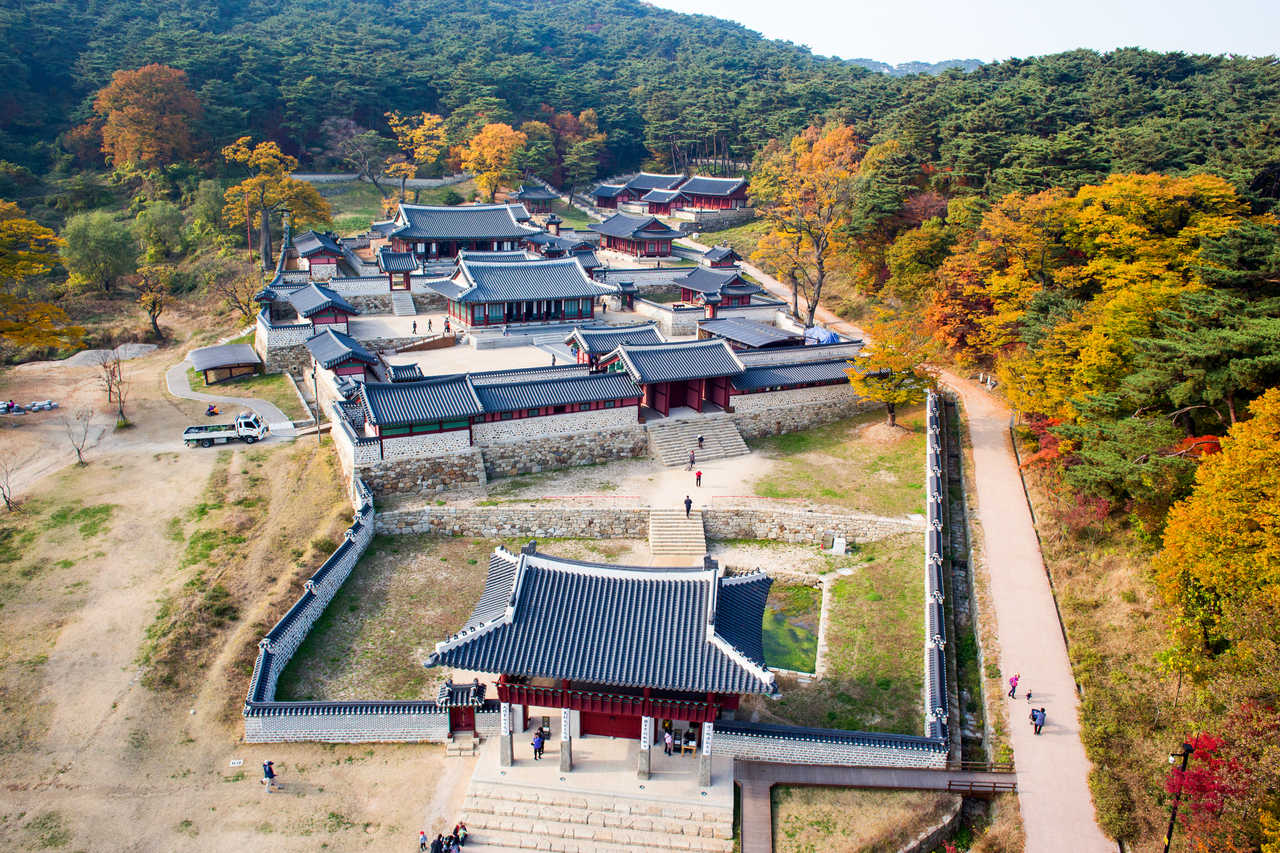
Tours. Free Korean-language palace tours of about an hour, for groups of five or more, leave from in front of the Hannamnu gate at 11:00 and 14:00 on winter weekdays and at 11:00, 13:00, 14:00 and 15:00 at weekends (031-746-1088); buy your palace ticket first.
The official page still lists English tours but also says they were suspended during Covid-19; ask on 031-746-2845 before you count on one.
Getting there from Seoul
Take Line 8 to Sanseong Station (산성역); from Jamsil it is 19 minutes. Buses 9 and 52, plus 9-1 on holidays, run up the mountain in 26 to 43 minutes; get off at the last stop, Namhansanseong. Pay with a T-money card; our Seoul transport guide explains how.
Line 8 also has a station called Namhansanseong (남한산성입구, "Namhansanseong entrance"). The official bus directions start from Sanseong, so check the station name before you get off the train.
From Moran Station (Line 8 and the Suin-Bundang Line), bus 52 takes 39 minutes and bus 9 takes 64, from exits 2 and 3. From Gyeonggi Gwangju Station (Gyeonggang Line), bus 15-1 takes 58 minutes. All end at the Namhansanseong stop; the timetables are not on the official page, so check them in KakaoMap or Naver Map.
From Seoul's side, a steep path climbs from near Macheon Station (Line 5, exit 1) to the West Gate; a Seoul city news article gives about 3 km and 1 hour 30 minutes. It is the shortest way to the sunset viewpoint, but in the dark or on ice it is better to go down by bus.
The fortress has four paid car parks inside the walls (pay as you leave). A car is 3,000 won on weekdays and 5,000 won on public holidays, free if you leave within 30 minutes and free from 20:00 to 09:00.
The official page does not say which rate applies at weekends; ask on 031-8008-5150. The office warns that roads are very busy on holidays.
The free shuttle between the lower car park and the central car park runs only at weekends from March to November, and not in July and August, so it does not run from December to February.
History: records, legends, ruin and rebuilding
The Silla kingdom built a fortress called Jujangseong on this mountain in 672, according to the World Heritage Centre; excavations in 2005 found walls believed to be part of it. The fortress you walk today was rebuilt in 1624–1626 under the military commander Yi Seo on the old site, as a refuge for the court in war.
When it was finished in 1626 the walls ran 6,297 paces with 4 gates and 16 hidden gates, and the county government moved inside. UNESCO inscribed it in 2014 as an example of a fortified city planned as an emergency capital, showing how fortress building and firearms were exchanged across East Asia in the 17th century.
| Story | Source | Record or legend? |
|---|---|---|
| Silla built Jujangseong here in 672 | Samguk Sagi, as cited by the World Heritage Centre; the Encyclopedia of Korean Culture gives 673 | Record |
| Baekje's founder Onjo had his capital here | Joseon-era geography books; excavations found Baekje houses but no Baekje walls | Tradition |
| Monks from all eight provinces built the walls in 1624–26 | World Heritage Centre; Encyclopedia of Korean Culture | Record |
| Yi Hoe, in charge of the south-east wall, was wrongly executed, and Cheongnyangdang shrine was built to calm his spirit | The World Heritage Centre says it "has been handed down" | Legend |
| Onjo helped King Injo in a dream, so Onjo and Yi Seo share Sungnyeoljeon shrine | World Heritage Centre | Legend |
| A Qing cannonball fired from Hanbong hit a pillar of the lower palace hall | The World Heritage Centre says "there is a record" | Record (source not named) |
| Year | What happened | What you see now |
|---|---|---|
| 1624–26 | Walls rebuilt and the palace built | The main wall |
| 1636–37 | King Injo holds out for 47 days in the Qing invasion | The palace, the West Gate |
| 1751 | The west command post rebuilt with two storeys and named Sueojangdae | Sueojangdae |
| 1907 | On 1 August, the day the Korean Empire's army was disbanded, the Japanese army blew up weapons stored in the fortress temples; temples were lost | Gaewonsa, rebuilt in 1976 |
| 1909 on | The palace, intact until 1909, is damaged under Japanese rule | — |
| 1971 | Made a provincial park on 17 March | The park |
| 1999–2012 | Palace excavated and rebuilt; reopened 24 May 2012 | The Haenggung |
| 2014 | UNESCO World Heritage, 22 June, Korea's 11th | — |

The winter of 1636: 47 days
In the twelfth lunar month of 1636 a Qing army invaded Joseon.
On the 14th, told that Qing troops were already near Seoul, King Injo left the capital at dusk and reached Namhansanseong after nightfall; the next morning he set out for Ganghwa Island, but snow had frozen the mountain road, and he turned back (Annals of King Injo).
Inside the walls the court argued for weeks. On the 18th of the first month of 1637, Kim Sang-heon, who opposed surrender, tore up the reply that Choe Myeong-gil was drafting to the Qing, the annals record. Kim Sang-heon's memorial tablet was later placed at Hyeonjeolsa shrine, on course 3.
On the 30th of the first lunar month, 24 February 1637 in today's calendar, the annals say the king put on a plain blue robe, rode a white horse without his royal procession, and left through the West Gate with about 50 attendants.
At Samjeondo by the Han River he performed three kneelings and nine bows, and the crown prince was held back by the Qing, to be taken north.
The plaque inside Sueojangdae, hung in 1751, reads Mumangnu, "the pavilion of not forgetting".
The monks who built the walls
For the rebuilding, the court made the monk Byeogam Gakseong commander of monks for all eight provinces, and monks were called up in turns to build the walls. They stayed on as the garrison, and the fortress held up to ten temples for them, with Gaewonsa as headquarters.
The World Heritage Centre says only Janggyeongsa, built in 1638 for the monk-soldiers, still keeps its old form; it is on courses 3 and 5. The monk garrison system was abolished in 1894.
Sunset at the West Gate
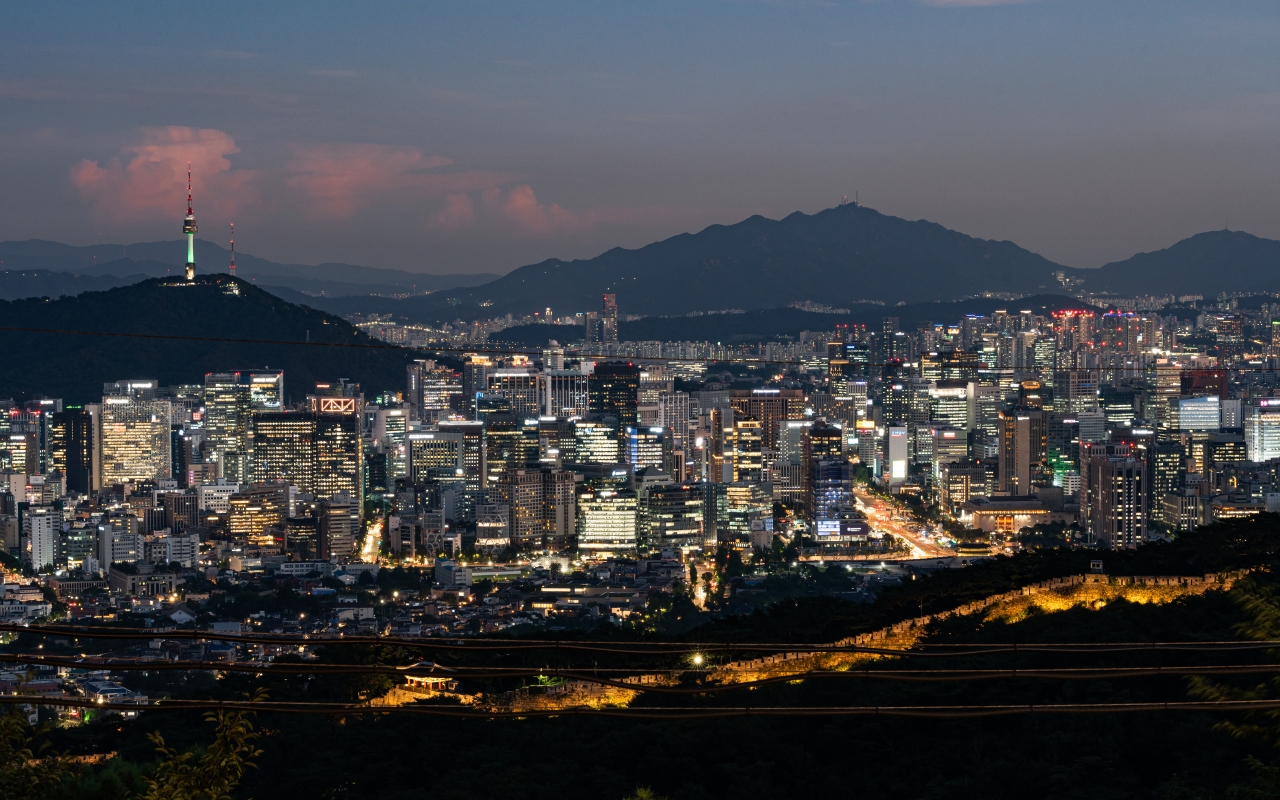
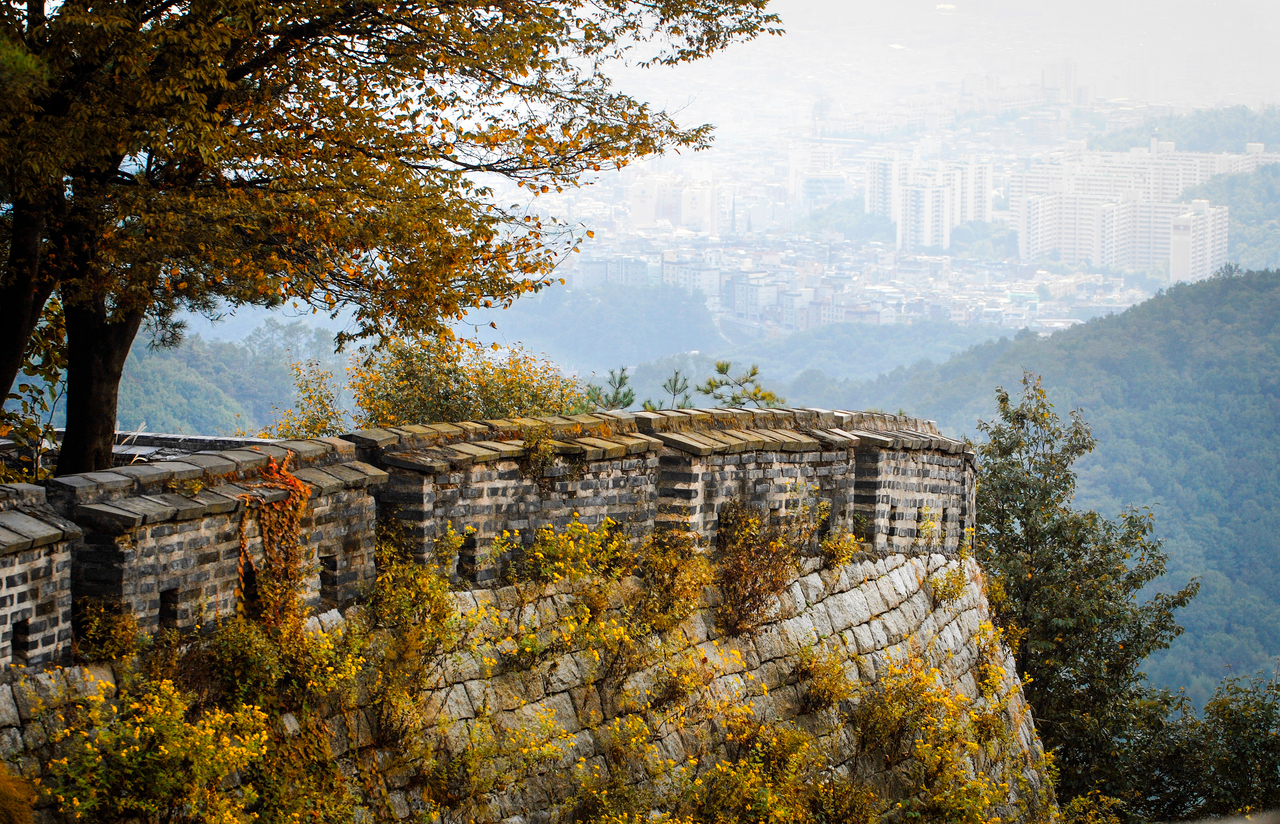
From the viewpoint by the West Gate the sun goes down behind Namsan, and below you lie Lotte World Tower, the Wirye new town and Mongchon fortress (Seoul city news, 2018).
In Seoul the sun sets at 17:22 on 14 November and at about 17:14 in early December, and it is fully dusk about half an hour later (sunset and twilight times: Korea Astronomy and Space Science Institute). The palace closes at 17:00, so visit it first, then walk about 25–30 minutes from the rotary car parks to the gate.

On screen and videos
The siege is the story of Kim Hoon's 2007 novel Namhansanseong and of the film The Fortress (2017), directed by Hwang Dong-hyuk and starring Lee Byung-hun and Kim Yun-seok, released on 3 October 2017. The film was made mainly on open sets built in Pyeongchang, Gangwon (CJ Entertainment, as reported by Yonhap and Dailian).
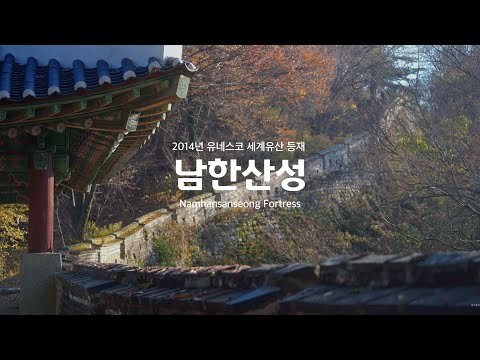 ▶
Namhansanseong Fortress [UNESCO World Heritage in Korea] — Korea Heritage Service
The national heritage agency's own short film, with English subtitles (April 2026).
 ▶
[4K][The K-Palette] Namhansanseong Fortress — Arirang TV
A one-minute 4K look at the walls and gates from Korea's English-language broadcaster (June 2026).
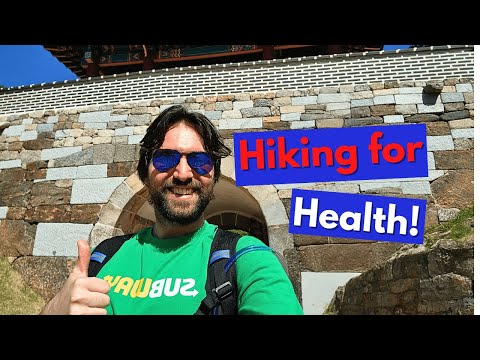 ▶
Hiking The Most Stunning Fortress in Seoul: Namhansanseong — Seoul Lovin
A foreign traveller's walk along the walls, useful to see the paths and gates before you go (May 2025).
Food: the chicken village
Around the rotary is a village of about 70 restaurants in hanok buildings, listed by the Korea Tourism Organization as a traditional food village, serving rice meals, acorn jelly, native chicken and spicy braised chicken. A Gyeonggi province essay traces it to villagers who began selling chicken porridge after the fortress lost its role as a military town.
Yongmaru (용마루), on the road towards Gukcheongsa, opened in 1979 and was named a "100-year shop" by the Ministry of SMEs and Startups, according to Gyeonggi province's magazine; check on Naver Map that it is open before you go. Opening days vary by restaurant (tourist information 031-762-3010).
Nearby
| Place | Why go | Hours, cost |
|---|---|---|
| Namhansanseong History and Culture Museum (남한산성역사문화관) | The fortress's history indoors; a warm stop in winter | 10:00–18:00, last entry 17:30; closed Mondays except holidays, 1 January, Seollal and Chuseok; free |
| Janggyeongsa temple | The one monk-soldiers' temple that keeps its old form | Open daily (tourism organization listing) |
| Hwadamsup forest garden | Gardens and a monorail in the same city, about 18 km away in a straight line | Its season ends in late November; see our Hwadamsup guide |
| Seoul City Wall | Another Joseon wall walk, inside Seoul | See our Naksan city wall walk |
Couples and families
| Idea | Why |
|---|---|
| Palace, then the West Gate at sunset | Sunset about 17:15 in late November and December |
| Hanbok for the palace | Free entry in full traditional dress |
| Chicken dinner by the rotary | Restaurants are next to the bus stop for the ride down |
| Idea | Why |
|---|---|
| Course 2 | The shortest loop, about 1 hour |
| Haenggung | Under-7s free, ages 7–18 1,000 won |
| History and Culture Museum | Free and indoors on a cold day |
Parts of the wall paths are steep, so a pushchair suits the palace area and the rotary better than the trails.
What a day costs
| Item | Cost |
|---|---|
| Walls and trails | Free |
| Haenggung palace | 2,000 won (adult) |
| Subway and bus | A few thousand won each way on T-money |
| Lunch, for comparison | about 12,000 won (Seoul average for bibimbap, September 2026) |
The links in this section are affiliate links: if you book through them, Korea Routes may earn a commission, at no extra cost to you.
To skip the two buses, the Hwadam, Namhansanseong and Folk Village day trip on Klook is a small-group day tour from Seoul that stops at the palace (Hwadamsup closes in winter, so check the winter itinerary before you book), and a Korea eSIM keeps the bus-times app working on the mountain.
Where to stay
There are no hotels inside the walls, and the fortress is an easy day trip. Jamsil on Line 8 is 19 minutes from Sanseong Station, and the three Seoul bases in our Seoul travel guide are all an hour or so away by subway.
Watch out, and outdated tips
· Trekking poles, pets, alcohol and picnic mats are not allowed into the palace and other heritage buildings.
· Wild boars are more aggressive in November and December, the park office says: do not provoke them, and move away slowly.
· After snow, the paths on the walls and the climb from Macheon can be slippery; light spikes for your shoes help.
· Holidays and weekends are crowded, and the buses can be packed.
Outdated tips you will still find online
| You may read | What is right | Source |
|---|---|---|
| Bus 9-1 or 52 takes 11 minutes | 26–43 minutes from Sanseong Station; 9-1 runs on holidays | World Heritage Centre |
| Children pay 1,000 won | 1,000 won is for ages 7–18; under-7s are free | World Heritage Centre |
| The palace opens Tuesday to Sunday | Closed Mondays, but open when Monday is a public holiday | World Heritage Centre |
| English palace tours run daily | The official page says they were suspended for Covid-19; call to check | World Heritage Centre |
| The fortress was built in 1621 | Repairs began in 1621; the rebuilding was 1624–1626 | World Heritage Centre |
| The Fortress (2017) was filmed here | It was made mainly on sets in Pyeongchang | CJ Entertainment via Yonhap |
Quick answers
What are Namhansanseong Fortress opening hours?
The walls are open at all times. The Haenggung palace is open 10:00–17:00 from November to March and 10:00–18:00 from April to October, closed on Mondays unless they are public holidays.
How do I get to Namhansanseong Fortress from Seoul?
Line 8 to Sanseong Station, then bus 9 or 52 (9-1 on holidays) to the last stop, Namhansanseong: 26 to 43 minutes by bus.
How long is the Namhansanseong fortress hike?
Course 2 is about 3 km and 1 hour, course 1 is 3.8 km and 1 hour 20 minutes, and the full loop is 7.7 km and 3 hours 20 minutes.
Is Namhansanseong free?
Yes for the walls, which have been free since 1 January 2007. The palace costs 2,000 won for adults.
Why is Namhansanseong a UNESCO World Heritage Site?
It was inscribed on 22 June 2014 as a mountain fortress city planned as an emergency capital, built and garrisoned by monk-soldiers.
Sources (checked 14 November 2026)
Gyeonggi-do Namhansanseong World Heritage Centre, Korean and English pages (admission and parking, updated 10 September 2026; trails, updated 24 October 2024; public transport, updated 29 October 2025; shuttle; tours; visiting rules; park safety; history, the palace and heritage buildings); UNESCO World Heritage Centre (Decision 38 COM 8B.29 and property 1439); Annals of the Joseon Dynasty, King Injo, 1636–37 (National Institute of Korean History); Encyclopedia of Korean Culture (Namhansanseong, the palace, the monk garrison); Korea Tourism Organization TourAPI (Sueojangdae, trails, traditional food village, Janggyeongsa); Namhansanseong History and Culture Museum; Gyeonggi province magazine (Yongmaru, chicken village); Korea Astronomy and Space Science Institute (sunrise and sunset, Seoul); Seoul Metropolitan Government news site (West Gate view, 2018; Macheon path, 2026); Kyeongbuk Maeil/Yonhap and Dailian (The Fortress, 2017); Korea Consumer Agency (meal prices); The Soul of Seoul and Wikivoyage (older tips compared); OpenStreetMap (locations, walking route); Klook product pages. Videos are embedded from their creators' YouTube channels. Photos: Korea Tourism Organization photo gallery; not taken this year.


Comments
Post a Comment