






















Korea New Year Sunrise 2027: Best Spots, Times, Trains
At about half past seven on the first morning of the year, tens of thousands of people stand on a cold beach on Korea's east coast, facing the sea in the dark. Many have been on the road all night. When the sun clears the horizon, phones go up and people bow or shout a wish; at some spots, packs of rice-cake soup are handed out. On 1 January 2026, Gangneung counted about 300,000 people on its beaches; Homigot, further south, about 50,000. In Seoul, the night before ends with a bronze bell struck 33 times at midnight.
This guide is for New Year's sunrise in Korea on 1 January 2027: the official sunrise times, which beaches and hills to choose, what each place held last year, how to get there from Seoul without a car, what to eat, where to sleep near the sea, and the old tips that no longer hold. Tap a tab or open a box to read more.
Sunrise on 1 January 2027: 07:32 in Ulsan and Busan, 07:33 Pohang, 07:40 Gangneung, 07:47 Seoul (Korea Astronomy and Space Science Institute). The sky starts to brighten about 30 minutes earlier
2027 events: not announced yet; cities usually publish them in December. In 2026 Gangneung's beach events were free
Seoul on the night: the Bosingak bell is struck 33 times at midnight; in 2026 it was free, with no booking
Without a car: an overnight tour from Seoul, or the KTX to Gangneung on 31 December
Weather: about −6 °C at Homigot at dawn in 2026, feeling like −10 °C. Cloud can hide the sun
Checked 1 November 2026 with the sources at the end.

In this guide
- Map
- Sunrise times for 1 January 2027
- Seoul: the midnight bell and the hills
- Jeongdongjin and Gyeongpo, Gangneung
- Naksansa and Chuam: the eight views
- Homigot and Ganjeolgot
- Haeundae and Seongsan Ilchulbong
- When the events were cancelled
- Why Koreans watch the first sunrise
- What to eat
- Getting there
- Plans for the night
- Couples and families
- Videos
- Where to stay, tours, and before you go
- Watch out, and outdated tips
- FAQ
Map
Ten places, from Seoul to Jeju. The east coast faces the sunrise directly; Seoul's hills see it about 15 minutes later, over the mountains. Tap a number for its name.
Map © OpenFreeMap, data © OpenStreetMap contributors. Use Naver Map or KakaoMap for directions in Korea.
Sunrise times for 1 January 2027
The Korea Astronomy and Space Science Institute has published its times for January 2027. They are for each city's reference point at sea level, so a headland can be a minute or two off, and a hilltop sees the sun earlier. Seongsan Ilchulbong and Yangyang are not in the 2027 table; the times shown for them are 2026's, which change by less than a minute from year to year.
| Place | Sunrise, 1 Jan 2027 | Spots near it |
|---|---|---|
| Ulsan | 07:32 | Ganjeolgot |
| Busan | 07:32 | Haeundae |
| Pohang | 07:33 | Homigot |
| Seongsan, Jeju | 07:36 (2026) | Seongsan Ilchulbong |
| Donghae | 07:38 | Chuam |
| Gangneung | 07:40 | Jeongdongjin, Gyeongpo |
| Yangyang | 07:42 (2026) | Naksansa, Naksan beach |
| Seoul | 07:47 | Achasan, Haneul Park |
Ganjeolgot and Homigot both call themselves the first place on the mainland to see the new year's sun. In the institute's 2026 figures the gap was about one minute.
Seoul: the midnight bell and the hills
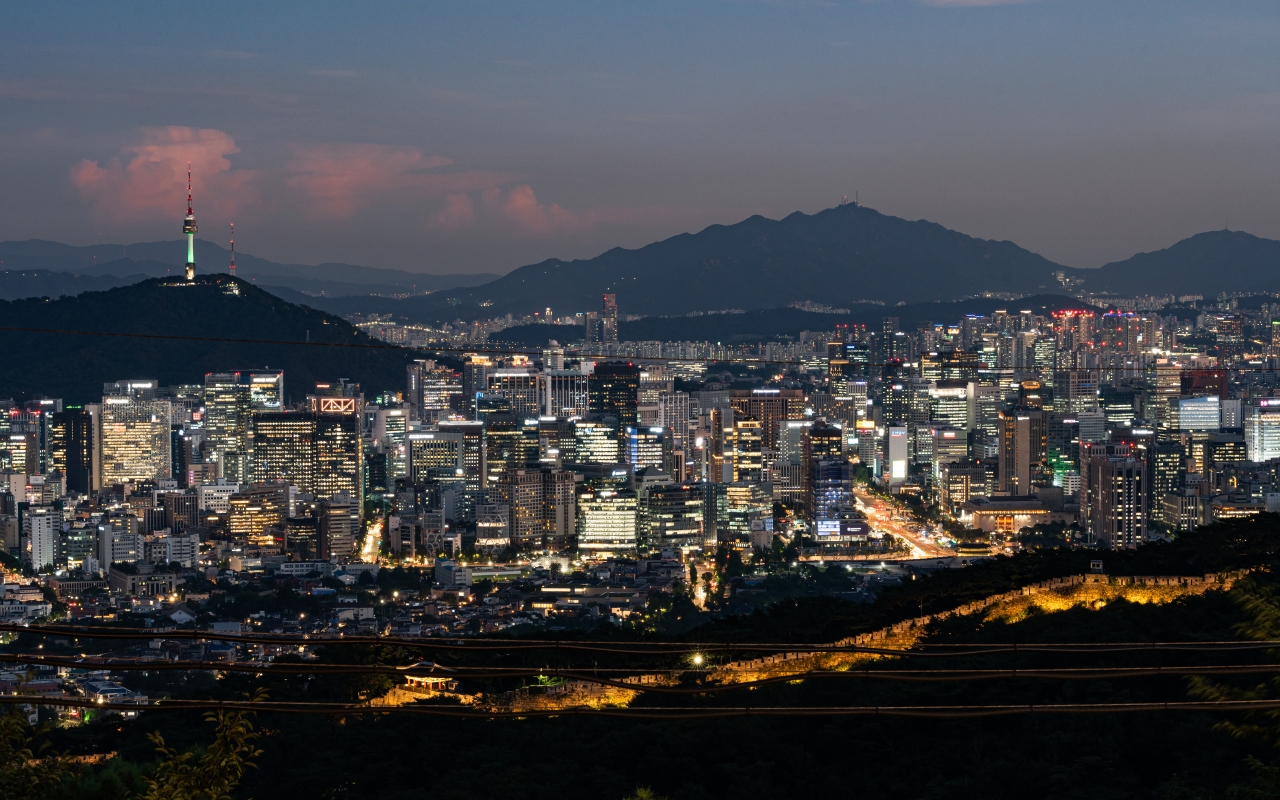
Bosingak, the bell pavilion on Jongno, holds Seoul's New Year's Eve ceremony. In 2026 it ran from 23:00 to 00:20: 11 citizens chosen by the city struck the bell 33 times at midnight, with media art on the pavilion and live music. There was no advance registration, and about 15,000 people came. The streets around it were closed to traffic from 18:00 on 31 December to 07:00 on 1 January, and subway trains did not stop at Jonggak station from 23:00 to 01:00; use City Hall, Jongno 3-ga, Euljiro 1-ga or Gwanghwamun. The subway ran extra trains until about 02:00. Our Seoul Lantern Festival guide covers the lanterns and the walk to the bell that night.
Why 33 strikes
In Joseon-era Seoul the bell was struck 33 times at about 4 a.m. to open the city gates. The number is also linked to the 33 heavens of Buddhism. The midnight ceremony began at the end of 1953, after Bosingak was rebuilt following the Korean War; the original bell is now in the National Museum of Korea, and a replica is rung.
For the sunrise itself, Seoul's districts held 16 sunrise events on hills and parks in 2026. Achasan in the east of the city, which the city calls the first place in Seoul to see the sun, started at 06:00 with drums and food; its paths are gentle. Haneul Park in Mapo released wish balloons. Namsan was not an event site. On 1 January 2026, the Seoul Sky observatory at Lotte World Tower, 500 m up, sold sunrise packages in advance on its own site.
Jeongdongjin and Gyeongpo, Gangneung
Jeongdongjin is a small station on the beach, said to lie due east of Seoul's royal palace. It became famous after the 1995 SBS drama Sandglass was filmed there, and the sunrise trip from Seoul became a tradition. On the hill stands a giant hourglass, 8.06 m across and 40 tonnes, which is turned at midnight on 31 December.

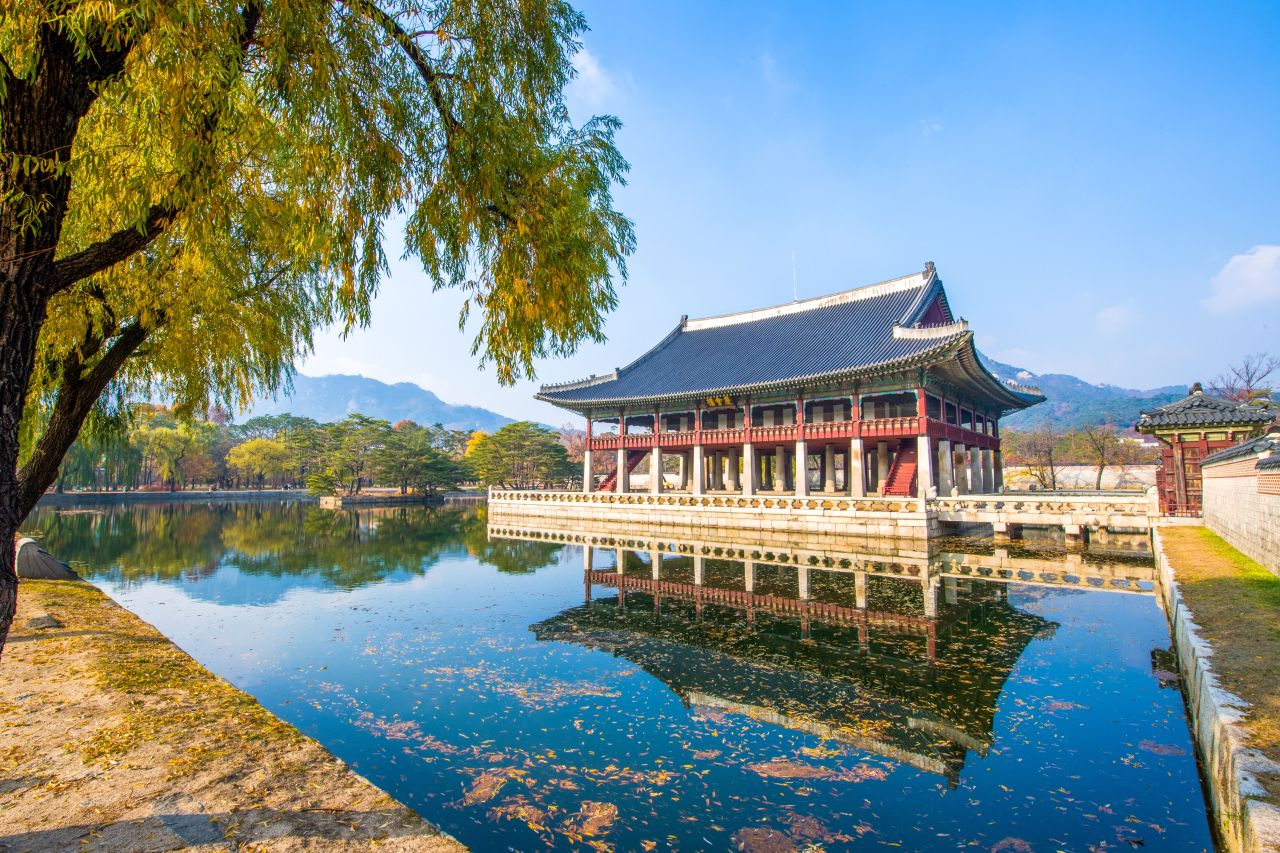
Above Gyeongpo lake stands Gyeongpodae, a pavilion that is one of the eight views of the east coast (see Naksansa below) and a national Scenic Site.
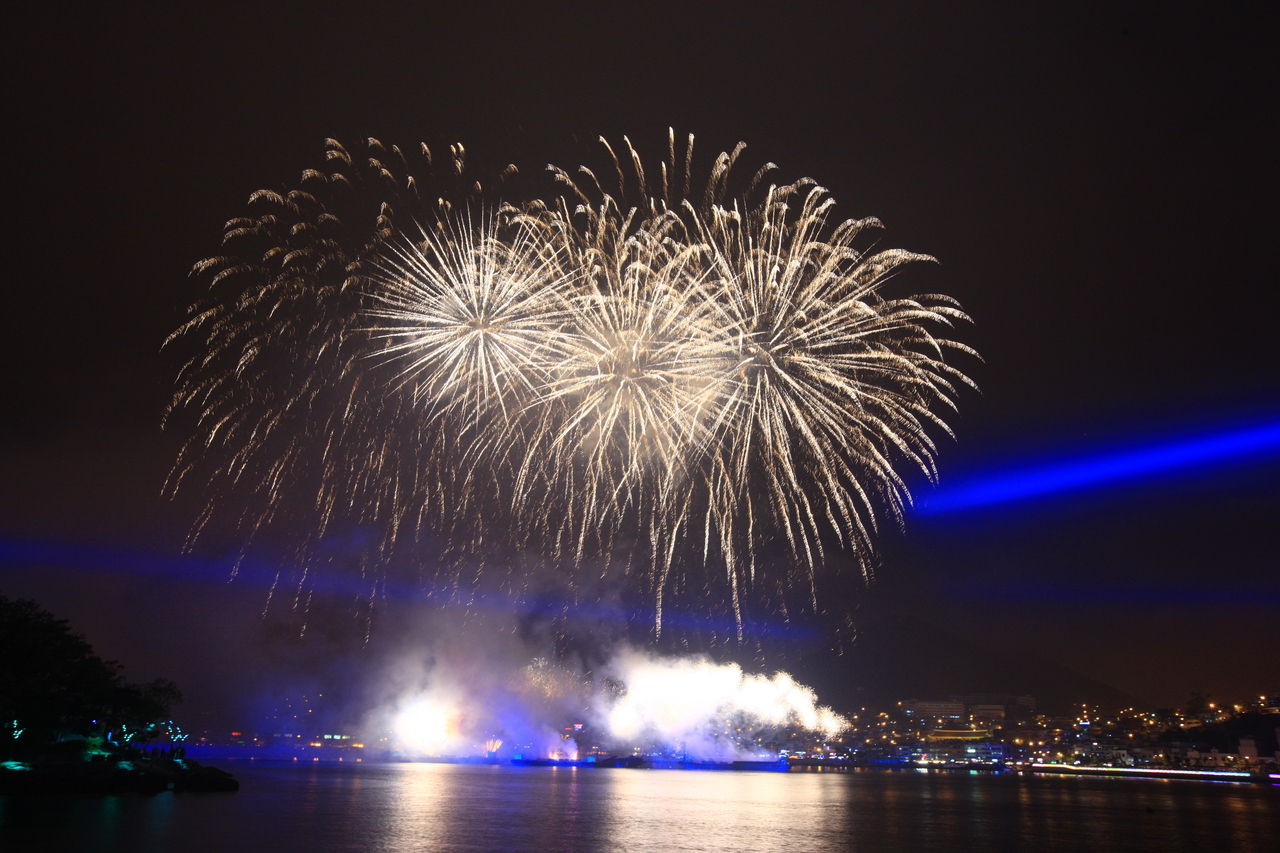
In 2026 Gangneung held its festival at Jeongdongjin's Sandglass Park and at Gyeongpo beach: shows, a countdown and fireworks from 20:00 on 31 December to 00:30, then sunrise events from 06:00 to 08:00 on 1 January. It was free. About 110,000 people came to Jeongdongjin and 130,000 to Gyeongpo, with the biggest crowds between 07:00 and 08:00. The coast guard posted officers on breakwaters and boats offshore.
A four-storey building on Jeongdongjin's breakwater can hide part of the sun from some places on the beach; Korean TV reported on it in 2015 and again in January 2026. Walk along the sand until the horizon is clear.
Naksansa and Chuam: the eight views
Naksansa, one of the eight views of the east coast
Naksansa in Yangyang, north of Gangneung, is a temple on a headland above the sea. Tradition says the monk Uisang founded it in 671, after praying by a sea cave where Gwaneum, the bodhisattva of compassion, was believed to live; the legend says she rose from the waves on a red lotus, and the small Hongnyeonam hermitage, "red lotus hermitage", stands over the cave. Naksansa is often named with Bomunsa on Ganghwa and Boriam on Namhae as one of Korea's three great shrines to Gwaneum.
The temple has burned more than once: in the Mongol invasions of the 13th century, in the Korean War, and on 5 April 2005, when a forest fire swept over the headland and destroyed most of its buildings. Its bronze bell, cast in 1469 and listed as a national Treasure, melted, and lost that status in July 2005; a replica hangs in its place. The temple was rebuilt over the following years. The white Haesu Gwaneum statue, 16 m tall, made in 1977 by the sculptor Kwon Jeong-hwan, was left standing.

The sunrise spot is Uisangdae, a small pavilion on the cliff built in 1925 where Uisang is said to have meditated, with a pine leaning over the sea. A Seoul sunrise tour offers it as one of its stops. Watching the dawn here is far older than the 1 January custom; writers of the Joseon era already praised it.
Gwandong Palgyeong: the eight views of the east coast
"Gwandong" is the land east of the Daegwallyeong pass, and its eight famous views, the Gwandong Palgyeong, run down the coast. The name was in use in literature before the 16th century, and the list of eight settled in the early 17th. In 1580 the poet Jeong Cheol, newly made governor of Gangwon, travelled them and wrote Gwandong Byeolgok, one of the best-known poems in the Korean language, which sings of Naksansa and Gyeongpodae among others.
| View | Where | Today |
|---|---|---|
| Chongseokjeong | Tongcheon | North Korea |
| Samilpo | Goseong | North Korea |
| Cheonganjeong | Goseong | Gangwon |
| Naksansa | Yangyang | Gangwon |
| Gyeongpodae | Gangneung | Gangwon |
| Jukseoru | Samcheok | Gangwon |
| Mangyangjeong | Uljin | North Gyeongsang |
| Wolsongjeong | Uljin (Pyeonghae) | North Gyeongsang |

Chuam
South of Gangneung, the rock pillars of Chuam in Donghae are known in Korea as the background of the sunrise in the national anthem broadcast on TV.
Homigot and Ganjeolgot
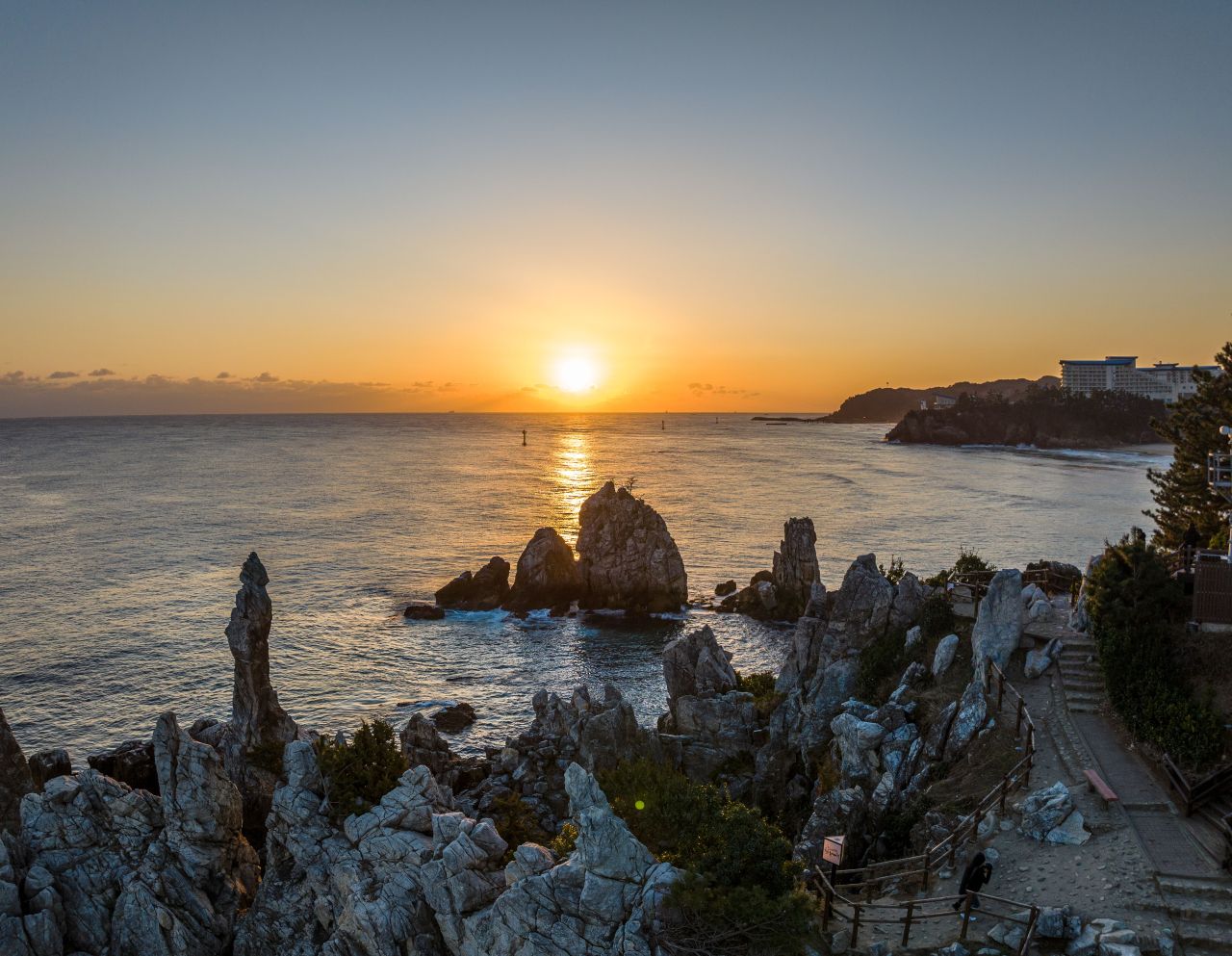
Homigot, the "tiger's tail" cape near Pohang, has a giant bronze hand rising out of the sea, the Hands of Harmony, made in December 1999 for the new millennium; a second hand stands on land. Pohang's 28th sunrise festival in 2026 opened on the afternoon of 31 December with a market and food, ran a show and a light show on the lighthouse before midnight, and started again at 06:50 on 1 January. At 07:30 about 3,000 packs of tteokguk, rice-cake soup, were handed out. About 50,000 people came. It was −6 °C at dawn, and clouds on the horizon held the sun back by about five minutes.

Ganjeolgot in Ulsan was expected to draw about 130,000 people in 2026, the largest forecast for any sunrise spot in Korea. Its programme began at 05:00 on 1 January with a show by 1,500 drones and fireworks. Shuttle buses ran from car parks in the area; one route stopped at Seosaeng station. By the cape stands a large red postbox for New Year's wishes.

Haeundae and Seongsan Ilchulbong
In Busan, more than 100,000 people were expected at Haeundae beach on 1 January 2026. The night before, Gwangalli beach held a countdown with 2,500 drones, and the Busan Metro ran extra trains for up to two hours longer on 31 December and 1 January. See our Haeundae guide for the area.
Seongsan Ilchulbong, "sunrise peak", is a crater 182 m high on Jeju's east tip, part of a UNESCO World Natural Heritage site since 2007. Its 33rd sunrise festival ran from 31 December 2025 to 1 January 2026 at the plaza below. The dawn climb to the crater rim needed advance registration: 900 places for 2025, and 500 for 2026 according to a news report, which went early. Without a place, people watched from the shore, such as Gwangchigi beach. On 1 January 2026, low cloud hid the sun. Inland, Hallasan has opened its summit trails in the middle of the night on recent New Year's Days; places are booked like any Hallasan winter hike.

When the events were cancelled
Sunrise events have been cancelled at short notice, even when the beaches stay open.
| Year | What happened | Source |
|---|---|---|
| 2021, 2022 | COVID-19: Homigot's plaza was closed and its road blocked in 2021; six East Coast cities and counties held no official events in 2022 | Kyeongbuk Maeil; Nocut News |
| 2023 | After the Itaewon crowd crush, Pohang cancelled the Homigot festival | Financial News |
| 2025 | After the Jeju Air crash on 29 December 2024: Ganjeolgot's sunrise event, Seongsan's festival, Haeundae's countdown show and Gangneung's fireworks were cancelled; Bosingak rang the bell only. About 22,000 people still came to Homigot | Kyeongbuk Maeil; Newsseoul; news reports |
| 2026 | Events held again at Bosingak, Gangneung, Homigot and Ganjeolgot | City and county reports |
Why Koreans watch the first sunrise
People go to make a wish for the year: health for the family, a job, a good year for the country. 1 January is a one-day public holiday. The big family holiday is Seollal, the lunar new year, which in 2027 falls on Sunday 7 February, with days off from 6 to 9 February.
The New Year dish is tteokguk, a clear soup of sliced rice cakes. Long rice cakes stand for a long life, the coin-shaped slices for wealth, and the white for a clean start. Eating a bowl is said to make you a year older. Since June 2023 Korea has used international age in law, so the soup no longer changes anyone's legal age, though the saying lives on; a few laws, such as for military service and buying alcohol, still count by calendar year.
An old custom or a new one?
A Korean scholar argued in a 2018 newspaper column that crowds watching the sun on 1 January is a modern habit, spread from Japan in the colonial period and boosted after Sandglass made Jeongdongjin famous in 1995; older Korean sunrise-watching, such as at Naksansa, was not tied to that date. It is one scholar's view.
What to eat
At the 2026 festivals, rice-cake soup was handed out free: 3,000 packs at Homigot, about 4,000 servings at the tomb of King Munmu off Gyeongju. Homigot also keeps a giant cauldron once used to cook soup for 10,000 people. Pohang's winter speciality is gwamegi, half-dried saury eaten in strips, in season from mid-November to February; Guryongpo harbour, on the way to Homigot, is known for it. In Gangneung, Chodang sundubu, soft tofu from the village by Gyeongpo, is an early breakfast; several places there open around 07:30.
Getting there
The simplest way from Seoul is an overnight sunrise tour. The one on Klook below leaves Dongdaemun History & Culture Park station, exit 10, at 01:00 on 1 January, reaches Jeongdongjin at about 04:50, and returns to Seoul from 16:00. You can watch the countdown at DDP nearby first. The same tour offers Naksansa instead, or Homigot from Busan.
The KTX from Seoul and Cheongnyangni reaches Gangneung in about two hours; some trains on the line also stop at Jeongdongjin. In the timetable from 30 December 2025 there were 22 return trips on weekdays and 32 at weekends, and a KTX-Eum from Busan to Gangneung. Tickets for 31 December sold out early in 2026; book as soon as sales open, a month ahead. See our Seoul transport guide for the stations.
Korea Expressway Corporation's forecast for 1 January 2026 was up to 4 hours 10 minutes from Seoul to Gangneung and about 6 hours back. The worst hours were 05:00–07:00 towards the coast and 16:00–18:00 back towards Seoul. Parking on the roadside at sunrise spots was blocked with cones.
In Busan, the metro runs late on New Year's Eve and Haeundae is on line 2. For Ganjeolgot, use the festival shuttles from car parks in the area. On Jeju, stay in Seongsan the night before and walk; the Seongsan tours on Klook run by day.
Plans for the night
Seoul bell, then a tour to Jeongdongjin.
| Time | What | Why then |
|---|---|---|
| 23:00 | Bosingak bell, or the countdown at DDP | Bell at midnight; Jonggak station closed 23:00–01:00 |
| 00:30 | Subway to Dongdaemun History & Culture Park | Trains ran until about 02:00 in 2026 |
| 01:00 | Tour coach leaves | Exit 10 |
| 04:50 | Arrive at Jeongdongjin; find a café or a spot | Crowds peak at 07:00–08:00 |
| 07:40 | Sunrise | Gangneung time |
| 16:00 | Back in Seoul | Roads back are slowest in the afternoon |
A night by the sea. Take the KTX to Gangneung on 31 December, watch the fireworks at Gyeongpo, sleep, and walk to the beach at 07:00. Or stay in Seongsan on Jeju or by Haeundae in Busan and walk to the shore.
Couples and families
| Place | Why for a date | When |
|---|---|---|
| Bosingak | The bell at midnight, then the lanterns on the stream | 23:00–00:20 |
| Gyeongpo beach | Fireworks on the eve, sunrise next morning | 31 Dec 20:00 – 1 Jan 08:00 |
| Seoul Sky | Sunrise from 500 m, indoors | Book ahead on its site |
| Place | Why for children | Note |
|---|---|---|
| Achasan, Seoul | Gentle paths, no overnight trip | Event from 06:00 in 2026 |
| Homigot | The bronze hand; free soup | Warm tents in 2026 |
| A hotel facing the sea | Watch from the room | Book early |
An overnight tour is hard for small children; a night by the sea or a Seoul hill is easier. Pack blankets: a foreign vlogger's group at Homigot in 2019 brought four.
Videos
An English guide to Jeongdongjin, Korean TV at Seongsan, the Homigot festival's own film, and a foreign visitor at Homigot.
 ▶
That's how we celebrate New Year in Korea! | Jeongdongjin — JINRO Global
An English guide to the New Year sunrise trip to Jeongdongjin, December 2022.
 ▶
Seongsan Ilchulbong on New Year's morning — KBS News (Korean)
Live from the shore by Seongsan on 1 January 2026: wind, cold and a cloudy horizon.
 ▶
28th Homigot sunrise festival highlights — Pohang Culture Foundation (official)
The organiser's film of the 2026 festival.
 ▶
First sunrise of the new year at Homigot — Nour
A foreign vlogger's New Year morning at Homigot in 2019.
Where to stay, tours, and before you go
Rooms by the sea fill early for 31 December: in 2026 one Gangneung hotel was over 90% booked days ahead. These hotels on Klook are close to a sunrise spot; check the room's view before you book. The Klook links for hotels, tours and the eSIM on this page are affiliate links: if you book through them, Korea Routes may earn a commission, at no extra cost to you.
| Hotel | Why | Near |
|---|---|---|
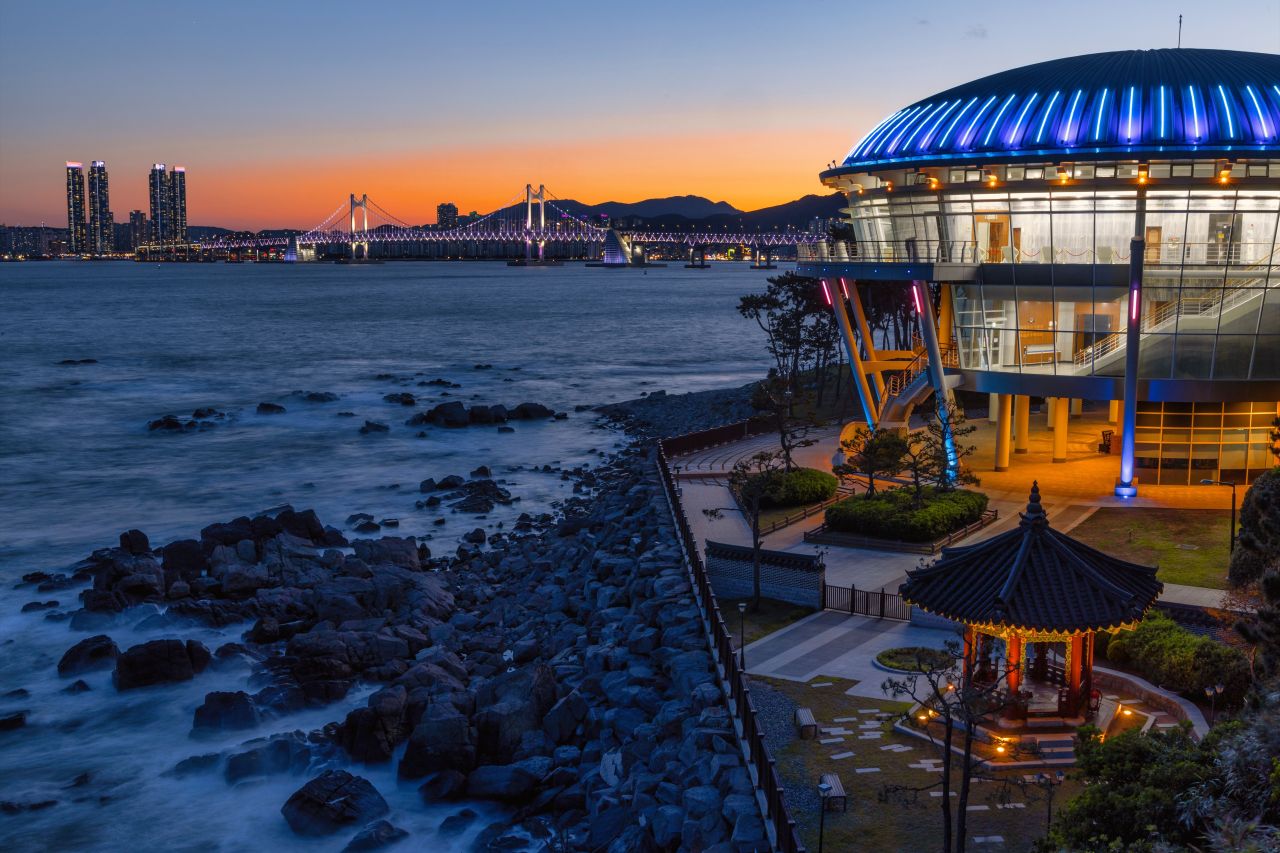
| Sun Cruise Resort and Yacht | The ship on the cliff in the photos; travel blogs say the sun is seen from its "sunrise half ocean view" rooms | Jeongdongjin |
| Residence Hotel Blue Ocean View | On Jinha beach, about five minutes' drive from the cape | Ganjeolgot |
| Shilla Stay Busan Haeundae | Ocean-view room types | Haeundae |
| Golden Tulip Jeju Seongsan | About five minutes' drive to the peak and Gwangchigi beach | Seongsan |
Tours (on Klook; prices checked 1 November 2026)
| Tour | What | Good for |
|---|---|---|
| 2027 New Year Countdown & Sunrise | Overnight coach to Jeongdongjin or Naksansa from Seoul, or Homigot from Busan; English or Chinese guide; about US$97, lunch not included | The sunrise without a car |
| Seoraksan and Naksansa | Mountain and the seaside temple, by day | Seeing Naksansa in daylight |
| Udo, Seongsan Ilchulbong and Seopjikoji | Jeju's east coast by day | The day after |
Clothes: padded coat, hat, gloves, warm boots, a blanket. You will stand still for an hour or more
Phone: batteries drain in the cold; bring a power bank
Data: for maps and train times, a Korea eSIM is sold on Klook
Check in late December: each city's 2027 programme, and the forecast for cloud on the coast
Watch out
· Events can be cancelled at a few days' notice after a national tragedy, as in 2025.
· Cloud. The sun was hidden at Seongsan in 2026 and late at Homigot. In 2024 the forecast was poor for the whole Gangwon coast.
· Crowds and the way home. Hundreds of thousands leave at the same time after 08:00; trains and roads back are full.
· Breakwaters and rocks. They are icy in the dark; the coast guard watches them for a reason. At Jeongdongjin the cliff-side sea trail was closed during sunrise hours in 2026.
Outdated tips you will still find online
| You may read | What is right | Source |
|---|---|---|
| The train from Seoul to Jeongdongjin takes 5–6 hours | That was the old slow train; the KTX takes about two hours | Old articles; KTX timetables |
| Take the 23:20 night train from Cheongnyangni | Blogs from 2018–19; check KORAIL's timetable before you plan on it | Travel blogs, 2018–19 |
| Homigot boils soup for 10,000 in a giant pot | In 2024 and 2026 the soup was handed out as packs | Kyeongbuk Maeil, 2026 |
| Seongsan's festival is free, just climb up | The dawn climb needed advance registration: 900 places in 2025, 500 in 2026 | Festival notices, 2025–26 |
| Sandglass aired in 1996 | It aired in 1995 on SBS | SBS; Wikipedia |
FAQ
What time is sunrise on 1 January 2027?
07:32 in Ulsan and Busan, 07:33 in Pohang, 07:40 in Gangneung, 07:47 in Seoul, from the Korea Astronomy and Space Science Institute.
Where is the first sunrise in Korea?
On the mainland, Ganjeolgot and Homigot, a minute apart. Dokdo, far out at sea, is earlier still, at 07:26.
Do I need tickets?
Not for Gangneung's beach events or Bosingak in 2026. The Seongsan summit climb and Seoul Sky needed advance booking.
Can I do it as a day trip from Seoul?
Yes, with an overnight tour that leaves at about 01:00 and returns in the afternoon, or by staying on a Seoul hill such as Achasan.
Is 1 January a holiday in Korea?
Yes, one day. The longer holiday is Seollal, 6–9 February 2027; our Asia festival calendar compares it with China's and Taiwan's.
Sources (checked 1 November 2026)
Korea Astronomy and Space Science Institute, sunrise and sunset times for January 2026 and 2027; Seoul city news portal (Bosingak ceremony, closures and subway, 2026; district sunrise events, 2026); Kukinews (Gangneung crowds, 2026); Kyeongbuk Maeil (Homigot 2025 and 2026, tteokguk); Hankyung (Homigot and Ganjeolgot organisers, 2026); Herald Economy (Ganjeolgot programme, Busan, KTX timetable, expressway forecast, Seoul Sky); Financial News (weather forecast, 2026; Homigot cancellation, 2023); Wikitree (peak traffic hours); Newsis (Bosingak crowd, 2026); Newsseoul (Seongsan summit registration and 2025 cancellation); Nate travel (Seongsan 2026, not confirmed officially); Nocut News (2022); news reports on the 2025 cancellations; KBS News (Seongsan, 2026); MBC 2580 (2015) and SBS (Jan 2026) on the breakwater building; JoongAng Daily (bookings, sea trail, crowds); Ministry of Justice (age law, 2023); Rural Development Administration (tteokguk); Korea AeroSpace Administration 2027 calendar via news (Seollal); Kyunghyang Shinmun, Jang Yu-seung column (2018); Wikipedia (Jeongdongjin station, Homigot, Seongsan Ilchulbong, Bosingak, Naksansa); Encyclopedia of Korean Culture (Gwandong Byeolgok); Korea Science paper on the Gwandong Palgyeong; Cultural Heritage Administration (Gyeongpodae Scenic Site); Pressian and Hangyo (Naksansa as a Gwaneum shrine, 2005 fire); Frommer's and Korea by Bike (the statue after the fire); Visit Korea (Hands of Harmony); Michelin Guide (gwamegi); National Geographic (Chodang sundubu); Klook product and hotel pages; travel blogs and booking sites (room views). Videos are embedded from their creators' YouTube channels. Photos: Korea Tourism Organization photo gallery, taken between 2012 and 2023; the events change every year.


Comments
Post a Comment