






















King Sejong the Great: Hangeul, Myths, Films and Places
At the end of the twelfth lunar month of 1443, the royal scribes of Joseon added a short note to the month's record: "This month the king personally created 28 letters." They were simple shapes, a few strokes each, drawn from the shapes of the tongue, lips, teeth and throat. Less than two months later, the deputy head of the king's own research institute was protesting that they were a mistake. The king jailed him and his allies for one night, let them go, and kept working.
This is the story of King Sejong the Great, the man on the 10,000-won note and the bronze giant on Gwanghwamun Square: how a third son became king, how Hangeul works and why it took 450 years to win, what he really invented and what others did for him, which famous claims about him are true, the films and dramas about him, and the places in Korea where you can follow him. Tap a tab or open a story to read more.
Who: the fourth king of the Joseon dynasty, who created Hangeul, the Korean alphabet
Lived: 1397–1450. Born in Seoul, king from 1418 until his death at 52
Known for: Hangeul (created 1443, published 1446) · rain gauges and water clocks · a poll of about 173,000 people on a tax · 100 days of maternity leave for enslaved women working for the state
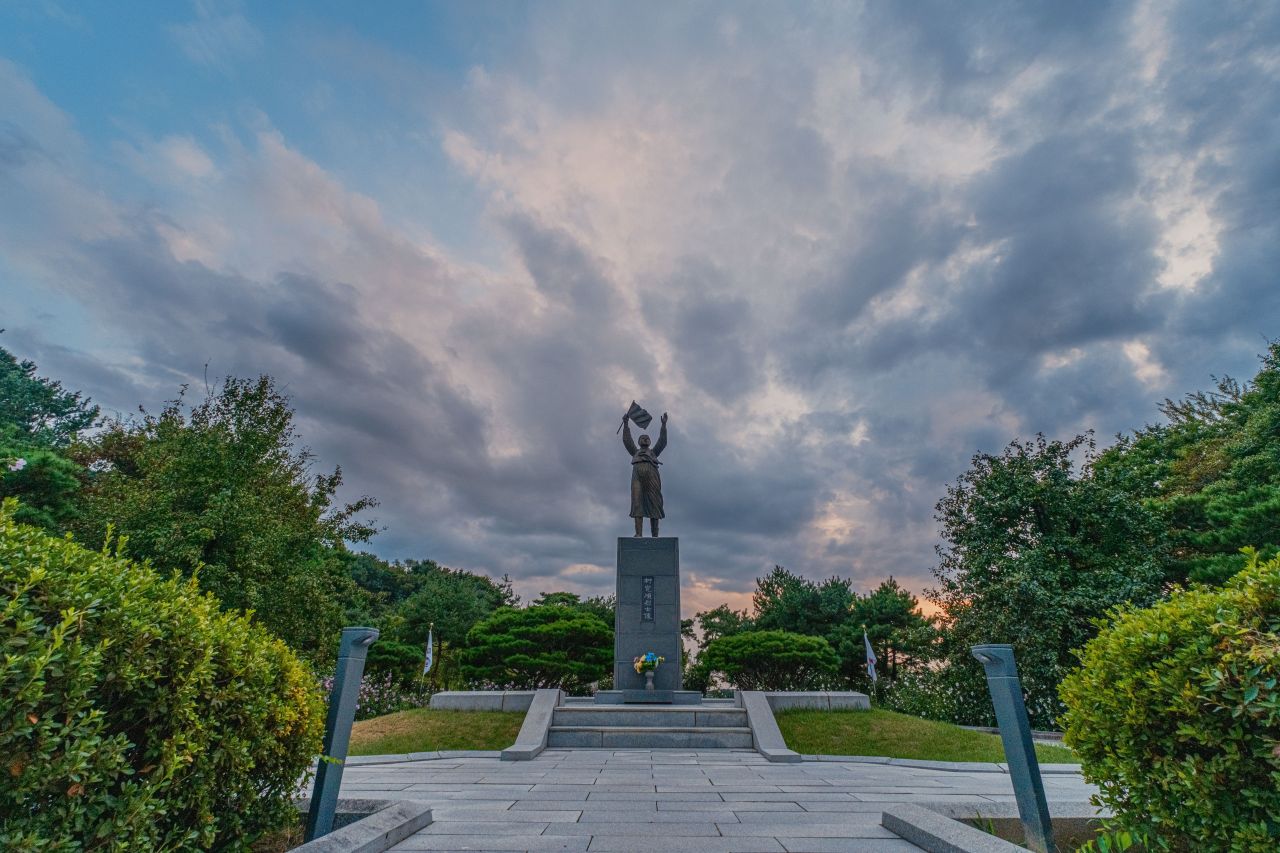
See him in Seoul: the statue on Gwanghwamun Square (always open) and the free underground exhibition below it (10:00–18:30, closed Mondays)
His tomb: Yeongneung in Yeoju, part of a UNESCO World Heritage site, 500 won, closed Mondays, about 50 minutes by train from Pangyo, then a short taxi ride
Watch first: Tree with Deep Roots (SBS, 2011), a murder mystery set while he secretly creates the alphabet
Checked 28 October 2026 with the sources at the end.

In this guide
- Map: where to follow him
- His life in one table
- Hangeul: how the letters work
- Science: what he made, and who made it
- Laws for ordinary people
- What the world says, and what is myth
- Stories from his life
- On screen
- Places to follow him
- Watch out, and outdated tips
Map: where to follow him
Most Seoul sites are within a 20-minute walk of Gyeongbokgung Palace, where he lived and worked. The Memorial Hall is in north-east Seoul, and his tomb is in Yeoju, south-east of Seoul. Tap a number for its name.
Map © OpenFreeMap, data © OpenStreetMap contributors. Use Naver Map or KakaoMap for directions in Korea.
His life in one table
Sejong, born Yi Do, was not meant to be king. He was the third son of King Taejong, and his eldest brother Yangnyeong was crown prince. In 1418 Taejong removed Yangnyeong, whose behaviour had worn out his father's patience, and chose the third son. The royal annals record his reasons: the prince was clever and "loved learning", read through the night, behaved well with Chinese envoys, and, unlike the second son, who could not drink at all, "does not drink well, but drinks in moderation and stops". Two months later Taejong stepped down and Sejong became king at 21 (22 by the Korean count).
| Year | What happened | Where you can see it |
|---|---|---|
| 1397 | Born in Seoul, west of Gyeongbokgung, on the 10th day of the 4th lunar month (15 May in today's calendar, now Korea's Teachers' Day) | A marker stone in Seochon |
| 1418 | Made crown prince in the 6th month, king in the 8th. His father keeps control of the army | Gyeongbokgung Palace |
| 1419 | Raid on Tsushima island, led in practice by his retired father | A relief on the Gwanghwamun statue |
| 1420 | Sets up the Jiphyeonjeon, the "Hall of Worthies", a research institute in the palace | Sujeongjeon hall, Gyeongbokgung |
| 1430 | Asks about 173,000 people what they think of a new land tax | Below |
| 1434 | The self-striking water clock and the bowl-shaped sundial are made | National Palace Museum |
| 1441–42 | Standard rain gauges are set up in Seoul and every county | King Sejong Memorial Hall (science room) |
| 1443 | Creates the 28 letters of Hangeul | The underground exhibition at Gwanghwamun |
| 1446 | Publishes Hunminjeongeum, "the correct sounds for teaching the people" | Hangeul Day, 9 October |
| 1450 | Dies at a prince's house in Seoul | — |
| 1469 | His tomb is moved from southern Seoul to Yeoju | Yeongneung, Yeoju |
He suffered for much of his reign. The annals record him saying in 1439 that he had suffered from a wasting thirst for 13 or 14 years, as well as swellings on his back, a painful leg since his youth, and eyes so bad by 1439 that his left eye was clouded over. Doctors today read the thirst as diabetes. His father had already noted in 1418 that the new king was heavy and should get out more.
Hangeul: how the letters work

Before Hangeul, Koreans wrote in Chinese characters, which took years to learn and did not fit the Korean language. Sejong's preface says it plainly: the people have things they want to say but cannot write them down, "and I find this pitiful".
- Consonants draw the mouth. The five basic consonants are pictures of the speech organs: ㄱ (g/k) is the back of the tongue blocking the throat, ㄴ (n) the tongue tip against the gums, ㅁ (m) the mouth, ㅅ (s) a tooth, ㅇ the open throat. The 1446 explanatory edition says so itself.
- Add a stroke, add force. ㄱ becomes ㅋ (a stronger k), ㄴ becomes ㄷ and ㅌ. You can see the family in the letters.
- Vowels are heaven, earth and person: a dot (heaven), a flat line ㅡ (earth) and an upright line ㅣ (a person), combined into ㅏ, ㅓ, ㅗ, ㅜ and the rest.
- Letters stack into blocks. 한 is ㅎ + ㅏ + ㄴ, one syllable, written in a square.
- 28 then, 24 now. Four of the original letters dropped out of use. Today's spelling is based on rules first unified in 1933.
The 1446 book promised that "a wise man can learn them before the morning is over, and even a fool within ten days".
In the 2nd month of 1444, Choe Mal-li, deputy head of Sejong's own Hall of Worthies, and six other scholars sent a long protest. A country that served China should not invent its own letters, they wrote; Korea already had ways to write sounds with Chinese characters; people would stop studying the classics; and the crown prince was wasting time on it. Sejong argued back ("if I do not correct the rhyme books, who will?"), locked them up and released them the next day. Only one, who had changed his story, was questioned further, and one other lost his post.
Who designed the letters? The annals say the king made them himself. Eight scholars of the Hall of Worthies wrote the explanatory edition of 1446. Most school textbooks say the scholars helped create the alphabet; some scholars insist it was Sejong alone. A theory that a Buddhist monk was the real co-author has little support.
The ruling class kept writing in Chinese. Hangeul was called eonmun, "vulgar script", and was used mostly by women, commoners, Buddhist texts and moral primers. In 1504, after anonymous letters in Hangeul attacked him, King Yeonsangun banned teaching or learning it and punished neighbours who did not report people who knew it. Only in 1894 did a royal decree make Hangeul the basis of official documents. Hangeul Day was first celebrated in 1926, as "Gagya Day"; after the 1446 book was found around 1940, the date was fixed as 9 October.
North Korea celebrates its own "Korean Alphabet Day" on 15 January, counting from the creation in 1443 rather than the publication in 1446.
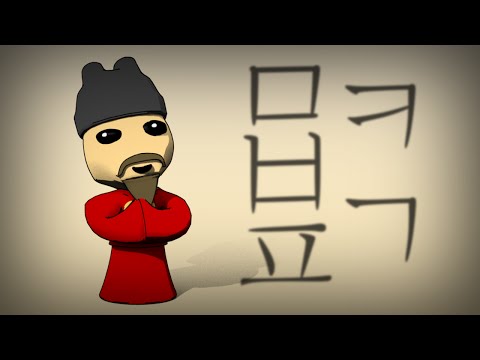 ▶
How Korea crafted a better alphabet — NativLang (English)
A clear four-minute explainer of how the letter shapes work, from a channel about languages (2015).
Science: what he made, and who made it
Sejong gathered scholars, astronomers and craftsmen and gave them money and time. Many inventions credited to him were built by others, and one is usually credited to the wrong person.
| What | When · who | Good to know |
|---|---|---|
| Rain gauge (cheugugi) | 1441–42 · first tested by the crown prince, his son | The annals never mention Jang Yeong-sil here. Sejong's part was making it a standard: an iron gauge in Seoul, gauges of fixed size in every county, and reports to Seoul, about two centuries before rain gauges in Europe. No gauge from his time survives; the oldest is from 1837 |
| Self-striking water clock (jagyeongnu) | 1434 · Jang Yeong-sil and Kim Bin | Struck a bell, drum and gong by itself and was the kingdom's official clock. Part of a new clock built in 1536 survives |
| Bowl-shaped sundial (angbu ilgu) | 1434 · maker not recorded | A sundial aligned to the earth's axis; who designed it is not recorded |
| Armillary sphere | 1433 · Yi Cheon and Jang Yeong-sil | Korea's first, for watching the sky |
| Chiljeongsan calendar | 1442, printed 1444 | Worked out the sun, moon and planets for Seoul instead of using China's tables |
| Nongsa jikseol, a farming manual | 1429 | Collected the experience of farmers in each province |
| Court music | His reign · Bak Yeon and others | New instruments, a fixed pitch, and a grid notation (jeongganbo) often called the first in East Asia to show note length |
Jang Yeong-sil, the engineer he protected
Jang Yeong-sil began as a government slave in Dongnae, near today's Busan. In 1433 Sejong told his ministers that Jang's father was from Suzhou and Hangzhou in China and his mother a gisaeng, an entertainer: "his skill is beyond ordinary men, so King Taejong protected him, and I value him too." He was raised to a military rank for the water clock. In 1442 a royal palanquin he had supervised broke on the way to a hot spring. He was sentenced to 100 blows of the stick; Sejong reduced the punishment by two grades. After that he is not known to appear in the records, and the date of his death is unknown. The annals do not say Sejong was riding in it, as the film Forbidden Dream shows.

Laws for ordinary people
He polled the country on a tax. In 1430 officials asked people across the provinces about a new land tax. The annals give the result: 98,657 for and 74,149 against, about 173,000 in all. Even with a majority in favour, Sejong held back and followed his senior ministers' advice to wait. The tax was finally set, in a revised form, in 1444.
He gave maternity leave to enslaved women working for the state. In 1426 he ordered 100 days off after childbirth. In 1430 he added a month before the birth. In 1434 he gave their husbands 30 days, because mothers had died with no one to look after them. It applied to government slaves, not to everyone.
He kept a rival in office. Hwang Hui had opposed making Sejong crown prince and was exiled for it. Sejong brought him back and kept him as chief state councillor for 18 years.
What the world says, and what is myth
"The world's best alphabet" was first said by a Dutch scholar of Korea, Frits Vos, at a seminar in 1963: "They invented the world's best alphabet!" The linguist James McCawley, reviewing his work in 1966, agreed the superlative had "much justification".
Jared Diamond, the author of Guns, Germs, and Steel, wrote about Hangeul in Discover magazine in 1994. In his own words, the letters are "an ultrarational system devised from scratch", and "the details were invented from first principles". In the same article he scolded South Korea for still mixing in Chinese characters.
Geoffrey Sampson, a British linguist, gave Hangeul a category of its own in 1985: a "featural" script, where the shape of a letter shows how its sound is made. Korea's own National Institute of the Korean Language notes that much foreign praise is admiration rather than measurement.
Learners today: King Sejong Institutes, named after him, had 239,020 students abroad in 2025, in 89 countries by mid-2026. Duolingo's 2025 report ranked Korean the sixth most studied language on its app.
The 1446 explanatory edition of Hunminjeongeum is a National Treasure of Korea and has been on UNESCO's Memory of the World register since 1997. It was found around 1940 in an old house in Andong and bought by the collector Jeon Hyeong-pil; it is kept at the Kansong Art Museum.
Since 1990 UNESCO has given the King Sejong Literacy Prize, set up with the Korean government in 1989, to literacy projects around the world, especially those that teach in people's mother tongues. It is a prize for teaching people to read, not a ranking of alphabets.
| The story | Verdict | Why |
|---|---|---|
| UNESCO named Hangeul the world's best alphabet | False | UNESCO lists the 1446 book and gives a literacy prize in his name; it has never ranked writing systems |
| Hangeul is "the most scientific alphabet in the world" | An opinion | Praise from individual scholars, often quoted second-hand. Jared Diamond reported it as what "scholars" said, not as his own verdict |
| The letters copy the shape of the mouth | True | The 1446 book says the consonants show the tongue, lips, teeth and throat |
| An Indonesian tribe adopted Hangeul as its official script | Overstated | Since 2009 schools in Baubau city have taught the Cia-Cia language in Hangeul; Indonesia's government did not make it official |
| Sejong invented the rain gauge with Jang Yeong-sil | Mostly false | The annals credit the crown prince's tests and never name Jang |
| Sejong conquered Tsushima | Half true | The 1419 raid happened in his first year, but his retired father ran it |
| The 1430 tax poll was the world's first opinion poll | No source | It was a remarkable survey, but there is no evidence it was the world's first |
Stories from his life
"He cannot eat without meat" (1422)
When his father died, Sejong gave up meat for mourning, as custom demanded, and grew weak. His ministers begged him to eat it, quoting Taejong's last wish: "The king cannot eat a meal without meat. After I die, follow the exception and finish the mourning properly." Sejong refused at first, then gave in. The line is in the royal annals.
The book his father missed
A story told in a later collection of anecdotes, not in the annals: when the young prince fell ill and kept reading, his father had every book taken from his room. One volume, a collection of letters by two Chinese writers, had slipped behind a folding screen, and he read it more than a thousand times.
One night in jail for his critics (1444)
After Choe Mal-li's protest against the alphabet, Sejong had the seven scholars locked up by the State Tribunal. The next day he let them go.
The broken palanquin (1442)
On the way to a hot spring, a royal palanquin supervised by Jang Yeong-sil broke because it was not sturdy enough. The tribunal asked for 100 blows; Sejong reduced the sentence by two grades. The film Forbidden Dream turns this into a scene of loyalty and sacrifice; the annals only record the verdict.
"You are right, and you are right too"
A favourite Korean story says Hwang Hui, his chief minister, told two quarrelling servants they were both right, and then told his wife she was right too. It is a folk tale, not found in the official records.
On screen
| Film | Sejong · audience in Korea | Good to know |
|---|---|---|
| Forbidden Dream (2019) | Han Suk-kyu · about 2.0 million | Sejong and Jang Yeong-sil (Choi Min-sik) as close friends. The palanquin incident is real; their friendship and Jang's fate are imagined |
| The King's Letters (2019) | Song Kang-ho · about 956,000 | Shows the monk Sinmi as co-creator of Hangeul. The annals name Sinmi 69 times but never with the alphabet, and Sejong seems to have met him in 1446. It caused a row in Korea |
| I Am the King (2012) | Ju Ji-hoon · about 790,000 | A comedy: the prince swaps places with a slave who looks just like him. Pure fiction |
| The Divine Weapon (2008) | the late Ahn Sung-ki · about 3.7 million | Set in 1448; the story centres on a rocket weapon |
Audience figures: Korean Film Council daily box office, at the end of each run, checked 28 October 2026.
Tree with Deep Roots (SBS, 2011, 24 episodes): a palace guard investigates the murders of scholars while Sejong secretly works on the alphabet. Han Suk-kyu plays the older king and Song Joong-ki the young one; Han won SBS's top drama award. It is based on a novel by Lee Jung-myung.
King Sejong the Great (KBS, 2008, 86 episodes), with Kim Sang-kyung, is the long version of his reign. Kim played him again in Jang Yeong-sil (KBS, 2016). In The King of Tears, Lee Bang-won (KBS, 2021–22) he is the young prince who replaces his brother.
In the United States, JustWatch listed Tree with Deep Roots on Viki and Kocowa, Forbidden Dream and I Am the King on Prime Video and free services such as Tubi, and The King's Letters on Tubi and Kanopy, in October 2026. KBS's "KBS Drama Classic" YouTube channel has the first episode of King Sejong the Great and compilation clips, in Korean only. Listings change by country and month; check JustWatch for yours.
He is on the 10,000-won note (since 1973; today's design since 2007, with an armillary sphere and a star map on the back). His name is on Sejong-daero, the avenue through Gwanghwamun (2010), the Sejong Center for the Performing Arts (1978), Korea's first Antarctic research station (1988), a new administrative city (launched 2012), an Aegis destroyer launched in 2007, the King Sejong Institutes that teach Korean abroad, and an asteroid, 7365 Sejong, found in Japan in 1996. Teachers' Day, 15 May, is his birthday.
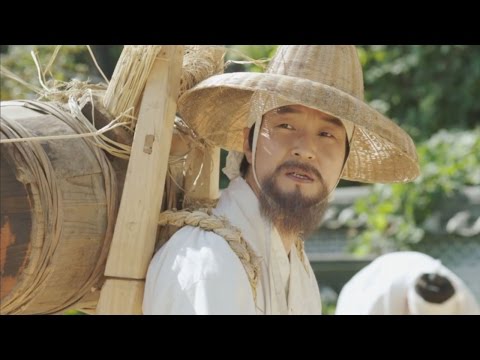 ▶
Tree with Deep Roots – King Sejong carries a manure bucket — SBS Drama (Korean, English subtitles)
An official SBS clip from episode 5, with English subtitles; over 1.3 million views.
 ▶
Forbidden Dream – official main trailer (international) — Lotte Entertainment
The international trailer from the film's distributor (2020).
 ▶
100 Icons of Korean Culture: King Sejong — Arirang TV (English)
A 13-minute English programme from Korea's international broadcaster (2013).
 ▶
How was Hunminjeongeum created? — KBS History Special (Korean)
KBS's documentary on the creation of the alphabet; nearly 2 million views.
Places to follow him
- The statue: a 6.2 m bronze of the king seated with a book, unveiled on Hangeul Day 2009 and made by the sculptor Kim Young-won. In front are models of the armillary sphere, rain gauge and sundial; the reliefs behind show his scholars, printing, the northern frontier and Tsushima. Free, always open. Admiral Yi Sun-sin stands 250 m further south on the same square.
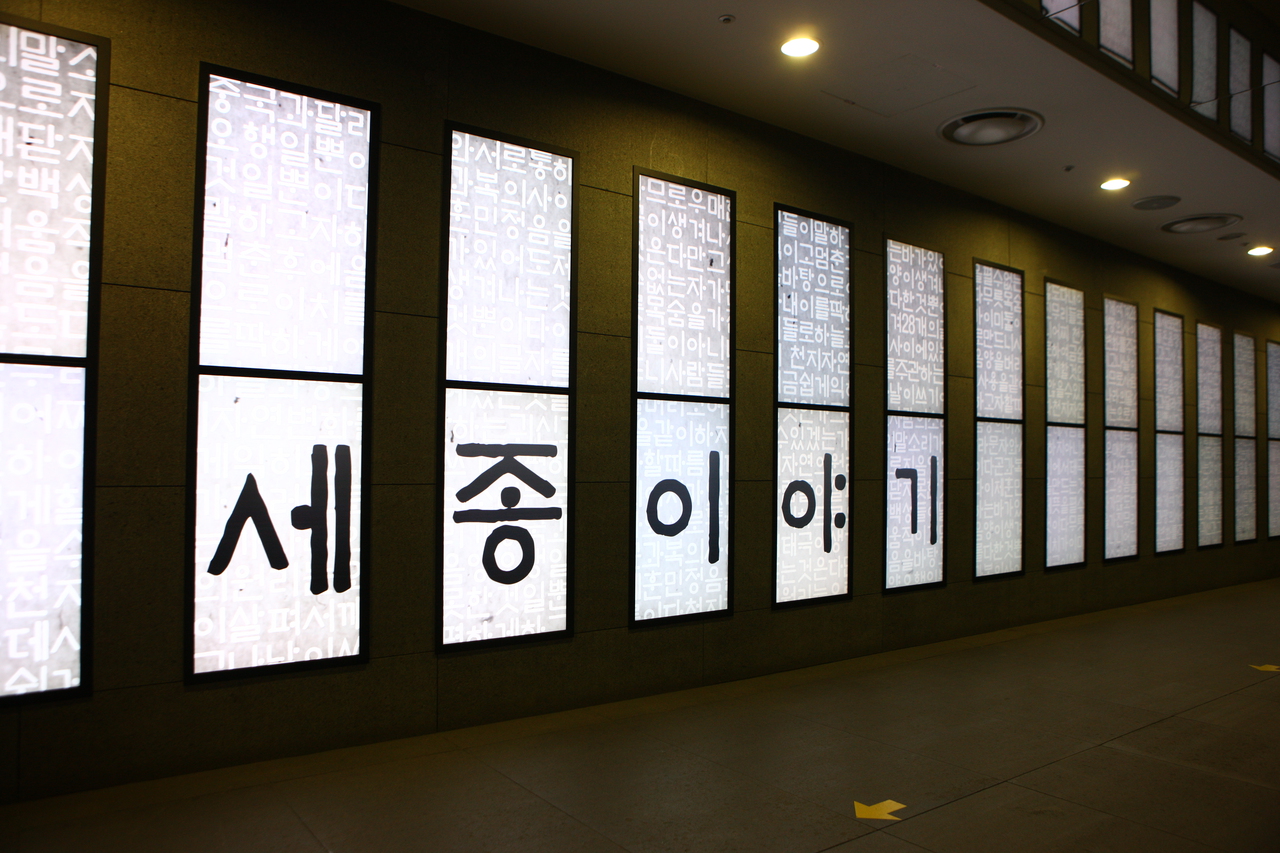
- The Story of King Sejong, underground, entered from below the statue: free, 10:00–18:30 (last entry 18:00), closed Mondays. Rooms on Hangeul, science, music and his laws; write your name in Hangeul with a brush. An English audio guide was reported in 2023. Seoul city announced later evening hours on some days until 30 November 2026; call 02-399-1177 before you go late.
- The exhibition for Hangeul Day's 100th anniversary at the National Museum of Korean Contemporary History, on the east side of the square: free, 2 October 2026 to 9 February 2027, 10:00–18:00 (to 21:00 on Wednesdays and Saturdays).

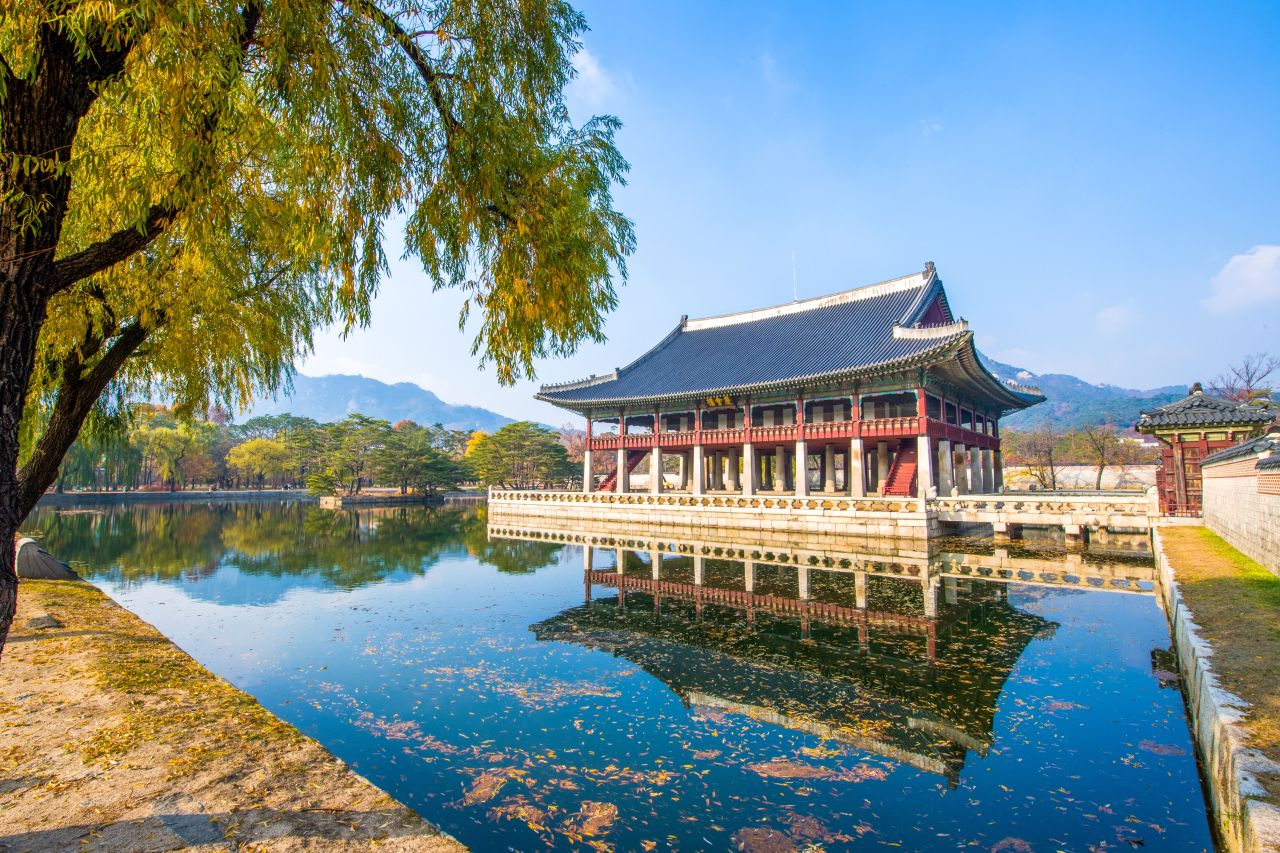
- Gyeongbokgung Palace: where he was crowned, worked and created the alphabet. Sujeongjeon hall stands on the site of his Hall of Worthies; the water clock pavilion stood somewhere near it, with no marker today. Closed Tuesdays. November–February 09:00–17:00 (last entry 16:00). 3,000 won; free for foreigners 18 and under or 65 and over, and for anyone in hanbok. Free English tours at 11:00, 13:30 and 15:30. See our palace route.
- National Palace Museum, next to the palace: free, 09:30–17:30 (to 21:00 on Saturdays), closed the last Monday of each month. The basement science gallery has shown parts of the 1536 water clock, sundials and the star map since 2022; displays rotate, so ask at the desk.
- Where he was born: a stone marker on Jahamun-ro near Tongin Market, west of the palace, marks the area. The exact house has never been found. The food alley from exit 2 of Gyeongbokgung station is called Sejong Village after him.

- Yeongneung: the first Joseon royal tomb with a king and queen in one mound, Sejong on the left. Part of the UNESCO World Heritage site of the Joseon royal tombs (2009). Restored from 2017 and fully reopened in 2020. 500 won in 2026 (palace and tomb fees are due to change from 1 January 2027). Closed Mondays. November–January 09:00–17:30 (last entry 16:30). In 2026 it was free on 15 May, the day of his memorial rite. Food is generally not allowed inside.
- King Sejong History and Culture Museum, at the entrance: free, same hours.
- Getting there: Shinbundang line to Pangyo, then the Gyeonggang line to Sejongdaewangneung station; some trains turn back at Bubal, so take one for Yeoju. From the station it is about 4 km to the tomb; take a taxi.
- King Sejong Memorial Hall, Cheongnyangni, Seoul: Hangeul, science and music rooms, the stone figures from his first tomb and an old Cheonggyecheon water gauge in the garden. 3,000 won. November–February 09:00–17:30. Sources disagree on which days it closes, so call 02-969-8851. Exit 3 of Korea University station, 10 minutes' walk.
- National Hangeul Museum, Yongsan: closed for expansion since October 2024; a fire during the work in February 2025 extended the closure, and reopening is planned for October 2028.
- Sejong City: a new government city named after him, launched in 2012; he never lived there. Its round pedestrian bridge, the "Ieung bridge" after the letter ㅇ, is 1,446 m around, for the year Hangeul was published. Free, 06:00–23:00.
| Time | Route | Avoid |
|---|---|---|
| Half a day | Gyeongbokgung (Sujeongjeon) → National Palace Museum → statue and underground exhibition | Tuesdays (palace), Mondays (exhibition) |
| 1 day | Add the Hangeul Day anniversary exhibition, then Seochon: the birthplace marker and Tongin Market | Same |
| Day trip | Yeoju: museum and Yeongneung; go early in winter | Mondays |
Hangeul Day and his birthday
Hangeul Day, 9 October, is a public holiday. Hangeul Week (6–17 October in 2026, Hangeul Day's 100th anniversary) brings concerts and hands-on stalls to Gwanghwamun Square in its first days, and Yeoju holds events at his tomb. On his birthday, 15 May, there is a celebration at Gyeongbokgung and a memorial rite at Yeongneung. The 2027 dates were not out yet when we checked.
· The palace closes on Tuesdays, the Gwanghwamun exhibition and Yeongneung on Mondays. Wednesday to Sunday is safest.
· In winter, Gyeongbokgung stops letting people in at 16:00 and Yeongneung at 16:30.
· On the Gyeonggang line, check the train goes to Yeoju, not only to Bubal.
· Exhibits in museums rotate; if you want to see the water clock or a sundial, ask at the desk.
Outdated tips you will still find online
| You may read | What is right | Source |
|---|---|---|
| Visit the National Hangeul Museum in Yongsan | Closed since October 2024, longer after a fire in February 2025; reopening planned for October 2028 | Newsis, Jan 2026 |
| Go to the King Sejong Cultural Festival in Yeoju | Not held under that name in 2026; Yeoju holds Hangeul Day events and a 15 May rite | Korea Tourism Organization; news |
| Yeongneung is closed for restoration | Reopened in stages from May 2020 | Kuki News (reopening plan), Apr 2020 |
| Jang Yeong-sil invented the rain gauge | The annals credit the crown prince's tests | Annals of the Joseon Dynasty, 1441–42 |
FAQ
Who was King Sejong?
The fourth king of Korea's Joseon dynasty (reigned 1418–1450), who created Hangeul, the Korean alphabet, and backed advances in science, farming and music.
Did King Sejong really create Hangeul himself?
The royal annals say he made the 28 letters himself in 1443. Scholars of his Hall of Worthies wrote the 1446 explanation.
Why is Hangeul Day on 9 October?
It marks the publication of Hunminjeongeum in the 9th lunar month of 1446, converted to today's calendar.
Where can I see King Sejong in Seoul?
His statue on Gwanghwamun Square and the free underground exhibition below it (closed Mondays), and Gyeongbokgung Palace behind it (closed Tuesdays).
What should I watch about King Sejong?
Tree with Deep Roots (2011) for a thriller about the alphabet, and Forbidden Dream (2019) for his friendship with the engineer Jang Yeong-sil.
Sources (checked 28 October 2026)
Annals of the Joseon Dynasty (King Taejong 1418; King Sejong 1418, 1422, 1426, 1430, 1433, 1434, 1438, 1439, 1441, 1442, 1443, 1444, 1446, 1450; King Yeonsangun 1504); Encyclopedia of Korean Culture (Sejong, Hunminjeongeum, Jiphyeonjeon, Tsushima expedition, water clock, sundial, Jang Yeong-sil, Hwang Hui, Yeongneung, Sejong Sillok, rain gauge); National Institute of Korean Language; National Archives of Korea (Hangeul policy timeline, Sejong Center); UNESCO (King Sejong Literacy Prize; Memory of the World nomination file); Jared Diamond, "Writing Right", Discover (1994); National Institute of Korean Language on Frits Vos (1963) and J. D. McCawley (1966); Korea JoongAng Daily (King Sejong Institutes, February 2026); Duolingo (2025 language report); Ministry of Culture, Sports and Tourism; Bank of Korea (banknote designs); Korea Times (2010, Cia-Cia); Newsis (2025 Cia-Cia; Hangeul Museum, January 2026); Kyunghyang Shinmun (book anecdote, tax poll); Weekly Kyunghyang (rain gauge, 2023); Seoul Metropolitan Government Media Hub (statue, exhibition, birthplace, Hangeul Day 2026); Royal Palaces and Tombs Center (Gyeongbokgung); National Palace Museum of Korea; Korea Tourism Organization TourAPI (hours, fees, events); Kuki News (Yeongneung, 2020); Insight (2027 palace and tomb fees); Kyeongin Ilbo (Gyeonggang line, 2026); Korean Film Council (box office); Korea JoongAng Daily and Korea Herald (film accuracy); OSEN; SBS, KBS (dramas); JustWatch (streaming, October 2026); NASA JPL (asteroid 7365 Sejong). Videos are embedded from their creators' YouTube channels. Photos: Korea Tourism Organization photo gallery; none were taken in 2026.


Comments
Post a Comment